60
No. of Vendors
70
No. of Products
29
Verified Products
CHECKOUT OUR LATEST ARTICLE

Li Hawkins
Project management & innovationProducts (70)

Blastness - IMS
by Blastness Vendor verified
Blastness - Business Intelligence
by BlastnessVendor verified
Cendyn Grouprev®
by CendynVendor verifiedCendyn Revintel
by CendynVendor verified
Hotel Asset Reporting
by FairmasVendor verifiedAI Powered

FLYR Hospitality | Insights
by FLYRVendor verifiedAI Native
-(1).jpg)
IDeaS Optix
by IDeaS - a SAS CompanyVendor verifiedIDeaS RevPlan
by IDeaS - a SAS CompanyVendor verifiedIDeaS SmartSpace
by IDeaS - a SAS CompanyVendor verifiedBusiness Intelligence Tools for hotels
Hotels are generating more operational and commercial data than ever before, yet many still struggle to turn that data into decisions. Performance information sits across disconnected systems, reporting takes days to compile, and by the time insights reach decision-makers they are already out of date.
Business Intelligence (BI) platforms address this by bringing together data from across the hospitality technology environment into a single centralized reporting layer. A well-implemented BI platform transforms fragmented data into real-time dashboards, automated reports, and forward-looking insights that teams across the organization can access and act on. Modern platforms have evolved well beyond static reporting into broader decision intelligence environments that support forecasting, operational planning, and portfolio-wide performance visibility.
What are Business Intelligence Tools for hotels?
Hotel
Business Intelligence (BI) tools are technology platforms that aggregate,
integrate, and visualize performance data from multiple hotel systems into a
unified analytics environment. They enable management teams to monitor KPIs,
analyze trends, benchmark performance, and make data-informed decisions across
all commercial and operational functions without relying on manual data
extraction and compilation.
Core
BI functions include:
•
Multi-system data aggregation from PMS, POS, channel manager,
and financial platforms
•
Performance dashboards for RevPAR, occupancy, rate, and channel
metrics
•
Segmentation and market mix analysis
•
Budget versus actual financial performance reporting
•
Integration with property management systems, revenue management
system (RMS), and financial accounting platforms
Why do Business Intelligence Tools matter for hotels?
Hotel
management teams that rely on individual system reports cannot see the complete
commercial picture. RevPAR trends visible in the PMS, competitive rate data
from rate shopping tools, and channel mix analysis from the channel manager
each tell part of the story in isolation. BI tools connect these data sources
so management can see the relationships between them that actually drive
commercial decisions and performance outcomes.
•
Disconnected system reports create incomplete commercial
visibility:
individual system reports cannot show how occupancy, rate, channel mix, and
cost performance interact to determine total hotel profitability
•
Manual reporting consolidation consumes management time: BI tools that
automate data aggregation replace the spreadsheet compilation that currently
occupies finance and revenue teams at period end
•
Trend identification requires longitudinal data analysis: monitoring
performance trajectory across weeks, months, and years requires the connected
historical data that BI platforms maintain and make accessible
•
Benchmarking requires external market data alongside internal
performance: hotel business intelligence tools that connect competitive
benchmarking and market intelligence with internal performance data provide the
commercial context that internal reports alone cannot
What problems do Business Intelligence Tools help solve?
•
Period-end reporting consuming analyst and management time: automated data
aggregation and dashboard generation replaces the manual data extraction and
formatting that occupies revenue and finance teams
•
No integrated view of commercial performance across systems: BI platforms that
connect PMS, channel manager, and financial data create the unified commercial
view that separate system reports cannot provide
•
Slow identification of performance issues: real-time dashboards
surface emerging trends and anomalies that weekly or monthly reports identify
too late for meaningful corrective action
•
Inconsistent KPI definitions across departments: shared BI
infrastructure with standardized metric definitions ensures all teams across
departments and properties work from the same performance data
•
No historical performance context for current decisions: BI platforms with
longitudinal data enable current performance to be assessed against comparable
prior periods and trend trajectories
What capabilities should hotels expect?
•
Real-time performance dashboards accessible from any device
•
Multi-system data connectors for PMS, POS, channel manager, and
financial platforms
•
Customizable reporting views by property, department, segment,
and time period
•
Market intelligence and competitive benchmarking integration
•
Budget versus actual variance reporting connected to financial
planning and reporting tools
How do Business Intelligence Tools fit into the hotel technology ecosystem?
•
Property management systems: PMS reservation, occupancy, and rate
data is the primary source for hotel commercial performance analytics and the
foundation of most BI reporting
•
Revenue management system (RMS): RMS forecast and
pricing data feeds BI for commercial strategy reporting and forward performance
tracking
•
Financial accounting platforms: financial cost and
revenue data connects with BI for complete P&L visibility alongside
operational metrics
•
Customer data platform (CDP): guest segment and
behavior data from the CDP enriches BI with demand source and guest value
intelligence
•
Rate shopping tools: competitive rate data connects with BI for
market positioning analysis alongside internal performance metrics
Which hotel types benefit most from BI investment?
•
Multi-property hotel groups: where portfolio performance
management, comparative benchmarking across properties, and centralized
reporting require connected BI infrastructure
•
Hotels with complex commercial structures: where multiple
revenue centers, booking segments, and distribution channels create reporting
complexity that single-system views cannot address
•
Hotels with active revenue management programs: where commercial
strategy depends on the integrated data visibility that BI provides across
channels, segments, and competitor positioning
•
Hotels with ownership and investor reporting obligations: where performance
data aggregation and formatting that manual processes cannot produce reliably
is required on defined schedules
What should hotels evaluate before selecting a BI platform?
•
Data connector coverage for existing hotel systems: the BI platform must
connect with the specific PMS, channel manager, and financial systems the hotel
operates rather than requiring manual data export
•
Ease of use for non-technical commercial teams: dashboards and
reports must be accessible to revenue managers, general managers, and finance
teams without data analyst skills
•
Real-time versus batch data refresh frequency: for operational
decision-making, the frequency of data updates must match the pace at which
commercial decisions need to be made
•
Customization capability for property-specific views: the ability to build
property-specific KPI definitions and reporting views determines long-term BI
platform value
•
Benchmarking and market intelligence integration: external competitive
data connectivity significantly enhances the commercial value of internal
performance reporting
What common mistakes should hotels avoid?
•
Building BI infrastructure without defined analytical
objectives:
BI platforms that aggregate data without clear use cases generate dashboards
that are viewed occasionally but not used for decision-making
•
Too many dashboards creating information overload: effective BI focuses
on the metrics that actually drive commercial decisions rather than displaying
every available data point
•
No data governance framework for connected systems: BI platforms are only
as accurate as the underlying system data they aggregate, and data quality
issues in source systems appear amplified in BI reporting
•
Treating BI as a finance tool only: the most commercially
valuable BI applications in hotels are in revenue management, commercial
strategy, and operational performance management across all departments
How have Hotel Business Intelligence Tools evolved?
Hotel
BI has evolved from static spreadsheet reports and standalone system exports
into dynamic, multi-source analytics platforms. Early hotel BI relied on manual
data extraction from individual systems and Excel-based consolidation that was
time-consuming and inconsistent. The development of pre-built hotel data
connectors and cloud BI platforms from around 2016 made multi-system analytics
accessible to hotel management teams without specialist data infrastructure. By
2025, real-time dashboards with automated data feeds from all major hotel
system types, AI-powered anomaly detection, and self-service analytics tools
had become standard capabilities in professional hotel BI platforms.
What trends are shaping Hotel Business Intelligence?
•
AI-powered anomaly detection and insight generation: machine learning is
identifying performance patterns and anomalies in hotel data that manual
dashboard review would miss
•
Total revenue management integration: BI platforms are
expanding beyond room revenue to incorporate F&B, spa, and total hotel
profitability analysis
•
Predictive analytics alongside historical reporting: forward-looking
forecast integration alongside historical performance is moving BI from pure
reporting toward active decision support
•
Self-service analytics for commercial teams: no-code analytical
tools are enabling revenue managers and commercial teams to build their own
analyses without relying on IT or specialist analyst support
What impact can Business Intelligence Tools deliver?
•
Integrated commercial performance visibility replacing
disconnected individual system reports
•
Faster identification of performance issues through real-time
monitoring and alerting
•
Reduced management time on manual reporting through automated
data aggregation
•
Better commercial decisions through data that connects
operational, revenue, and financial performance in one place
What should hotels prioritize when comparing BI providers?
Hotels
evaluating Business Intelligence Tools should prioritize data connector
coverage for existing hotel systems, ease of use for commercial teams,
real-time data refresh capability, and market intelligence integration as the
primary selection criteria.
•
Data connector coverage: the platform must connect with the
hotel's actual PMS, channel manager, and financial systems without requiring
manual data export
•
Commercial team usability: revenue managers and general managers
must be able to use the BI platform without data analyst support for day-to-day
decision-making
•
Real-time data refresh: update frequency must match the pace of
commercial decision-making in the hotel's market environment
•
Market intelligence integration: competitive context
alongside internal data is essential for commercially relevant performance
assessment
News (5)

What ChatGPT’s decision to move away from in-platform transactions means for hotels

AI is rewiring how people choose hotels
Juyo Analytics introduces agentic analytics with upcoming April webinar

Why FP&A Software Matters More in Times of Political Uncertainty
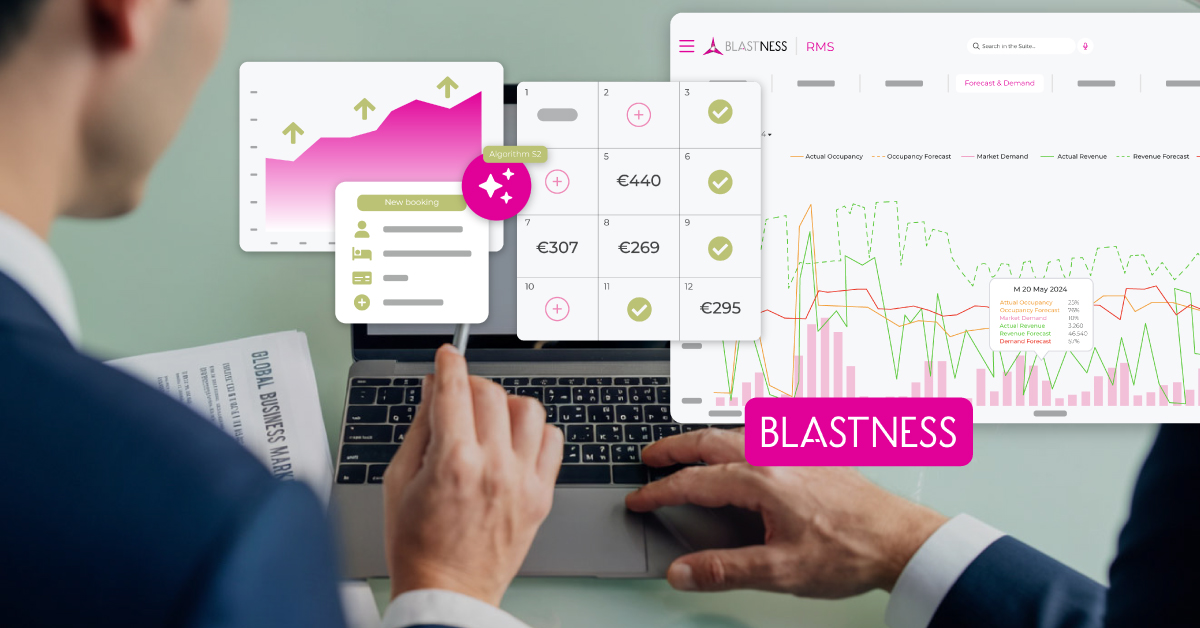
How to choose the right RMS for your property
Blogs (5)
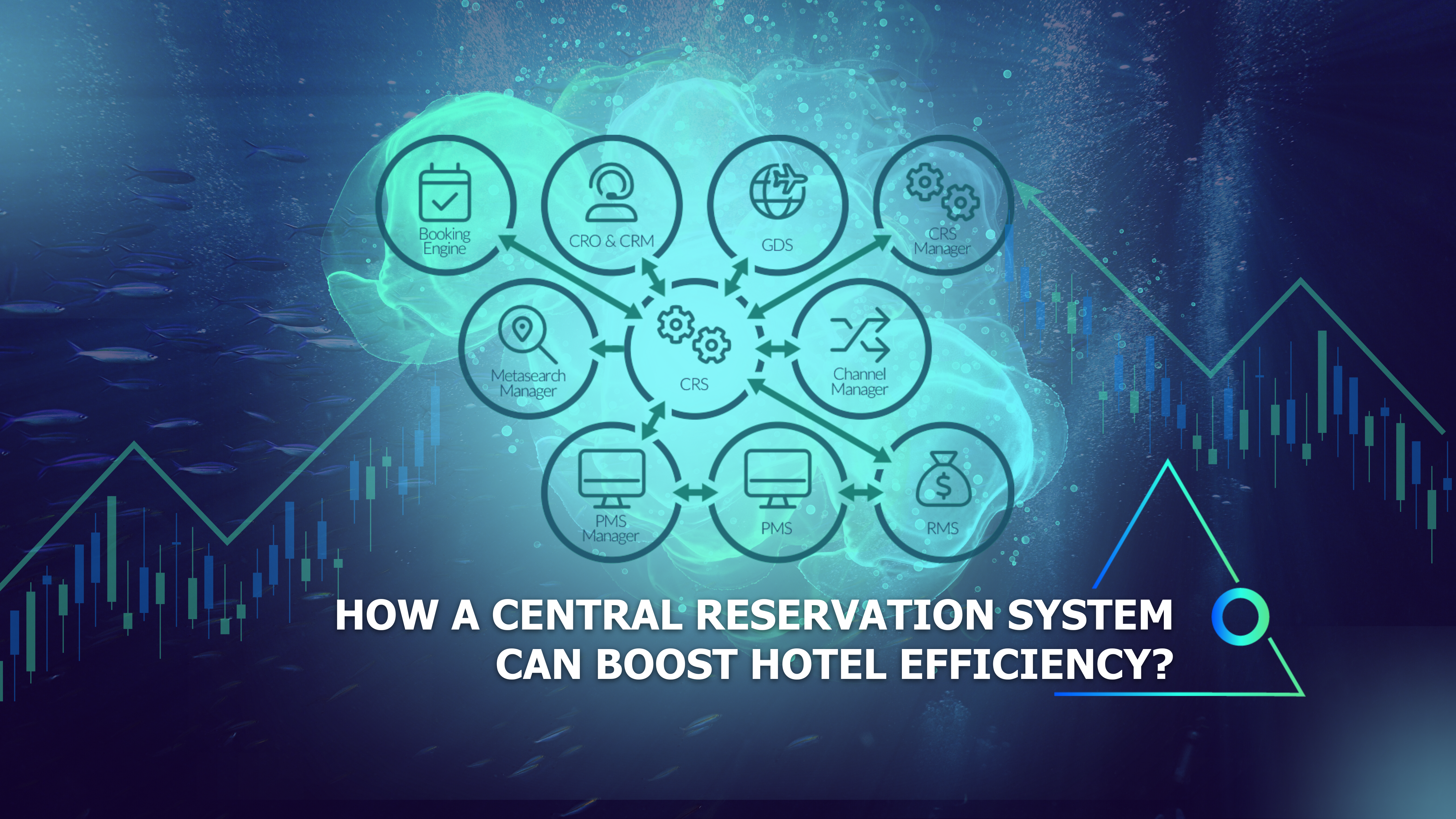
Boost Hotel Efficiency with a Central Reservation System (CRS)

Disruptive Trends & the Future of Hospitality

The Impact of Hotel CRM on Customer Loyalty
Choosing a Revenue Management System for Your Hotel

7 Ways Hospitality Technology Enhances Hotel Operations & Profitability