7
No. of Vendors
7
No. of Products
2
Verified Products
CHECKOUT OUR LATEST ARTICLE

Ralph Melis
Hotel and travel distribution technologyProducts (7)
Digital Guest Directory
by IRIS Vendor verified
iPortal
by TigerTMSVendor verified
Directory+
by eona Unverified
HOTAINMENT Mobile
by GoingSoftUnverified
IGB In-room guest services
by NetGenBizUnverified
Nutmeg Labs
by NutmegUnverified
Uniguest’s digital engagement platform
by UniguestUnverifiedDigital Compendium and Directories for hotels
The printed in-room compendium has been a fixture of hotel rooms for decades, and in most properties it has become a fixture that guests no longer read. Outdated information, physical wear, and the simple reality that guests now reach for their phones rather than a leather-bound folder have made the traditional compendium ineffective as a guest communication tool.
Digital Compendium and Directory platforms replace the printed in-room information guide with a digital, always-current, interactive alternative accessible through the guest's smartphone, in-room tablet, or television. Modern platforms combine hotel information, local recommendations, service requests, and dining reservations within a connected guest experience tool that integrates with property management systems, digital concierge solutions, and hotel business intelligence tools.
What are Digital Compendium and Directory platforms?
Digital
Compendium and Directory platforms are technology solutions that deliver hotel
information, local area guides, service menus, and guest directories through
digital interfaces accessible on guest smartphones, in-room tablets, or
television screens. They replace the static printed compendium with a dynamic,
updatable, and interactive information resource that guests can access at any
time through the devices they already carry.
Core
functions include:
•
Hotel information including services, facilities, hours, and
policies
•
Local area directory with restaurant, attraction, and activity
recommendations
•
Service request submission including housekeeping, dining, and
concierge requests
•
Dining reservation and activity booking integration
•
Multi-language content for international guests
Why do Digital Compendium and Directory platforms matter for hotels?
Guests
arrive at hotels with information needs that begin the moment they check in.
Where is the pool? What time does breakfast start? How do I connect to WiFi?
Can I get extra towels? Most of these questions currently generate a front desk
call or go unanswered, affecting both guest satisfaction and staff workload.
Digital compendiums address both problems simultaneously.
•
Front desk calls for routine information are avoidable: a digital compendium
that answers the most common guest queries reduces the call volume that
occupies front desk staff during busy periods
•
Printed compendiums are consistently outdated: prices, hours, and
services change frequently and printed materials cannot keep pace, while
digital platforms update instantly
•
Guests prefer digital information access: the vast majority of
hotel guests will reach for their smartphone before picking up a printed guide
•
Ancillary revenue opportunity through digital recommendations: digital compendiums
that present dining, spa, and activity options with booking capability convert
information into revenue in ways that static print cannot
What problems do Digital Compendium platforms help solve?
•
High front desk call volumes for routine information: digital self-service
for common information queries reduces the operational load of responding to
questions that a well-designed compendium answers
•
Outdated printed materials providing inaccurate information: instant digital
updates ensure guests always access current information without waiting for a
reprint cycle
•
Limited local area information for guests unfamiliar with the
destination: curated local directories with recommendations provide genuine
concierge value beyond basic hotel information
•
No service request channel outside front desk calls: digital service
request submission through the compendium gives guests a convenient alternative
to phone-based requests
•
Missed ancillary revenue from insufficient promotion: digital compendiums
presenting F&B, spa, and activity options with booking links convert guest
interest into bookings more effectively than printed alternatives
What capabilities should hotels expect?
•
Mobile-first design accessible through guest smartphones without
app download
•
Content management tools allowing hotel teams to update
information without technical support
•
Multi-language content delivery for international guest
populations
•
Service request integration connected to helpdesk ticketing
software
•
Integration with property management systems for personalized
guest content
How do Digital Compendium platforms fit into the hotel technology ecosystem?
•
Property management systems: guest name recognition and stay data
enables personalized welcome content and room-specific information delivery
•
Helpdesk ticketing software: service requests submitted through the
digital compendium create tracked tickets for operational follow-up
•
Digital concierge solutions: digital compendiums and concierge
platforms are closely related, with compendiums focusing on information
delivery and concierge platforms extending to AI-powered interaction
•
Hotel upsell software: dining, spa, and activity recommendations
within the compendium connect with upsell booking capability
Which hotel types benefit most?
•
Hotels with high front desk call volumes for information
queries:
where the operational workload relief from digital self-service information
access is most immediately valuable
•
Hotels with international guest mixes: where multi-language
content delivery serves guests in their preferred language more effectively
than printed alternatives
•
Boutique and independent hotels: where the digital
compendium delivers concierge-quality local knowledge that differentiates the
guest experience
•
Hotels with active ancillary revenue programs: where digital
recommendation and booking links convert guest information browsing into
service purchases
What should hotels evaluate before selecting a platform?
•
Content management ease: hotel marketing and operations teams
must be able to update information without developer support
•
Mobile accessibility without app download: QR code or web-based
access that does not require app installation maximizes guest adoption
•
Multi-language support: assess language coverage against the hotel's
primary international guest segments
•
Service request integration: connected helpdesk ticketing ensures
requests submitted through the compendium are tracked and actioned
•
PMS integration for personalization: guest name
recognition and stay-specific content requires reliable PMS connectivity
What common mistakes should hotels avoid?
•
Not keeping content current after launch: a digital compendium
with outdated information is no better than a worn printed one, and both damage
guest trust
•
Requiring app download for access: any friction in
accessing the digital compendium dramatically reduces guest adoption rates
•
Replicating the printed compendium digitally without
enhancement: digital platforms should offer search, booking links, and
interactive features that print cannot, not simply replicate the same static
content
•
No analytics on content engagement: understanding which
sections guests access most frequently informs both content priorities and
commercial opportunities
How have Digital Compendium and Directory platforms evolved?
Hotel
in-room information delivery has evolved from leather-bound printed compendiums
into dynamic digital platforms. QR code adoption from 2020 onwards accelerated
the transition by providing frictionless smartphone access without app
installation. By 2025, digital compendiums with integrated service request
workflows, local recommendation engines, and ancillary booking links had become
standard digital guest experience infrastructure in upscale and lifestyle hotel
segments.
What trends are shaping Digital Compendium and Directory
platforms?
•
AI-powered local recommendations: platforms are
incorporating AI to provide personalized local area suggestions based on guest
preferences and stay purpose
•
Integration with digital concierge solutions: the boundary between
digital compendiums and AI concierge tools is narrowing as conversational
capability is added to information platforms
•
Sustainability content integration: digital compendiums
are incorporating hotel sustainability information and local environmental
initiatives as standard content categories
•
Real-time dynamic content: live event listings, weather, and
transport information integrated into digital compendiums is increasing their
practical utility for guests
What impact can Digital Compendium and Directory platforms deliver?
•
Reduced front desk call volumes through digital self-service
information access
•
Eliminated print production costs for in-room information
materials
•
Increased ancillary revenue through integrated booking links for
dining, spa, and activities
•
Better guest experience through accurate, current,
multi-language information delivery
What should hotels prioritize when comparing providers?
Hotels
evaluating Digital Compendium and Directory platforms should prioritize content
management ease, frictionless guest access, service request integration, and
PMS connectivity for personalization.
•
Content management accessibility: hotel teams must
maintain content independently without technical support
•
Frictionless guest access: QR or web-based access without app
download is essential for adoption
•
Service request and helpdesk integration: connected request
management creates operational accountability
• Multi-language support: international guest populations require content in their preferred languages
News (5)

IRIS heads to HITEC San Antonio to unveil new mobile ordering innovations and hospitality integrations

IRIS partners with Global Hotel Alliance to bring Mobile Ordering and Digital Guest experiences to hotel brands worldwide

Marc & Rose Hospitality partners with IRIS to grow F&B revenue and reduce labour demand with mobile ordering
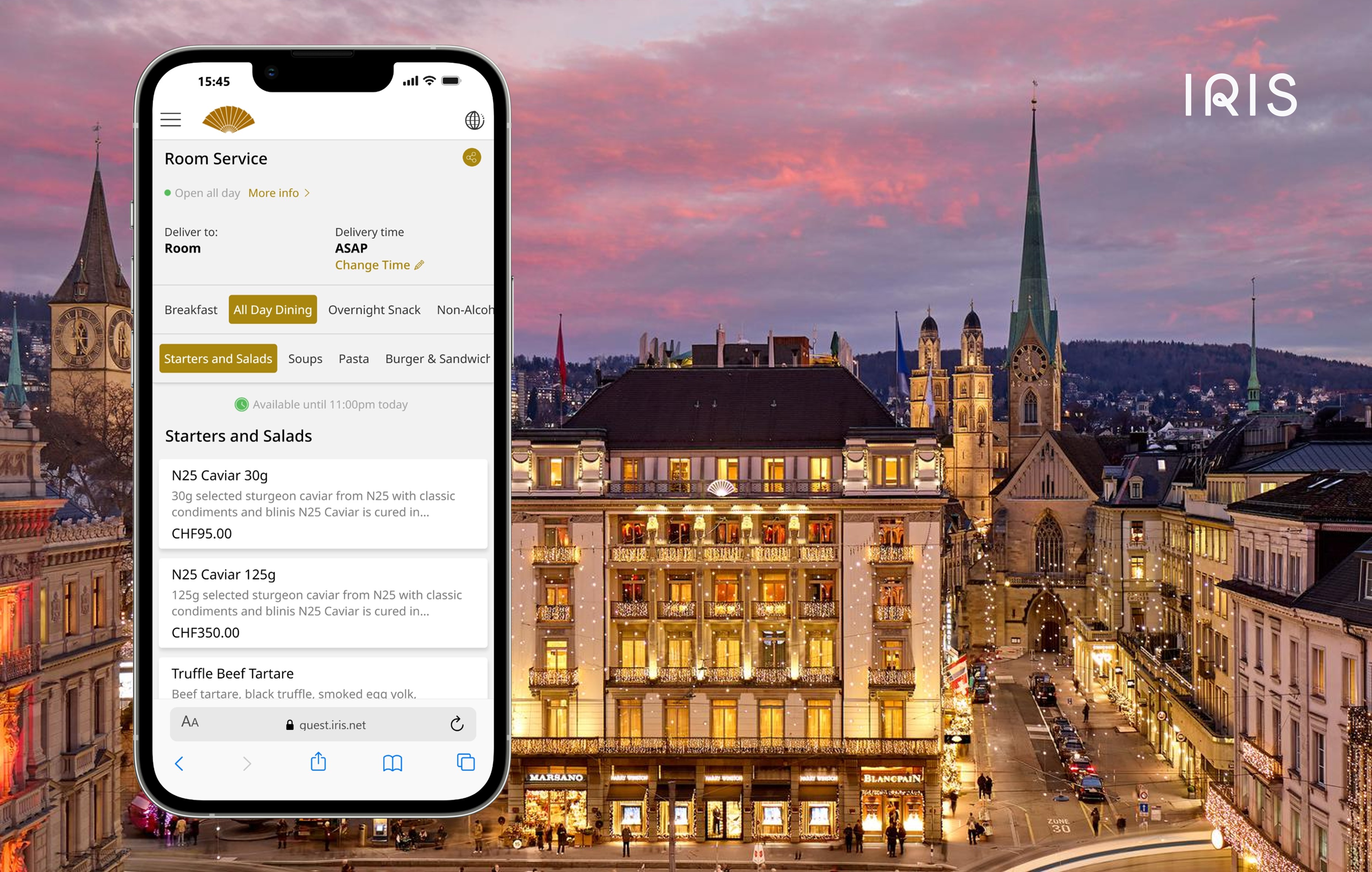
Mandarin Oriental Savoy, Zurich elevates in-room dining with IRIS, driving 27% higher guest spend
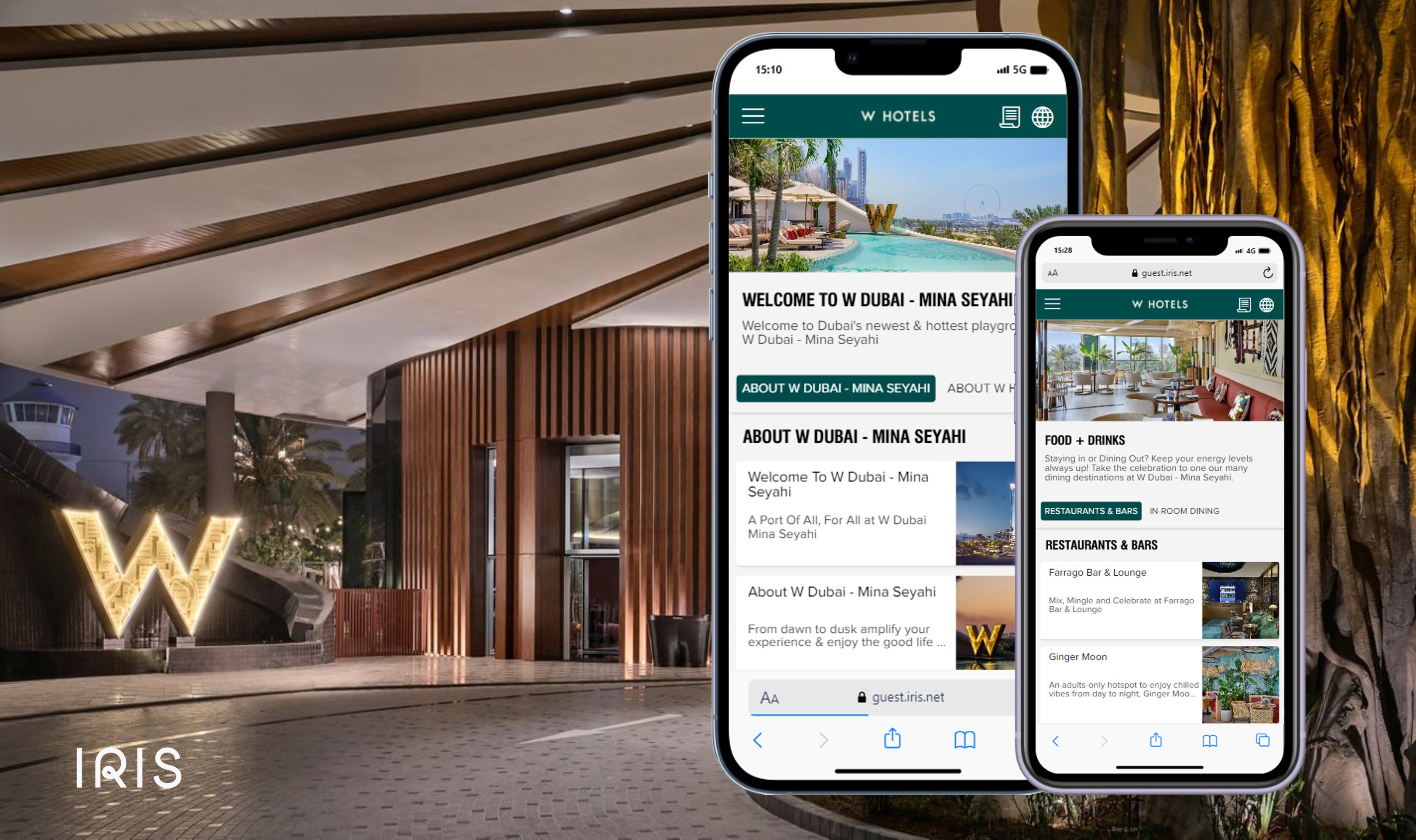
7 proven ways digital guest directories can transform the way guests interact with hotel amenities and services
Blogs (5)
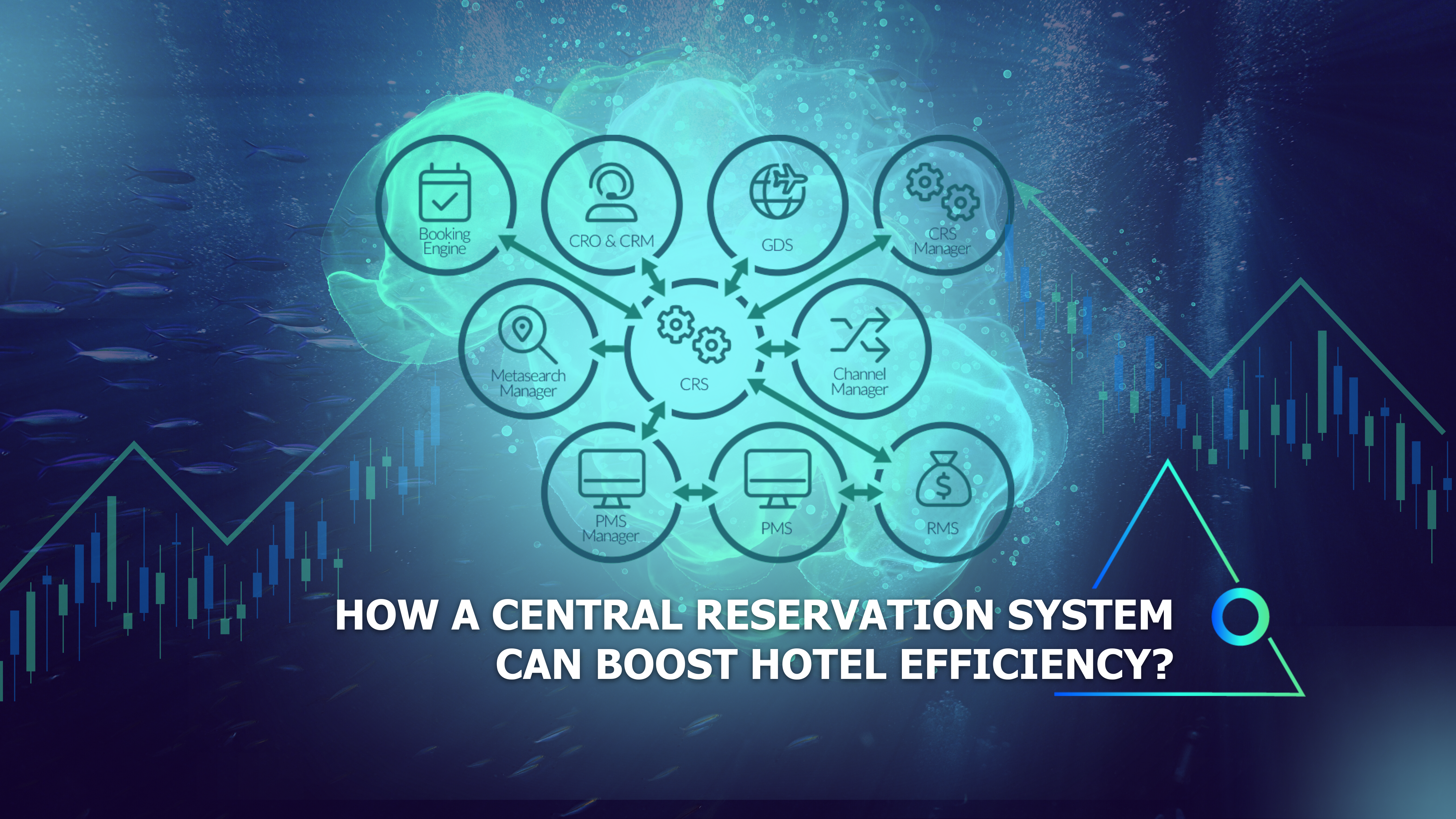
Boost Hotel Efficiency with a Central Reservation System (CRS)

Disruptive Trends & the Future of Hospitality

The Impact of Hotel CRM on Customer Loyalty

Choosing a Revenue Management System for Your Hotel

7 Ways Hospitality Technology Enhances Hotel Operations & Profitability