3
No. of Vendors
3
No. of Products
0
Verified Products
Products (3)

Boostly Bookings Booster
by Boostly Unverified
ProData
by Key Data DashboardUnverified
Market Dashboards
by PriceLabsUnverifiedShort Stay and Vacation Rental Market Intelligence
Short stay and vacation rental operators compete in a market that moves faster than traditional hotel distribution. Nightly rates, occupancy trends, and competitive supply shift continuously across Airbnb, Vrbo, Booking.com, and direct booking channels. Making pricing and investment decisions without real-time market intelligence means consistently leaving revenue on the table or setting rates that the market does not support.
Short Stay and Vacation Rental Market Intelligence platforms give operators the data to understand demand trends, competitive positioning, and market performance across their target markets. Modern platforms combine short-term rental supply and demand analytics, competitive benchmarking, and forward-looking booking pace data to support more informed pricing, acquisition, and growth decisions.
What is Short Stay and Vacation Rental Market Intelligence?
Short
Stay and Vacation Rental Market Intelligence refers to data platforms that aggregate
and analyze supply, demand, pricing, and performance data across short-term
rental markets. They give operators visibility into how their properties
perform relative to comparable listings, how market demand is trending, and
what pricing levels the competitive environment supports.
Core
data capabilities include:
•
Occupancy and revenue performance benchmarking against
comparable properties
•
Market supply analysis including listing counts, property types,
and new entrants
•
Demand trend analysis and forward booking pace visibility
•
Average daily rate and RevPAR comparison across market segments
•
Seasonal and event-driven demand pattern analysis
Why does Market Intelligence matter for short stay operators?
Short-term
rental markets are dynamic and hyperlocal. Demand patterns, competitive supply,
and pricing norms vary significantly not just by city but by neighborhood,
property type, and season. Operators who set prices based on intuition or
simple competitive rate checking consistently underperform relative to those
using systematic market data.
•
Pricing decisions require competitive context: setting rates without
knowing what comparable properties are charging and achieving creates
systematic over or under-pricing
•
Supply changes affect demand distribution: new listings entering
the market reduce each existing operator's share, a trend visible in market
intelligence data before it shows up in individual performance metrics
•
Forward demand data enables proactive pricing: booking pace and
demand trend data allows pricing adjustments before the market moves rather
than after
•
Acquisition and investment decisions depend on market data: understanding average
market RevPAR, occupancy, and growth trends is essential for evaluating new
property investments
What problems does Market Intelligence help solve?
•
Pricing without competitive context: market data reveals
what comparable properties are charging and achieving, enabling evidence-based
pricing rather than guesswork
•
No visibility into market demand trends: forward-looking
demand data surfaces seasonal patterns and event-driven spikes before they
arrive
•
Unknown competitive supply changes: new listing activity
and supply growth trends that affect future demand share are visible in market
intelligence platforms
•
No benchmarking for performance assessment: understanding whether
individual property performance is strong or weak requires comparison against
comparable market data
•
Poor investment decision support: acquisition analysis
without market RevPAR and demand data lacks the commercial foundation for sound
investment decisions
What capabilities should operators expect?
•
Occupancy, ADR, and RevPAR benchmarking against configurable
competitive sets
•
Market supply tracking including new listing activity and
property type mix
•
Demand trend and booking pace data for forward-looking pricing
decisions
•
Seasonal and event demand pattern analysis
•
Integration with short stay and vacation rental revenue
management systems
How does Market Intelligence fit into the short stay technology ecosystem?
•
Short stay and vacation rental revenue management: market intelligence
data feeds pricing strategy and dynamic rate optimization
•
Short stay and vacation rental property management systems: performance data
informs operational planning and investment decisions
•
Channel management platforms: market demand
insights inform channel mix and distribution strategy decisions
Which operator types benefit most?
•
Professional vacation rental managers: managing multiple
properties benefit from market benchmarking that identifies performance gaps
and pricing opportunities
•
Short stay property investors: making acquisition
decisions need market RevPAR, demand, and supply data to assess investment
viability
•
Operators in competitive urban markets: where supply growth
and demand volatility make market intelligence most commercially valuable
•
Operators expanding into new markets: need market data to
understand pricing norms, seasonal patterns, and competitive dynamics before
committing investment
What should operators evaluate before selecting a platform?
•
Market and geographic coverage: the platform must
cover the specific markets and property types relevant to the operator's
portfolio
•
Data recency and update frequency: short-term rental
markets move quickly and intelligence data must be updated frequently to remain
actionable
•
Competitive set configurability: operators need to
define their own comparable set rather than relying on platform-generated
groupings
•
Forward-looking demand data: booking pace and demand trend data for
future periods is more commercially valuable than historical performance alone
•
Revenue management integration: market data should
feed directly into pricing tools rather than requiring manual transfer
What common mistakes should operators avoid?
•
Using market intelligence data as a lagging rather than
leading indicator: the most valuable use of market data is forward-looking
pricing and supply monitoring, not explaining past performance
•
Comparing against an inappropriate competitive set: benchmarking against
properties that do not actually compete for the same guests produces misleading
performance signals
•
No integration with pricing strategy: market intelligence
that is reviewed periodically but does not connect to day-to-day pricing
decisions delivers limited commercial return
•
Treating market data as a substitute for local knowledge: data platforms
provide market context but local demand drivers and property-specific factors
require operator judgment
How has Short Stay and Vacation Rental Market Intelligence evolved?
Short-term
rental market intelligence emerged as a distinct technology category from
around 2014 as platforms including AirDNA began aggregating Airbnb listing and
performance data at scale. The growth of professional short-term rental
management from around 2018 created demand for more sophisticated competitive
benchmarking and forward-looking demand tools. By 2025, AI-powered demand
forecasting and real-time booking pace data had become standard capabilities in
leading short-term rental intelligence platforms.
What trends are shaping Short Stay Market Intelligence?
•
AI-powered demand forecasting: machine learning
models are improving the accuracy of forward demand predictions across complex
short-term rental markets
•
Neighborhood and micro-market granularity: operators are
demanding intelligence at the street and neighborhood level rather than
city-wide aggregations
•
Integration with dynamic pricing tools: market intelligence
and revenue management are converging into unified platforms for short-term
rental operators
•
Regulatory impact monitoring: tracking the effect
of short-term rental regulations on market supply and demand has become an
important intelligence capability
What impact can Market Intelligence deliver?
•
Improved revenue performance through evidence-based pricing
informed by competitive market data
•
Earlier identification of demand opportunities and supply
threats
•
Better investment decisions through market RevPAR and demand
trend analysis
•
Stronger competitive positioning through systematic performance
benchmarking
What should operators prioritize when comparing providers?
Operators
evaluating Short Stay and Vacation Rental Market Intelligence platforms should
assess market coverage, data recency, forward-looking demand capability, and
integration with revenue management tools as the primary criteria.
•
Market and property type coverage: data must cover the
specific markets and listing categories relevant to the operator's portfolio
•
Forward demand and booking pace data: future-oriented data
is more commercially valuable than historical performance alone
•
Competitive set flexibility: operators must be able to define their
own comparable set
• Revenue management integration: market data should connect directly with pricing tools
Blogs (5)
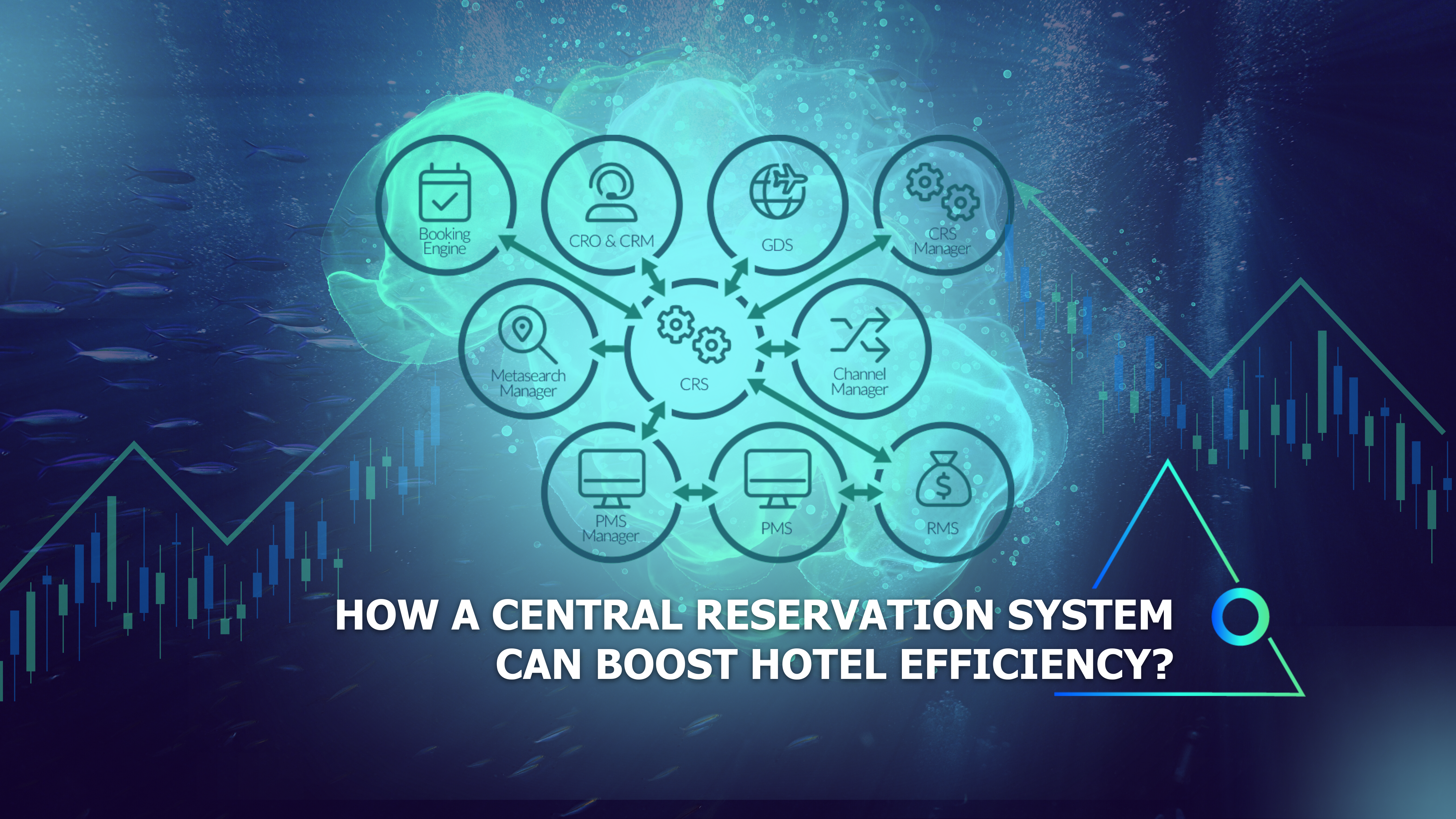
Boost Hotel Efficiency with a Central Reservation System (CRS)

Disruptive Trends & the Future of Hospitality

The Impact of Hotel CRM on Customer Loyalty

Choosing a Revenue Management System for Your Hotel

7 Ways Hospitality Technology Enhances Hotel Operations & Profitability