13
No. of Vendors
14
No. of Products
6
Verified Products
CHECKOUT OUR LATEST ARTICLE

Li Hawkins
Project management & innovationProducts (14)
AI Powered

Blastness - Market Intelligence
by Blastness Vendor verified
AI Powered
Knowland by Cendyn
by CendynVendor verified
Amadeus Demand360+
by AmadeusVendor verifiedAI Powered

Amadeus Agency360
by AmadeusVendor verified
Mabrian for Hotels
by Mabrian TechnologiesVendor verified.jpg)
Demand AI
by RateGain Partially verified
MarketMinder
by AirDNA Unverified
Dingus DataHotel
by DingusUnverified
ForwardKeys Nexus
by ForwardKeysUnverifiedMarket Intelligence Tools for Hotels
Good commercial decisions in hospitality require more than internal data. Pricing, positioning, and demand strategy all depend on understanding what is happening in the market around you, not just within your own property.
Market Intelligence Tools address this by consolidating competitor activity, demand trends, guest sentiment, and market pricing data into a single commercial visibility environment. Modern platforms have evolved well beyond basic competitor rate tracking into broader strategic intelligence tools that support pricing strategy, demand forecasting, consumer sentiment analysis, and connected commercial decision-making across the wider hospitality landscape.
What are Market Intelligence Tools for hotels?
Hotel
Market
Intelligence Tools are technology platforms that aggregate and analyze external
market data to provide competitive benchmarking, demand trend analysis, and
market performance context. They give hotel commercial teams visibility into
how their property performs relative to the competitive set and how market
conditions are evolving across demand, supply, and segmentation dimensions.
Core
functions include:
•
Competitive performance benchmarking for occupancy, ADR, and
RevPAR against defined competitive sets
•
Market demand trend analysis and forward-looking demand signals
•
Segmentation data showing market mix by source, channel, and
guest type
•
New supply monitoring and competitive hotel pipeline tracking
•
Integration with hotel business intelligence tools and revenue
management system (RMS)
Why do Market Intelligence Tools matter for hotels?
Internal
data tells hotels what has happened within their own four walls. Market
intelligence tells them what is happening in the market around them. The
combination of both is what enables genuinely informed commercial decisions
about pricing strategy, distribution mix, and commercial investment priorities.
Without market context, hotels cannot distinguish between strong absolute
performance and performance that is simply rising with a rising market.
•
RevPAR index measures competitive performance more accurately
than absolute RevPAR: a hotel that grows RevPAR while losing RevPAR index is
underperforming relative to its market potential despite positive absolute
numbers
•
Demand trend data enables proactive commercial strategy: understanding how
market demand is trending allows commercial teams to adjust pricing and
promotional strategy before conditions change rather than after
•
New supply affects future demand distribution: competitive set
additions and renovations visible in pipeline data allow hotels to anticipate
market share shifts before they occur in booking data
•
Segmentation benchmarking reveals strategic gaps: understanding how the
market's channel and segment mix compares with the hotel's own mix identifies
distribution and commercial opportunities
What problems do Market Intelligence Tools help solve?
•
Internal performance data without market context: market benchmarking
places the hotel's own occupancy, rate, and RevPAR performance against
comparable competitive set performance for accurate assessment
•
No visibility into future market demand conditions: forward-looking
demand indicators and event data provide the market context for proactive
pricing and promotional strategy
•
Unknown competitive supply changes affecting demand
distribution: new hotel openings and major renovations in the competitive
set visible in pipeline data help commercial teams anticipate market share
shifts
•
Segmentation strategy without market comparison: benchmarking the
hotel's own channel and segment mix against market averages reveals whether
current distribution strategy is aligned with market opportunity
•
Asset management and investment decisions without market
evidence:
RevPAR benchmarking and demand trend data provide the market evidence that
ownership and investment decisions require
What capabilities should hotels expect?
•
STR or equivalent market benchmarking data for competitive set
performance across occupancy, ADR, and RevPAR
•
Forward-looking demand indicators and booking pace data for
future periods
•
New supply and competitive set pipeline monitoring
•
Segmentation and channel mix benchmarking
•
Integration with hotel business intelligence tools and revenue
management system (RMS)
How do Market Intelligence Tools fit into the hotel technology ecosystem?
•
Hotel business intelligence tools: market data
integrates with internal performance data in BI platforms for combined internal
and external commercial analysis
•
Revenue management system (RMS): market demand and
competitive data feeds RMS pricing models for market-aware rate optimization
decisions
•
Rate shopping tools: competitive rate data from rate shopping
tools complements the market performance benchmarking that market intelligence
provides
•
Financial planning and reporting: market performance
context informs budget assumptions and the commercial targets set for revenue
management strategy
Which hotel stakeholders benefit most?
•
Revenue managers and commercial directors: who need market
context for pricing strategy, competitive positioning, and distribution channel
decisions
•
Hotel general managers: who require competitive benchmarking to
assess property performance accurately and communicate results to ownership
groups
•
Asset managers and ownership groups: who use market
intelligence for performance evaluation, management company accountability, and
investment decisions
•
Development and acquisition teams: who use demand trend
and supply pipeline data to evaluate new development sites and hotel
acquisition opportunities
What should hotels evaluate before selecting a platform?
•
Competitive set coverage and data accuracy: the platform must
cover the hotels that genuinely compete for the same guests in the relevant
market segments
•
Forward-looking demand data quality: booking pace and
demand trend indicators must be sufficiently timely and granular to inform
day-to-day commercial decisions
•
BI and RMS integration capability: market data delivers
most value when it connects directly with internal performance analytics and
revenue management pricing tools
•
Segmentation and channel mix data depth: benchmarking must
extend beyond occupancy and rate into the segmentation detail that distribution
and commercial strategy decisions require
•
Reporting accessibility for commercial teams: market intelligence
must be accessible to revenue managers and commercial directors without
requiring data analyst mediation
What common mistakes should hotels avoid?
•
Defining the competitive set inaccurately: benchmarking against
hotels that do not actually compete for the same guests and occasions produces
misleading performance signals that can drive poor commercial decisions
•
Using market data as an explanation rather than a prompt for
action:
market intelligence is most valuable when it drives commercial decisions rather
than providing retrospective context for results already achieved
•
Treating market intelligence as a revenue management tool
only:
asset management, investment decision, and general management applications of
market data are as commercially important as revenue management use cases
•
No process for acting on market insights: market intelligence
platforms deliver value only when commercial teams have defined processes for
incorporating market data into regular pricing, strategy, and investment
decision cycles
How have Market Intelligence Tools evolved?
Hotel
market intelligence has evolved from periodic industry survey reports into
real-time data platforms. STR (now CoStar) established competitive benchmarking
as a standard hotel commercial practice from the 1980s through weekly and
monthly benchmarking reports. The digitization of hotel distribution from
around 2010 created the data infrastructure for real-time demand signal
analysis. By 2025, platforms combining competitive benchmarking, forward demand
indicators, supply pipeline, and channel segmentation data had become standard
commercial management tools for professionally operated hotels of all sizes and
ownership structures.
What trends are shaping Market Intelligence Tools?
•
Alternative data sources improving demand forecasting: search trends, event
data, and flight booking signals are being incorporated alongside traditional
benchmarking data for more accurate forward demand insight
•
Real-time market data replacing weekly reporting cycles: faster data refresh
is enabling market intelligence to inform day-to-day pricing decisions rather
than only weekly or monthly strategy reviews
•
Integration with AI-powered commercial analytics: market intelligence
data is being incorporated into AI platforms that identify commercial
opportunities and anomalies automatically
•
Total revenue benchmarking beyond room metrics: market intelligence
is expanding from RevPAR benchmarking into F&B, meeting space, and total
hotel revenue comparison for a complete competitive picture
What impact can Market Intelligence Tools deliver?
•
Competitive performance context that transforms how internal
results are interpreted and communicated
•
Forward-looking demand visibility enabling proactive commercial
strategy adjustments
•
Supply pipeline intelligence allowing advance preparation for
competitive set changes
•
Better commercial decision-making through market evidence
alongside internal operational data
What should hotels prioritize when comparing providers?
Hotels
evaluating Market Intelligence Tools should prioritize competitive set coverage
accuracy, forward-looking demand data quality, hotel business intelligence and
RMS integration capability, and reporting accessibility for commercial teams.
•
Competitive set coverage and accuracy: the data must
accurately reflect the hotel's actual competitive environment for benchmarking
to be meaningful
•
Forward demand data quality: booking pace and demand indicators
must be timely enough to inform commercial decisions before the market moves
•
BI and RMS integration: market data value multiplies significantly
when connected to internal performance analytics and revenue management pricing
tools
•
Commercial team accessibility: intelligence must
reach revenue managers and commercial directors without analyst mediation for
day-to-day use
News (5)

What ChatGPT’s decision to move away from in-platform transactions means for hotels

AI is rewiring how people choose hotels
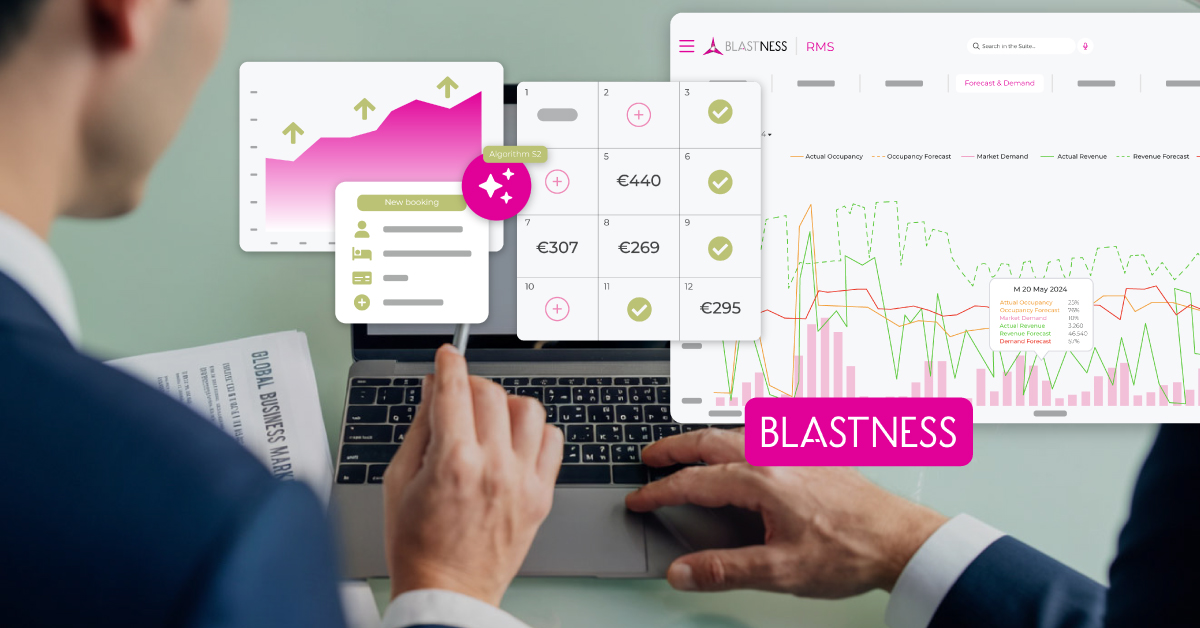
How to choose the right RMS for your property
How to choose the right RMS for your property

How hotels can navigate sudden shifts in global travel demand
Blogs (5)
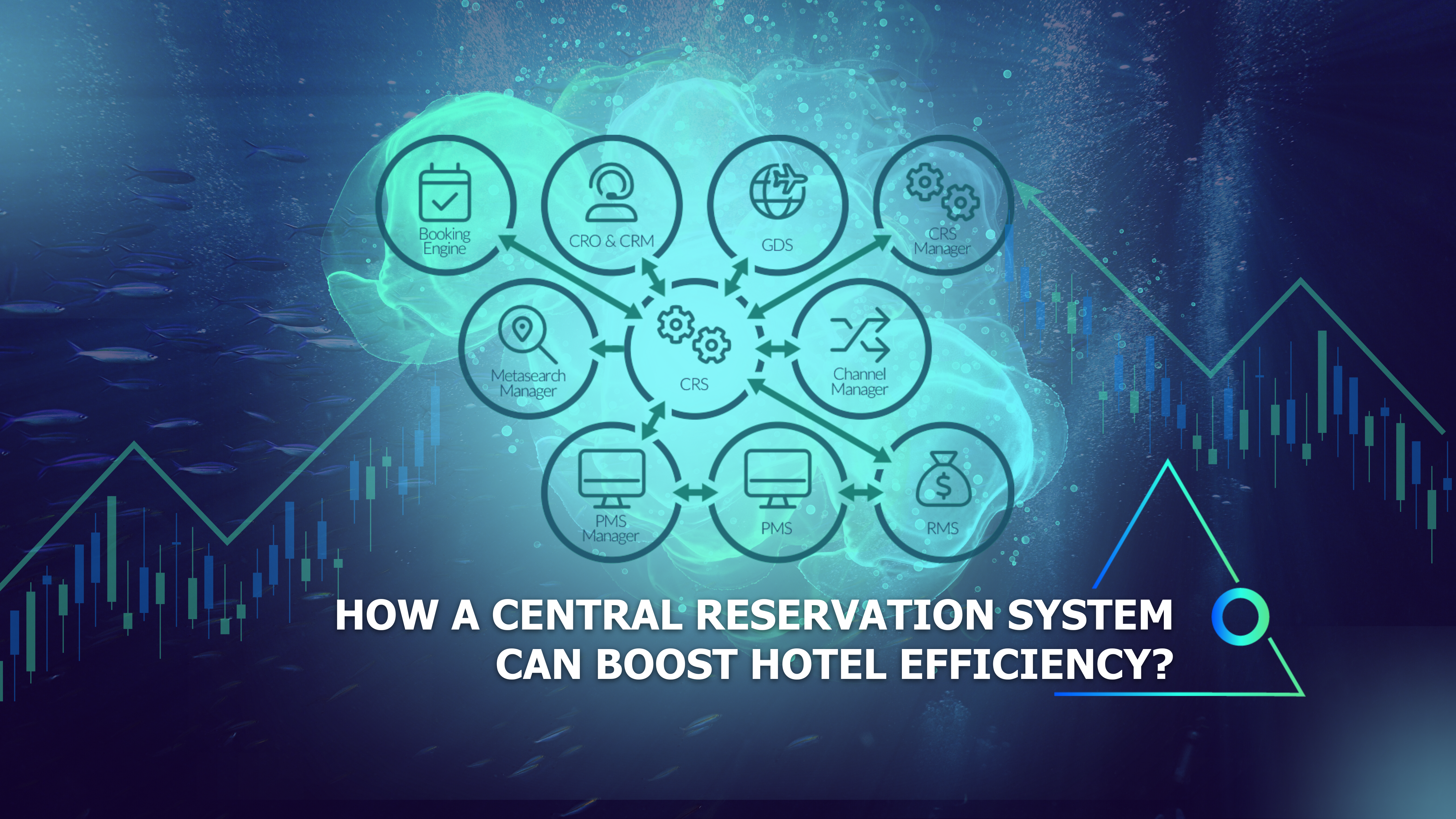
Boost Hotel Efficiency with a Central Reservation System (CRS)

Disruptive Trends & the Future of Hospitality

The Impact of Hotel CRM on Customer Loyalty
Choosing a Revenue Management System for Your Hotel

7 Ways Hospitality Technology Enhances Hotel Operations & Profitability