4
No. of Vendors
4
No. of Products
1
Verified Products
CHECKOUT OUR LATEST ARTICLE
Products (4)
AI Powered

GuestRevu Surveys
by GuestRevu Vendor verified
AI Powered

VenueVerdict CX
by BVA BDRC Unverified
IN-Gauge
by Frontline Performance GroupUnverified
CustomerMX
by HoickUnverifiedCustomer Experience Diagnostics for hotels
Most hotels know when guest experience has failed because guests tell them, in reviews, in complaints, or through declining return visit rates. Far fewer hotels have the visibility to understand why experience is failing, where specifically it is failing, and what operational changes would most reliably improve it.
Customer Experience Diagnostics platforms address this by giving hotels structured tools to measure, analyze, and improve guest experience performance across the full stay journey. Modern platforms combine survey design, sentiment analysis, journey mapping, operational benchmarking, and closed-loop feedback management to transform guest experience from a qualitative aspiration into a measurable and improvable operational discipline.
What are Customer Experience Diagnostics platforms?
Customer
Experience Diagnostics is a hospitality technology category that provides hotels
with structured tools for measuring and analyzing guest experience across the
full stay journey. Rather than relying solely on post-stay reviews, these
platforms collect targeted feedback at multiple touchpoints, analyze patterns
across the guest journey, and connect experience insights with the operational
workflows responsible for delivery.
Core
functions include:
•
Multi-touchpoint survey design and distribution across
pre-arrival, in-stay, and post-stay
•
Guest experience scoring and sentiment analysis by journey stage
and department
•
Operational driver analysis identifying which service factors
most influence overall satisfaction
•
Benchmarking against brand standards and competitive set
experience scores
•
Closed-loop case management for guest recovery and operational
follow-up
Why does it matter for hotels?
Online
reviews provide a lagging indicator of guest experience performance. By the
time a pattern of negative feedback becomes visible in review scores, the
operational issue has already affected hundreds of guests. Customer experience
diagnostics platforms shift hotels from reactive review management to proactive
experience measurement, identifying problems while they can still be resolved
within the stay or before they recur.
•
In-stay feedback enables real-time service recovery: identifying
dissatisfied guests during their stay and addressing issues immediately
dramatically improves the likelihood of a positive review and repeat visit
•
Journey-level analysis surfaces root causes: understanding which
specific touchpoints drive dissatisfaction enables targeted operational
improvement rather than generic service training
•
Driver analysis prioritizes improvement investment: hotels with limited
resources benefit from knowing which experience factors have the greatest
impact on overall satisfaction scores
•
Experience benchmarking provides competitive context: internal satisfaction
scores without external comparison cannot distinguish between genuinely strong
performance and mediocre market standards
What problems does it help solve?
•
Reactive experience management based on post-stay reviews
only:
hotels that measure experience only after checkout cannot identify or recover
dissatisfied guests while they are still on property
•
No visibility into which journey stages drive dissatisfaction: aggregate
satisfaction scores without touchpoint-level analysis cannot identify where
operational investment will have the most impact
•
Disconnection between guest feedback and operational
accountability: experience data that is not routed to the departments
responsible for delivery produces no operational improvement
•
Inconsistent experience measurement across properties: hotel groups without
standardized experience measurement cannot compare performance or identify
which properties have the strongest and weakest guest experience
•
Lost recovery opportunities during the stay: guests who are
dissatisfied mid-stay but not identified leave without resolution and
frequently share their experience publicly
What capabilities should hotels expect?
Modern
customer experience diagnostics platforms provide the analytical infrastructure
to move from measuring satisfaction to understanding and improving it.
•
Multi-touchpoint surveys covering pre-arrival, check-in,
in-stay, and post-checkout stages
•
AI-supported sentiment analysis across survey responses and
open-ended feedback
•
Operational driver analysis showing which service factors most
influence satisfaction scores
•
Real-time in-stay alerts for dissatisfied guests enabling
immediate service recovery
•
Integration with CRM, PMS, and reputation management platforms
How does it fit into the hotel technology ecosystem?
•
CRM platforms: connect experience data with guest profiles
to support personalized recovery, retention strategies, and loyalty management
•
Property Management Systems (PMS): link satisfaction
scores with stay records to identify patterns by segment, room type, booking
channel, and rate category
•
Reputation Management platforms: complement post-stay
review monitoring with structured survey data that provides more granular and
actionable feedback
•
Business Intelligence (BI) platforms: incorporate
experience scores alongside commercial and operational metrics for holistic
hotel performance reporting
Which hotel types benefit most?
•
Full-service hotels with complex guest journeys: benefit most from
multi-touchpoint diagnostics that identify experience gaps across multiple
departments and service stages
•
Luxury and upscale properties: where the gap between
guest expectations and experience delivery is most commercially consequential
•
Branded hotel groups: require standardized experience measurement
frameworks that enable meaningful cross-property comparison and brand standard
tracking
•
Hotels focused on loyalty and repeat business: benefit from
experience diagnostics that identify the specific factors that drive guest
return intent and loyalty program engagement
What should hotels evaluate before selecting a platform?
•
Survey design flexibility: the platform must support customizable
touchpoint surveys that reflect the hotel's specific journey stages and service
model
•
In-stay alert capabilities: real-time notification of dissatisfied
in-stay guests is one of the most commercially valuable features to evaluate
•
Operational driver analysis quality: assess how
effectively the platform identifies which experience factors most influence
overall satisfaction
•
Closed-loop case management: guest recovery workflows must connect
feedback with the departments responsible for resolution and track outcomes
•
Integration with CRM and PMS: experience data must
be connectable to guest profiles and stay records to support personalized
recovery and trend analysis
What common mistakes should hotels avoid?
•
Measuring satisfaction without acting on results: survey data that is
collected but not connected to operational improvement workflows produces no
guest experience improvement
•
Over-surveying guests: excessive feedback requests at multiple
touchpoints create survey fatigue that reduces response rates and annoys guests
•
Focusing only on overall satisfaction scores: aggregate scores
without touchpoint-level and driver analysis cannot identify where operational
investment will have the most impact
•
No in-stay recovery process: hotels that measure in-stay
satisfaction but have no process for responding to dissatisfied guests in real
time miss the most valuable recovery opportunity
How have Customer Experience Diagnostics platforms evolved?
Customer
experience measurement in hospitality has shifted from annual satisfaction
surveys and post-stay comment cards into real-time, multi-touchpoint diagnostic
platforms. The introduction of AI-supported driver analysis and in-stay
feedback tools has transformed the category from a periodic measurement
exercise into a continuous operational improvement discipline. By 2025,
real-time in-stay feedback with automated service recovery alerts had become a
defining capability of leading customer experience diagnostics platforms.
What trends are shaping Customer Experience Diagnostics platforms?
•
AI-powered experience prediction: platforms are
beginning to predict which guests are likely to become dissatisfied based on
operational signals before they self-report through surveys
•
Journey orchestration integration: experience
diagnostics are becoming more connected with guest messaging and CRM tools to
enable more personalized and proactive service delivery
•
Total experience measurement: hotels are expanding
diagnostics beyond the stay itself to include pre-arrival digital touchpoints
and post-stay engagement quality
•
Experience as a revenue strategy input: satisfaction driver
data is increasingly informing decisions about where to invest in service
improvement, facility renovation, and staff training
What impact can it deliver?
•
Higher satisfaction scores through systematic identification and
resolution of recurring experience failures
•
Improved review scores and OTA ranking through better in-stay
recovery and post-stay follow-up
•
Stronger guest retention through experience-driven loyalty and
personalized recovery strategies
•
More focused operational improvement investment directed by
driver analysis rather than intuition
What should hotels prioritize when comparing providers?
Hotels
evaluating Customer Experience Diagnostics platforms should look beyond survey
tools and assess how effectively a solution transforms guest feedback into
operational intelligence that drives measurable improvement in service
delivery.
•
In-stay alert and recovery capabilities: real-time
identification and resolution of dissatisfied in-stay guests is the
highest-value capability to prioritize
•
Driver analysis quality: the platform should identify which
specific experience factors most influence satisfaction, not just measure
scores
•
Touchpoint coverage and survey flexibility: feedback must be
collectible at the specific journey stages most relevant to the hotel's service
model
•
Integration with CRM and operational systems: experience data must
connect with guest profiles and departmental workflows to drive closed-loop
improvement
News (2)

Optimising Your Hotel’s Online Listings

Optimising Your Hotel’s Online Listings
Blogs (5)
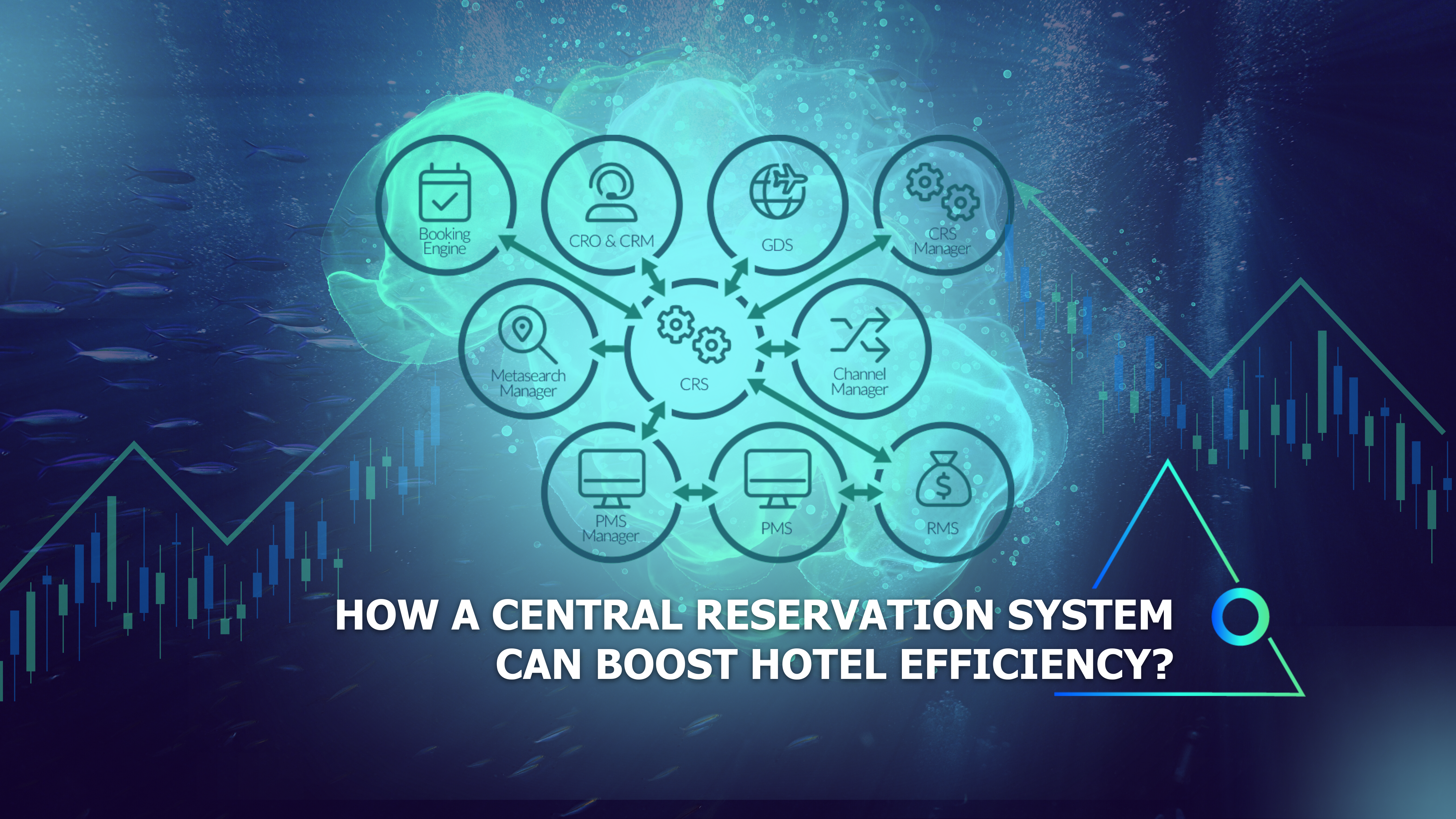
Boost Hotel Efficiency with a Central Reservation System (CRS)

Disruptive Trends & the Future of Hospitality

The Impact of Hotel CRM on Customer Loyalty

Choosing a Revenue Management System for Your Hotel

7 Ways Hospitality Technology Enhances Hotel Operations & Profitability