151
No. of Vendors
167
No. of Products
15
Verified Products
CHECKOUT OUR LATEST ARTICLE
Products (167)

Infrasys POS
by Shiji Vendor verified
Agilysys InfoGenesis
by AgilysysVendor verified
Apicbase
by ApicbaseVendor verified
GoTab
by GoTabVendor verified
HotelTime Vento POS
by HotelTime SolutionsVendor verified
Oracle MICROS Simphony POS
by Oracle HospitalityVendor verified
Touché POS
by Prologic FirstVendor verified
SORASO POS
by SORASO by Smart FinderVendor verified
TNG GO! F&B Mobile App
by TNG InternationalVendor verifiedRestaurant Management Software and POS for Hotels
Every food and beverage operation depends on point of sale technology at its operational core. Orders must be captured, routed to production, tracked through service, and settled at payment. The quality of the restaurant management software and POS system used determines how efficiently this happens, how accurately it is recorded, and how much commercial intelligence the operation can draw from its transaction data.
Restaurant Management Software and POS platforms are the operational backbone of food and beverage businesses. They manage order taking, table management, kitchen communication, payment processing, and sales reporting across restaurant, bar, café, and hotel F&B environments. Modern platforms have evolved from standalone till systems into connected management environments that integrate with kitchen display systems, reservation software, food costing software, and financial accounting infrastructure.
What is Restaurant Management Software and POS?
Restaurant
Management Software and POS refers to the integrated technology platform that manages
food and beverage operations from order capture through kitchen production,
service, and payment. It combines point of sale transaction processing with
table management, staff management, menu configuration, and sales reporting
within a single connected operational environment.
Core
functions include:
•
Order capture and management across dine-in, takeaway, and
delivery channels
•
Table and floor plan management
•
Kitchen order routing to kitchen display systems
•
Payment processing across all tender types
•
Sales reporting and operational analytics
Why does Restaurant Management Software and POS matter?
Every
transaction in a food and beverage operation passes through the POS. It is the
single system that touches every aspect of service from the moment an order is
placed to the moment it is paid for. The quality of the POS determines order
accuracy, kitchen communication speed, payment efficiency, and the quality of
the sales data that management decisions depend on.
•
Order accuracy depends on reliable order capture and routing: errors introduced at
the POS create the wrong dishes, missed items, and billing disputes that damage
the guest experience
•
Kitchen efficiency requires real-time order communication: POS integration with
kitchen display systems eliminates the delays and misreads of paper ticket
communication
•
Payment speed at busy periods affects throughput: fast, reliable
payment processing reduces the time guests wait to pay, improving table
turnover
•
Management decisions depend on POS data quality: sales by item,
period, and cover provide the commercial intelligence that menu engineering and
staffing decisions require
What problems does Restaurant Management Software and POS help solve?
•
Order errors from manual or paper-based processes: digital order capture
with kitchen display integration eliminates the transcription errors of verbal
and paper relay
•
Slow payment processing creating table turnover bottlenecks: integrated payment
terminals with split bill and multiple tender support accelerate checkout for
large parties and busy services
•
No sales intelligence for commercial management: POS reporting
provides the item, category, and cover data that food costing software and
management decisions require
•
Disconnected delivery and online ordering channels: modern POS platforms
consolidate dine-in, takeaway, and delivery orders into a single management
environment
•
Manual end-of-day reconciliation consuming management time: automated daily
reporting and cash management tools reduce the administrative overhead of
period-end processes
What capabilities should operations expect?
•
Intuitive order entry optimized for service pace in busy
environments
•
Table management with cover tracking and turn time visibility
•
Kitchen display system integration for order routing
•
Multi-channel order management including dine-in, takeaway,
delivery, and online orders
•
Integration with food costing software, restaurant accounting
software, and reservation software
How does Restaurant Management Software and POS fit into the technology ecosystem?
•
Kitchen display systems: POS routes orders to kitchen screens
for production management and timing coordination
•
Food costing software: POS sales data connects with recipe costs for
theoretical versus actual food cost analysis
•
Restaurant accounting software: POS revenue data
feeds into F&B financial reporting and accounts
•
Restaurant reservation software: reservation and
covers data from reservation systems inform table management within the POS
Which operation types benefit most?
•
Full-service restaurants and hotel dining outlets: where table
management, course firing, and split billing complexity requires dedicated
restaurant POS capability
•
High-volume quick service and café operations: where order speed,
queue management, and throughput depend on fast, reliable point of sale
processing
•
Multi-outlet food and beverage operations: where centralized
menu management, consolidated reporting, and consistent processes across venues
require connected POS infrastructure
•
Delivery and multi-channel operations: where managing orders
from multiple channels within a single operational environment requires unified
POS management
What should operations evaluate before selecting a platform?
•
Kitchen display system integration: order routing to
kitchen screens is the most operationally critical integration for service
quality
•
Payment terminal compatibility: the POS must support
the payment hardware and tender types used by the operation
•
Multi-channel order management: dine-in, takeaway,
online, and delivery orders should be managed within the same POS environment
•
Reporting depth and accessibility: sales data must be
accessible in formats that support food costing and management decision-making
•
Hotel PMS integration where applicable: for hotel F&B
operations, room charge posting and guest recognition require PMS connectivity
What common mistakes should operations avoid?
•
Selecting POS based on price rather than kitchen integration
quality:
the most important operational impact of the POS is kitchen communication, and
systems with poor kitchen display integration create the service failures that
low price does not justify
•
Insufficient staff training before service deployment: POS systems deployed
without adequate staff training produce the order errors and slow service that
training would prevent
•
No reporting review process alongside deployment: POS reporting only
improves decisions when management actively uses the data it generates
•
Underestimating multi-channel complexity: operations that
manage delivery and online orders through separate tablets alongside the POS
create the operational chaos that unified channel management prevents
How has Restaurant Management Software and POS evolved?
Restaurant
POS has evolved from standalone cash registers into connected management
platforms. The shift to cloud-based POS architecture from around 2015 enabled
real-time reporting, multi-site management, and open API integration that
traditional POS systems could not provide. By 2025, cloud-native POS platforms
with integrated kitchen display, online ordering, and delivery consolidation
had become the standard expectation for professionally operated food and
beverage businesses across restaurant, hotel, and multi-site environments.
What trends are shaping Restaurant Management Software and POS?
•
Cloud-native architecture enabling multi-site management: cloud POS platforms
provide real-time centralized management across multiple locations from a
single environment
•
Open API ecosystems expanding integration capability: modern POS platforms
with open APIs integrate with a growing ecosystem of specialist tools for
costing, reservations, and loyalty
•
AI-powered sales and waste analytics: machine learning is
improving the operational insight generated from POS transaction data
•
Unified omnichannel order management: dine-in, online,
delivery, and kiosk orders converging within a single POS environment is
reducing the operational complexity of multi-channel food service
What impact can Restaurant Management Software and POS deliver?
•
Improved order accuracy through digital capture and kitchen
display integration
•
Better table and throughput management through real-time floor
visibility
•
Richer commercial intelligence through comprehensive sales
reporting
•
Reduced administrative overhead through automated reporting and
reconciliation
What should operations prioritize when comparing providers?
Operations
evaluating Restaurant Management Software and POS should prioritize kitchen
display integration, multi-channel order management, reporting depth, and the
integration ecosystem that connects POS with food costing, accounting, and
reservation platforms.
•
Kitchen display system integration: kitchen communication
quality is the most operationally significant POS capability
•
Multi-channel order management: dine-in, online, and
delivery orders must be manageable within a single environment
•
Reporting and analytics: sales data must support food costing
and commercial management
• Integration ecosystem: connectivity with costing, accounting, and reservation platforms determines total operational value
Start your comparison
on ExploreTECH
News (5)

Mews is named official PMS of AAHOA: a partnership built for modern hotel ownership
.png)
From PMS to operating system: Mews OS and the next era of hospitality tech
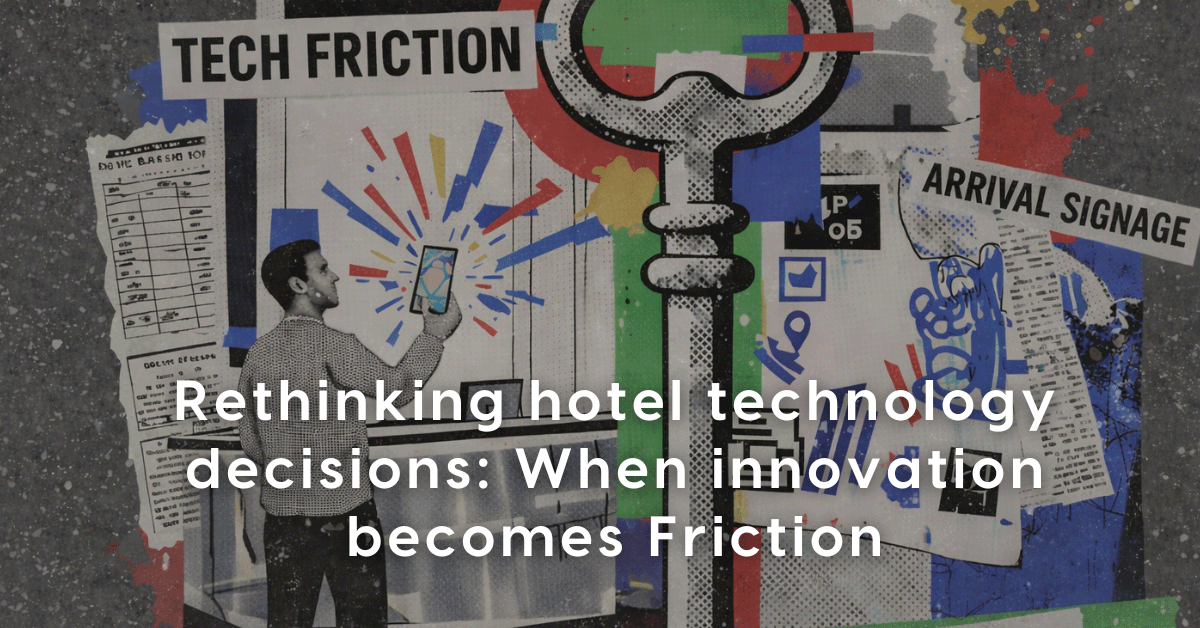
When innovation becomes friction: rethinking hotel technology decisions
.png)
FLYR Hospitality Now Available on Shiji Daylight PMS
.png)
12 strategies to maximize hotel group business and boost revenue
Blogs (5)
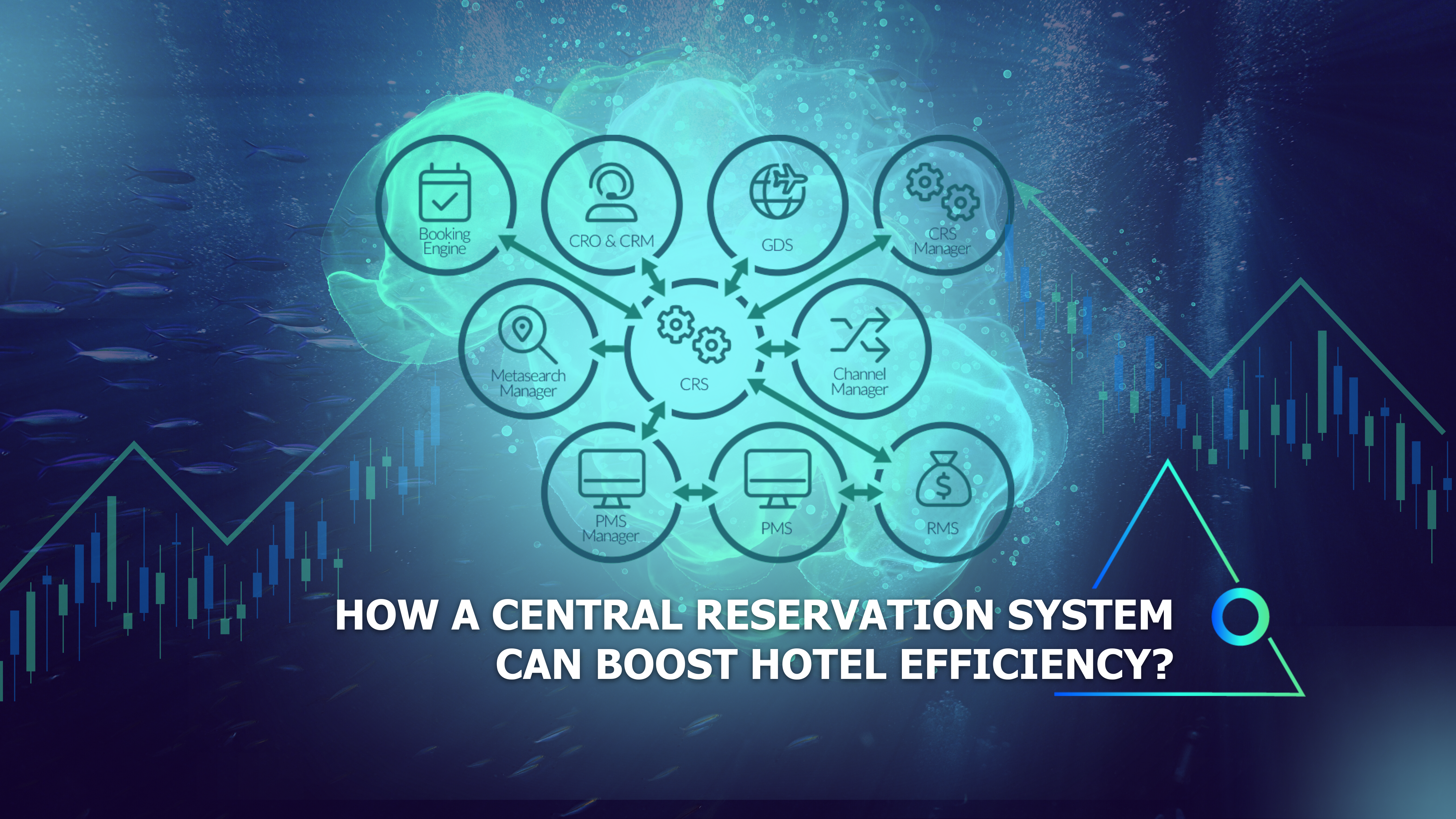
Boost Hotel Efficiency with a Central Reservation System (CRS)

Disruptive Trends & the Future of Hospitality

The Impact of Hotel CRM on Customer Loyalty
Choosing a Revenue Management System for Your Hotel

7 Ways Hospitality Technology Enhances Hotel Operations & Profitability