5
No. of Vendors
5
No. of Products
2
Verified Products
CHECKOUT OUR LATEST ARTICLE

Products (5)

DynamEat
by DynamEat Vendor verified
PerfectCheck
by PerfectCheckVendor verified
JUICER
by JUICER Unverified
R365 Store Operations
by Restaurant365Unverified
Sauce Pricing
by Sauce PricingUnverifiedRestaurant Revenue Management
Restaurants operate with a fixed capacity of seats, service periods, and kitchen output. Every empty seat during peak service and every table turning more slowly than its potential represents revenue that cannot be recovered once the service period ends. Managing the commercial performance of this constrained capacity requires the same systematic approach that room revenue management applies to hotel accommodation, and for the same reasons.
Restaurant Revenue Management applies demand-based commercial strategies to food and beverage operations, optimizing the combination of table turns, covers, pricing, and reservation management that maximizes revenue from available capacity. Modern restaurant revenue management platforms integrate with restaurant management software and POS systems and reservation software to give operators the data and tools to make commercial decisions that improve revenue per available seat hour across all service periods.
What is Restaurant Revenue Management?
Restaurant
Revenue Management is the application of systematic demand analysis, pricing
strategy, and capacity optimization to food and beverage operations. It uses
operational data to understand demand patterns, identify underperforming
service periods, optimize table and seat utilization, and where appropriate
apply dynamic pricing strategies that reflect the actual commercial value of
dining capacity at different times.
Core
focus areas include:
•
Revenue per available seat hour (RevPASH) analysis and
optimization
•
Demand pattern analysis by service period, day, and season
•
Dynamic pricing for menu items and covers
•
Reservation and capacity management optimization
•
Integration with restaurant management software and POS and
restaurant reservation software
Why does Restaurant Revenue Management matter?
A
restaurant that charges the same prices on a quiet Tuesday lunch as on a fully
booked Saturday dinner is leaving commercial value unrealized. Equally, a
restaurant that turns tables slowly during peak demand periods and fills easily
during off-peak times has a capacity utilization problem that pricing and
reservation management can address. Systematic revenue management provides the
analytical framework to identify and act on these opportunities.
•
RevPASH is the primary revenue management metric for
restaurants: revenue per available seat hour measures the commercial yield
from capacity in a way that covers count and average spend alone cannot
•
Demand varies significantly across service periods: pricing and
reservation strategies that reflect actual demand patterns improve both total
revenue and the guest experience for different service occasions
•
Menu pricing based on cost alone ignores commercial
opportunity: value-based pricing that reflects what guests are willing to
pay during high-demand periods captures revenue that cost-plus pricing leaves
unrealized
•
Table turn management directly affects capacity revenue: understanding and
managing average dining duration across service periods is as important as
pricing for total revenue optimization
What problems does Restaurant Revenue Management help solve?
•
Uniform pricing that ignores demand variation: demand-based pricing
strategies capture the commercial premium that high-demand service periods
support
•
No visibility into RevPASH performance by period: revenue per available
seat hour analysis identifies the service periods and table configurations with
the greatest commercial improvement opportunity
•
Poor capacity utilization during off-peak periods: pricing and
promotional strategies informed by demand data improve covers during periods
that currently underperform their potential
•
Table turn management without performance data: average turn time
analysis by period and table type provides the baseline for systematic turn
time management
•
Reservation strategy not reflecting commercial priorities: reservation
management informed by revenue management data allocates capacity to the covers
mix that maximizes total revenue
What capabilities should operations expect?
•
RevPASH reporting and trend analysis by service period
•
Demand pattern analysis using POS and reservation history
•
Pricing strategy tools for time-based and demand-based menu
pricing
•
Table utilization and turn time analysis
•
Integration with restaurant management software and POS and
restaurant reservation software
How does Restaurant Revenue Management fit into the
technology ecosystem?
•
Restaurant management software and POS: transaction data from
POS provides the sales, covers, and timing data that revenue management
analysis requires
•
Restaurant reservation software: reservation data
informs capacity planning and the advance demand visibility that revenue
management decisions depend on
•
Food costing software: cost data connects with revenue analysis for
integrated margin management alongside revenue optimization
•
Restaurant accounting software: revenue management
outcomes connect with financial reporting for commercial performance
accountability
Which operation types benefit most?
•
High-demand restaurants with consistent booking pressure: where demand
regularly exceeds available capacity and pricing strategies can capture the
commercial premium this supports
•
Hotel restaurants with mixed resident and external dining: where the different
commercial characteristics of resident and external covers require distinct
revenue management strategies
•
Multi-outlet food and beverage operations: where comparable
RevPASH analysis across venues identifies the relative commercial performance
of each outlet
•
Operations with significant variation between service periods: where the commercial
difference between peak and off-peak periods creates the most significant
revenue management opportunity
What should operations evaluate before selecting a platform?
•
POS data integration quality: RevPASH and demand
analysis depends on accurate, granular transaction data from restaurant
management software and POS
•
Reservation system connectivity: advance booking data
is essential for forward-looking demand analysis and capacity management
•
Reporting accessibility for operational managers: revenue management
analytics must be usable by restaurant managers and owners without specialist
data skills
•
Pricing strategy tool flexibility: the platform must
support the pricing approaches most relevant to the operation's market and
guest segments
What common mistakes should operations avoid?
•
Applying revenue management tactics without cultural buy-in: dynamic pricing and
turn time management require team understanding and commitment that management
must build alongside technology deployment
•
Focusing only on peak period optimization: off-peak demand
stimulation through pricing and promotional strategies often delivers more
incremental revenue than squeezing additional margin from already strong
periods
•
Turn time management that damages guest experience: table turn
optimization must be balanced against the dining experience standard that
defines the operation's reputation
•
No baseline performance measurement before implementing
changes:
revenue management improvements require before and after RevPASH comparison
that baseline data enables
How has Restaurant Revenue Management evolved?
Restaurant
revenue management has evolved from intuitive pricing decisions and informal
capacity management into data-driven commercial platforms. The application of
hotel-derived revenue management principles to restaurant operations gained
academic and practical traction from around 2000 but technology adoption
remained limited until POS data became more accessible. By 2025, restaurant
revenue management tools integrating POS data, reservation analytics, and
pricing strategy support had become available to independent operators and
groups beyond the large chains that pioneered systematic F&B revenue
management.
What trends are shaping Restaurant Revenue Management?
•
Dynamic menu pricing adoption growing: variable pricing for
menu items during different service periods is becoming more commercially
accepted as digital menus make price changes operationally feasible
•
AI-powered demand forecasting: machine learning
applied to POS and reservation data is improving the accuracy of short and
medium-term demand forecasting
•
Total revenue optimization beyond seat revenue: platforms are
expanding beyond RevPASH to incorporate bar, private dining, and ancillary
revenue streams into total F&B revenue management
•
Integration with hotel revenue management systems: for hotel F&B
operations, restaurant revenue management data is connecting with room revenue
management for total hotel revenue optimization
What impact can Restaurant Revenue Management deliver?
•
Improved RevPASH through demand-aligned pricing and capacity
management
•
Better off-peak performance through targeted demand stimulation
strategies
•
More informed commercial decisions through systematic
performance analysis
•
Stronger multi-outlet performance management through comparable
RevPASH benchmarking
What should operations prioritize when comparing providers?
Operations
evaluating Restaurant Revenue Management platforms should prioritize POS data
integration, reporting accessibility, reservation system connectivity, and
pricing strategy tool flexibility.
•
POS data integration: transaction-level data is the foundation of
meaningful revenue management analysis
•
Reporting accessibility: RevPASH and performance analytics must
be usable by operational managers without specialist skills
•
Reservation system connectivity: advance demand data
improves the accuracy of revenue management decisions
•
Pricing strategy flexibility: tools must support
the pricing approaches appropriate for the operation's market and guest mix
•
Blogs (5)
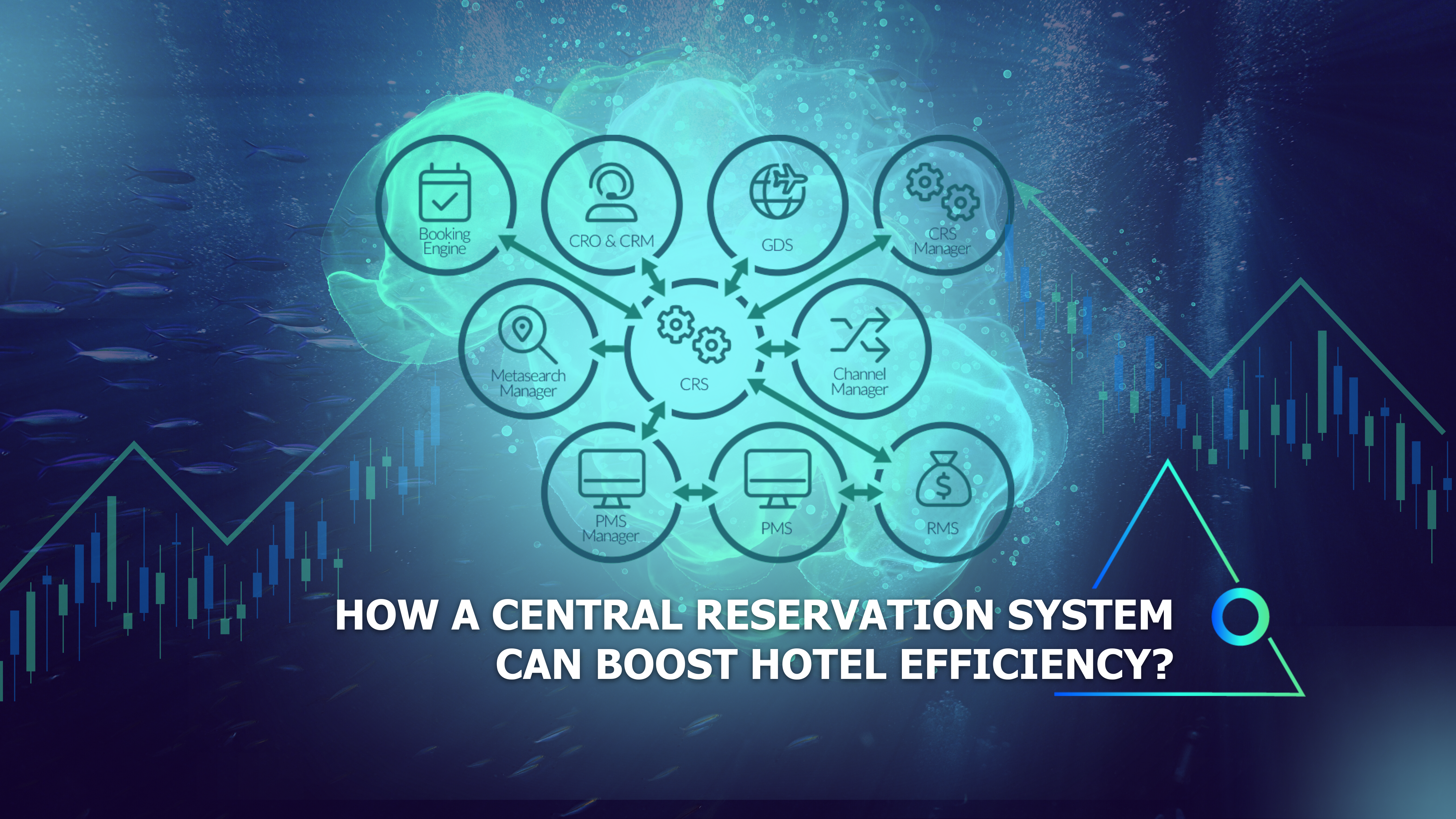
Boost Hotel Efficiency with a Central Reservation System (CRS)

Disruptive Trends & the Future of Hospitality

The Impact of Hotel CRM on Customer Loyalty
Choosing a Revenue Management System for Your Hotel

7 Ways Hospitality Technology Enhances Hotel Operations & Profitability