8
No. of Vendors
8
No. of Products
3
Verified Products
CHECKOUT OUR LATEST ARTICLE
Products (8)
SuitePad In-Room Tablet
by SuitePad Vendor verified
mystay In room table
by MyStay Partially verified
Volo! In-room tablets
by Volo SolutionsPartially verified
Altitude In-room App
by Altitude Hospitality Limited Unverified
ProXper
by EvolutixUnverified
HCN Hotel Tablet Technology
by HCN, Hotel Communication NetworkUnverified
Hibox Smartroom Tablet
by Hibox SmartroomUnverified
YourWelcome
by YourWelcomeUnverifiedIn-Room Tablets for hotels
The hotel room touchpoint landscape has expanded significantly. Where guests once relied on a bedside telephone and a printed compendium, they now expect digital interfaces that give them control over their environment, access to hotel services, and connection to local information from a single device. The in-room tablet has become the most capable physical interface for delivering this experience when it is correctly integrated with hotel operational systems.
In-room tablets for hotels provide dedicated guest-facing devices that consolidate room control, service requests, hotel information, entertainment management, and digital concierge functions within a purpose-built interface. Modern platforms integrate with guest room management systems (GRMS), property management systems, helpdesk ticketing software, and digital concierge solutions to create a connected in-room experience hub that serves both guest needs and hotel operational workflows.
What are In-Room Tablets for hotels?
In-room
tablets
are dedicated guest-facing devices installed in hotel rooms that provide a
touchscreen interface for room control, hotel services, entertainment, and
information access. Unlike personal tablets or smart assistance devices,
purpose-built hotel tablet platforms are designed for multi-guest use with
managed content, brand presentation, and deep integration with hotel
operational systems.
Core
functions include:
•
Room environment control including lighting, temperature, and
curtains through GRMS integration
•
Hotel service requests including housekeeping, room service, and
maintenance
•
Digital compendium and hotel information access
•
Entertainment management and streaming integration
•
Alarm, wake-up call, and do-not-disturb management
Why do In-Room Tablets matter for hotels?
In-room
tablets consolidate the multiple interaction points that guests currently
navigate across phone, remote control, printed compendium, and environmental
controls into a single intuitive interface. This simplification improves the
guest experience while simultaneously creating operational efficiencies through
digital service requests and reducing the calls that fragmented in-room
interfaces generate.
•
Consolidated room interaction reduces guest friction: a single interface
for all room controls and service requests is more intuitive than multiple
disconnected devices
•
Digital service requests reduce front desk workload: guests who submit
service requests through the tablet interface reduce the call volume that
phone-based requests generate
•
Always-on information access replaces printed materials: tablets provide
current, accurate hotel and local information without the print production cost
and accuracy limitations of physical compendiums
•
GRMS integration creates genuinely smart room experiences: tablets connected to
room automation infrastructure allow guests to control their environment
intuitively
What problems do In-Room Tablets help solve?
•
Multiple disconnected room control interfaces frustrating
guests:
a single tablet interface eliminates the need to locate separate controls for
lighting, climate, and entertainment
•
High front desk call volumes from routine requests: digital service
request submission through tablets reduces the phone interactions that occupy
front desk staff
•
Printed compendiums with outdated information: tablet-delivered
hotel information updates instantly when content changes
•
Poor accessibility of room controls for guests with mobility
limitations: touchscreen interfaces at a consistent location improve room
control accessibility for guests with physical limitations
•
Limited upsell reach from static in-room materials: tablet interfaces
present dining, spa, and service recommendations with booking capability that
printed alternatives cannot match
What capabilities should hotels expect?
•
Branded hotel interface with customizable content management
•
GRMS integration for lighting, temperature, and curtain control
•
PMS integration for guest recognition and service request
routing
•
Helpdesk ticketing software integration for tracked service
request management
•
Multi-language interface for international guest populations
How do In-Room Tablets fit into the hotel technology ecosystem?
•
Guest room management systems (GRMS): GRMS integration
enables environmental control through the tablet for lighting, temperature, and
curtain management
•
Property management systems: PMS connectivity enables personalized
welcome content and routes service requests to the correct operational teams
•
Helpdesk ticketing software: service requests submitted through
tablets create tracked tickets for accountable operational follow-up
•
IPTV and in-room entertainment: entertainment control
through the tablet provides a unified interface alongside dedicated remote
controls
Which hotel types benefit most?
•
Luxury and upscale hotels: where in-room technology quality is
part of the service standard and tablet interfaces elevate the connected room
experience
•
Hotels investing in smart room infrastructure: where GRMS investment
delivers greater guest-facing value when paired with an intuitive tablet
control interface
•
Properties with international guest mixes: where multi-language
tablet interfaces serve guests in their preferred language
•
Hotels with active ancillary upsell programs: where tablet-based
recommendation and booking capability converts in-room browsing into service
revenue
What should hotels evaluate before selecting a platform?
•
GRMS integration quality: room environment control is the most
operationally significant tablet capability and requires verified integration
with existing automation infrastructure
•
Content management ease: hotel teams must be able to update
information, promotions, and service menus without technical support
•
Hardware durability for multi-guest use: tablets in hotel
rooms receive intensive use by consecutive guests and require commercial-grade
hardware with appropriate warranty support
•
PMS integration for personalization: guest name
recognition and service request routing requires reliable PMS connectivity
•
Security and privacy management: tablet content must
be securely reset between guests with no residual personal data from previous
occupants
What common mistakes should hotels avoid?
•
Deploying tablets without GRMS integration: tablets without room
environment control deliver a fraction of their potential value and disappoint
guests who expect integrated functionality
•
Consumer tablet hardware in hotel environments: iPads and consumer
devices without hotel-specific management software create hygiene, security,
and theft issues that purpose-built hotel tablets address
•
No content management process after deployment: tablets with outdated
service menus, incorrect pricing, and stale information create the same
impression as worn printed compendiums
•
Insufficient staff training on tablet-submitted requests: operational teams
must understand how tablet service requests are routed to respond appropriately
and maintain the guest experience quality the tablet is designed to support
How have In-Room Tablets evolved?
Hotel
in-room tablets have evolved from adapted consumer iPads into purpose-built
hospitality devices with managed content, deep system integration, and
commercial-grade hardware. Early hotel tablet deployments from around 2012 used
consumer devices with limited system connectivity. Purpose-built hotel tablet
platforms with GRMS integration, PMS connectivity, and managed content emerged
from around 2015. By 2025, tablets with voice-enabled interaction and
AI-powered concierge functionality had become available within the hotel tablet
category.
What trends are shaping In-Room Tablets?
•
Voice and touch multimodal interaction: tablets are
incorporating voice interaction alongside touchscreen for more natural guest
engagement
•
AI concierge integration: conversational AI within tablet
platforms is enabling more sophisticated guest assistance beyond menu-driven
interaction
•
Convergence with smart assistance devices: the distinction
between in-room tablets and smart assistance devices is narrowing as both
categories expand their capabilities
•
Sustainability content and controls: tablets are
increasingly providing guests with visibility into energy and water consumption
and conservation program information
What impact can In-Room Tablets deliver?
•
Reduced front desk call volumes through digital self-service for
information and service requests
•
Improved guest experience through consolidated, intuitive room
control and information access
•
Increased ancillary revenue through in-room booking capability
for dining, spa, and services
•
Enhanced connected room experience through GRMS integration
What should hotels prioritize when comparing providers?
Hotels
evaluating In-Room Tablet platforms should prioritize GRMS and PMS integration
quality, hardware durability, content management ease, and security management
between guests.
•
GRMS integration reliability: room environment
control is the most commercially differentiated capability
•
Hardware durability and warranty: commercial-grade
hardware with responsive support is essential for consistent multi-guest use
•
Content management independence: hotel teams must
maintain content without developer support
• Security and privacy between guests: complete data reset between occupants is a non-negotiable requirement
News (5)
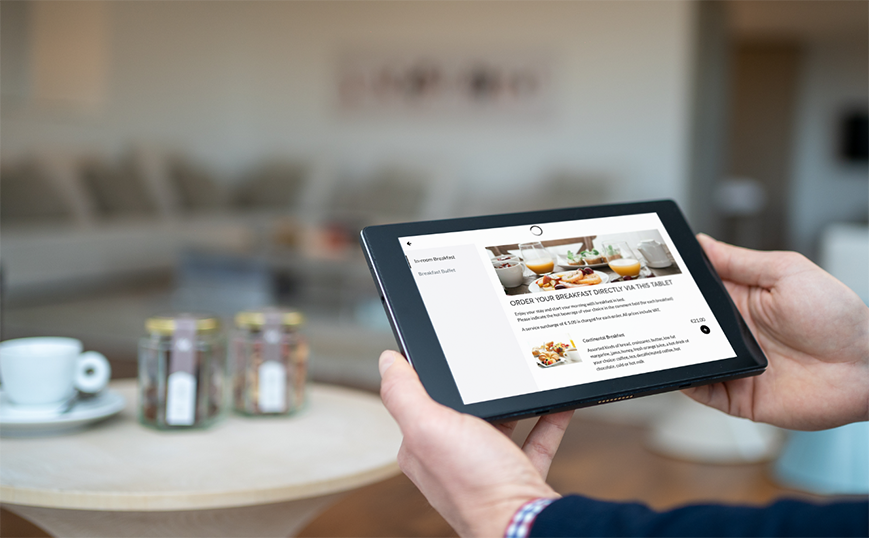
What a 2.6x room service revenue gap says about hotel operations in 2026
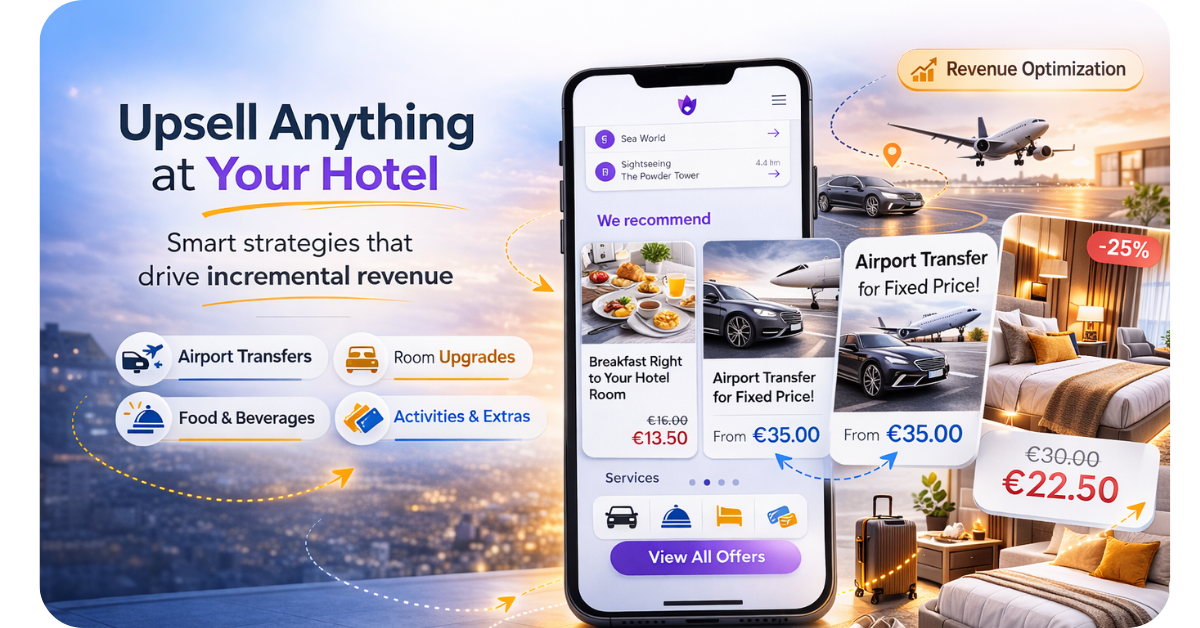
Upsell anything at your hotel – tips and tricks

How Marenas Beach Resort elevates guest experience while saving $7k+ monthly
SuitePad Whitepaper: AI in Hospitality: Why the Real Opportunity Lies During the Stay
_MainImage.png)
AI in Hospitality: From Global Insights to Real In-Stay Impact
Blogs (5)
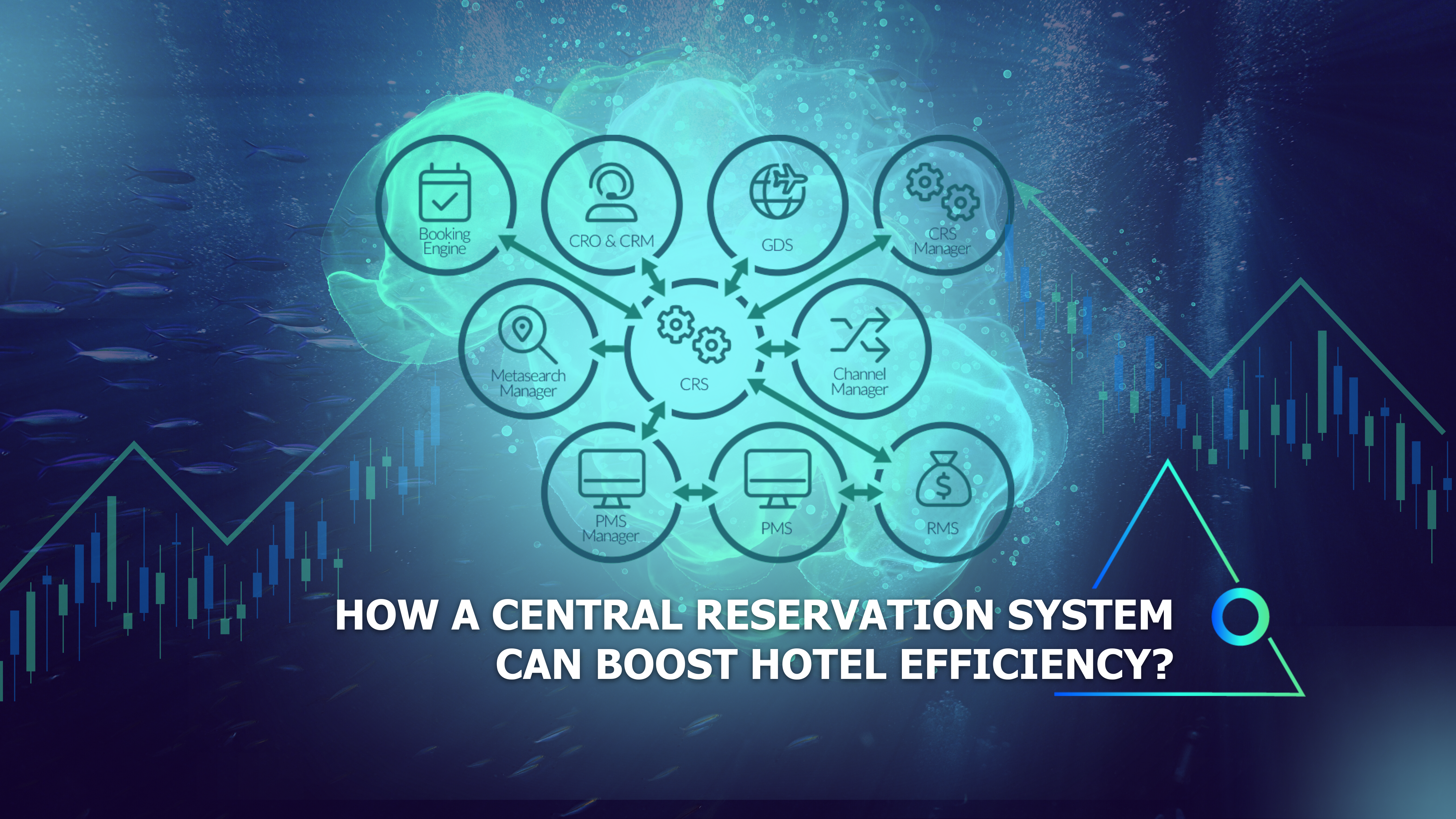
Boost Hotel Efficiency with a Central Reservation System (CRS)

Disruptive Trends & the Future of Hospitality

The Impact of Hotel CRM on Customer Loyalty

Choosing a Revenue Management System for Your Hotel

7 Ways Hospitality Technology Enhances Hotel Operations & Profitability