62
No. of Vendors
64
No. of Products
22
Verified Products
CHECKOUT OUR LATEST ARTICLE

Products (64)
AI Powered

Customer Relationship Management & Loyalty
by Access Hospitality, The Access Group's hospitality division

Vendor verified
Blastness - CRM
by Blastness
Vendor verifiedCendyn B2B Sales
by Cendyn
Vendor verifiedAI Powered
Cendyn CRM
by Cendyn
Vendor verifiedAI Powered

360° - CRM & Central Data Platform
by dailypoint™ - The CDP for CRM & Loyalty
Vendor verified
Amadeus Guest Management
by Amadeus
Vendor verifiedAI Powered

Multi-channel CRM
by Bookboost AB
Vendor verifiedAI Powered

CRM & Guest Journey
by BookingWhizz
Vendor verifiedAI Powered

Hospitality Apps
by Brandnamic
Vendor verifiedCustomer Relationship Management (CRM) for Hotels
Most hotels collect more guest data than they ever act on. Booking history, stay preferences, communication patterns, and spending behavior sit across disconnected systems, rarely assembled into a complete picture of who the guest actually is.
Customer Relationship Management (CRM) systems address this by centralizing guest data into a single intelligence platform that supports personalized communication, loyalty strategies, and direct booking performance. Modern CRM platforms have evolved well beyond guest marketing databases into broader guest intelligence tools that connect operations, commercial strategy, and the full guest journey.
What is a Customer Relationship Management (CRM) system for hotels?
A
hotel Customer
Relationship Management (CRM) platform is a technology system that consolidates guest
data from all interaction points into a unified profile, enabling personalized
communication, targeted marketing campaigns, and informed service delivery
across the complete guest relationship lifecycle. It transforms fragmented
transaction records and touchpoint data into actionable guest intelligence that
drives both commercial and operational decisions.
Core
CRM functions include:
•
Unified guest profile consolidating data from all hotel systems
and touchpoints
•
Pre-arrival, in-stay, and post-stay communication management
•
Segmentation and targeted marketing campaign management
•
Customer loyalty software integration and guest recognition
workflows
•
Integration with property management systems, customer loyalty
software, and marketing platforms
Why does a CRM matter for hotels?
Guest
acquisition is significantly more expensive than guest retention. The economics
of hotel marketing favor repeat business, and repeat business depends on the
hotel remembering who its guests are, what they value, and how to communicate
with them in a way that motivates return visits. A CRM is the technology
infrastructure that makes systematic, personalized relationship management
possible at scale across hundreds or thousands of guest relationships
simultaneously.
•
Repeat guest revenue is more profitable than new acquisition: guests who return
repeatedly have lower acquisition cost and often higher lifetime value than
first-time visitors acquired through paid OTA and marketing channels
•
Personalization requires connected guest data: delivering the
preferences-aware service that drives loyalty requires access to consolidated
guest history that fragmented systems spread across PMS, POS, and feedback
platforms cannot provide
•
Marketing effectiveness depends on segmentation quality: targeted
communication based on actual guest behavior and preferences outperforms
generic broadcast communication across every commercial metric including open
rates, conversion, and revenue per email
•
Guest recognition at check-in requires advance intelligence: front desk teams who
can greet returning guests by name and acknowledge their preferences need the
CRM data surfaced before or during check-in to deliver this experience
What problems does a hotel CRM help solve?
•
Fragmented guest data preventing personalization: CRM consolidation of
PMS stay history, booking preferences, feedback, and communication creates the
complete guest profile that genuine personalization requires
•
Generic marketing communication with low engagement: segmented CRM-driven
campaigns based on actual guest behavior achieve higher open rates, conversion,
and revenue per communication than undifferentiated broadcast messaging
•
No visibility into guest value and retention risk: CRM analytics
identify high-value guests, declining visit frequency, and at-risk
relationships that proactive retention communication can address before guests
are lost
•
Post-stay communication that does not reflect the actual stay: CRM-connected
post-stay messaging that references the specific stay, dining visits, and
experiences creates the relevance that generic templates cannot match
•
No systematic approach to loyalty and guest recognition: CRM-connected loyalty
workflows ensure consistent recognition and reward for returning guests
regardless of which team member handles the interaction
What capabilities should hotels expect from a CRM?
•
Unified guest profile with stay history, preferences, and
complete communication record
•
Automated pre-arrival, in-stay, and post-stay communication
workflows
•
Segmentation tools for targeted campaign management by behavior,
value, and preference
•
Customer loyalty software integration for recognition and reward
management
•
Analytics for guest value, retention patterns, and marketing
campaign performance
How does a hotel CRM fit into the technology ecosystem?
•
Property management systems: PMS stay data is the primary source of
guest history and profile information that the CRM consolidates into a unified
record
•
Customer loyalty software: loyalty program membership and reward
data connects with the CRM for recognition-enabled service and targeted
retention communication
•
Marketing platforms: CRM segmentation and guest data feeds
marketing platform campaigns for targeted digital, email, and direct marketing
•
Hotel reputation management: guest satisfaction data from
reputation management platforms connects with CRM profiles for a complete view
of each guest's relationship with the hotel
•
Hotel business intelligence tools: CRM guest value and
retention analytics feed commercial intelligence reporting for strategic
planning
Which hotel types benefit most from CRM investment?
•
Hotels with significant repeat guest business: where the commercial
value of guest retention makes CRM-enabled loyalty management most financially
significant
•
Hotels with active direct booking strategies: where CRM-driven
personalized marketing reduces OTA dependency by building direct guest
relationships that reward booking through the hotel's own channels
•
Lifestyle and boutique hotels: where personalized,
relationship-based service is a competitive differentiator that CRM data
enables at scale
•
Multi-property hotel groups: where consolidated guest recognition
and consistent communication across all properties in the portfolio requires
group-level CRM infrastructure
What should hotels evaluate before selecting a CRM?
•
PMS integration quality and data completeness: the CRM is only as
useful as the guest data it receives from the property management system,
making integration quality the most critical selection criterion
•
Marketing platform connectivity: CRM segmentation must
feed into the marketing tools the hotel uses for email, digital, and direct
campaigns for commercial value
•
Automation workflow capability: pre-arrival, in-stay,
and post-stay communication triggers must be configurable to the hotel's
specific guest journey and communication standards
•
Customer loyalty software integration: loyalty program
connectivity determines whether the CRM can deliver consistent, reward-aware
guest recognition
•
Analytics and guest intelligence quality: retention analytics,
campaign performance measurement, and guest value reporting must be accessible
for commercial decision-making
What common mistakes should hotels avoid?
•
Collecting guest data without using it: a CRM that stores
guest preferences and history without connecting them to service delivery and
communication creates an administrative burden rather than commercial value
•
Generic communication workflows that do not reflect
individual stays: automated post-stay emails that reference the wrong outlet,
wrong dates, or wrong preferences damage rather than strengthen the guest
relationship
•
No staff training on CRM-enabled guest recognition: the value of
pre-arrival CRM data depends entirely on front desk and service teams accessing
and using it during check-in and throughout the stay
•
Treating CRM as a marketing tool only: the most commercially
valuable CRM applications in hotels are in service personalization and
retention management, not just in email campaign frequency
How have Hotel CRM Platforms evolved?
Hotel
CRM has evolved from basic guest history databases and post-stay survey tools
into connected guest intelligence platforms. Early hotel CRM focused primarily
on storing stay history for loyalty program administration and post-stay
communication. The integration of real-time PMS data, marketing automation, and
guest feedback from around 2016 transformed CRM from a record-keeping system
into an active commercial management tool. By 2025, AI-powered segmentation,
predictive retention modeling, and real-time personalization capabilities had
become standard features in leading hotel CRM platforms, making sophisticated
relationship management accessible to independent hotels as well as large
groups.
What trends are shaping Hotel CRM?
•
AI-powered guest segmentation and next-visit prediction: machine learning is
improving the accuracy of retention risk identification and personalized offer
targeting based on behavioral patterns
•
Real-time personalization across digital and physical
touchpoints: CRM data is beginning to inform in-stay service delivery in
real time rather than only pre-arrival preparation and post-stay communication
•
First-party data strategy driving CRM investment: as third-party
digital marketing becomes less effective, owned CRM data is becoming the
primary commercial asset for hotel direct marketing
•
Integration with guest stay and journey management platforms: CRM is converging
with journey orchestration tools for unified guest relationship management
across every touchpoint in the stay
What impact can a well-implemented hotel CRM deliver?
•
Improved guest retention through personalized communication and
recognition that builds loyalty
•
Higher direct booking revenue through CRM-driven targeted
marketing that reduces OTA dependency
•
Better guest satisfaction scores through preferences-informed
service delivery across all departments
•
Stronger commercial visibility through guest value analytics and
retention performance tracking
What should hotels prioritize when comparing CRM providers?
Hotels
evaluating CRM platforms should prioritize PMS integration quality, marketing
platform connectivity, automation workflow capability, and customer loyalty
software integration as the primary selection criteria.
•
PMS integration and data completeness: stay history and
guest data quality from the property management system determines the CRM's
commercial value
•
Marketing platform connectivity: CRM segmentation must
reach the hotel's digital and direct marketing channels for commercial impact
•
Automation workflow capability: guest journey
communication must be configurable to actual touchpoints and brand
communication standards
•
Customer loyalty software integration: loyalty program
connectivity enables the recognition that drives the repeat visits that make
CRM investment commercially worthwhile
News (5)

dailypoint signs Serena Hotels and Mirror Lake Inn Resort & Spa as new customers

Shiji and dailypoint Launch Real-Time Guest Data Integration for Hotels

What ChatGPT’s decision to move away from in-platform transactions means for hotels

AI is rewiring how people choose hotels

How to choose the right RMS for your property
Blogs (5)

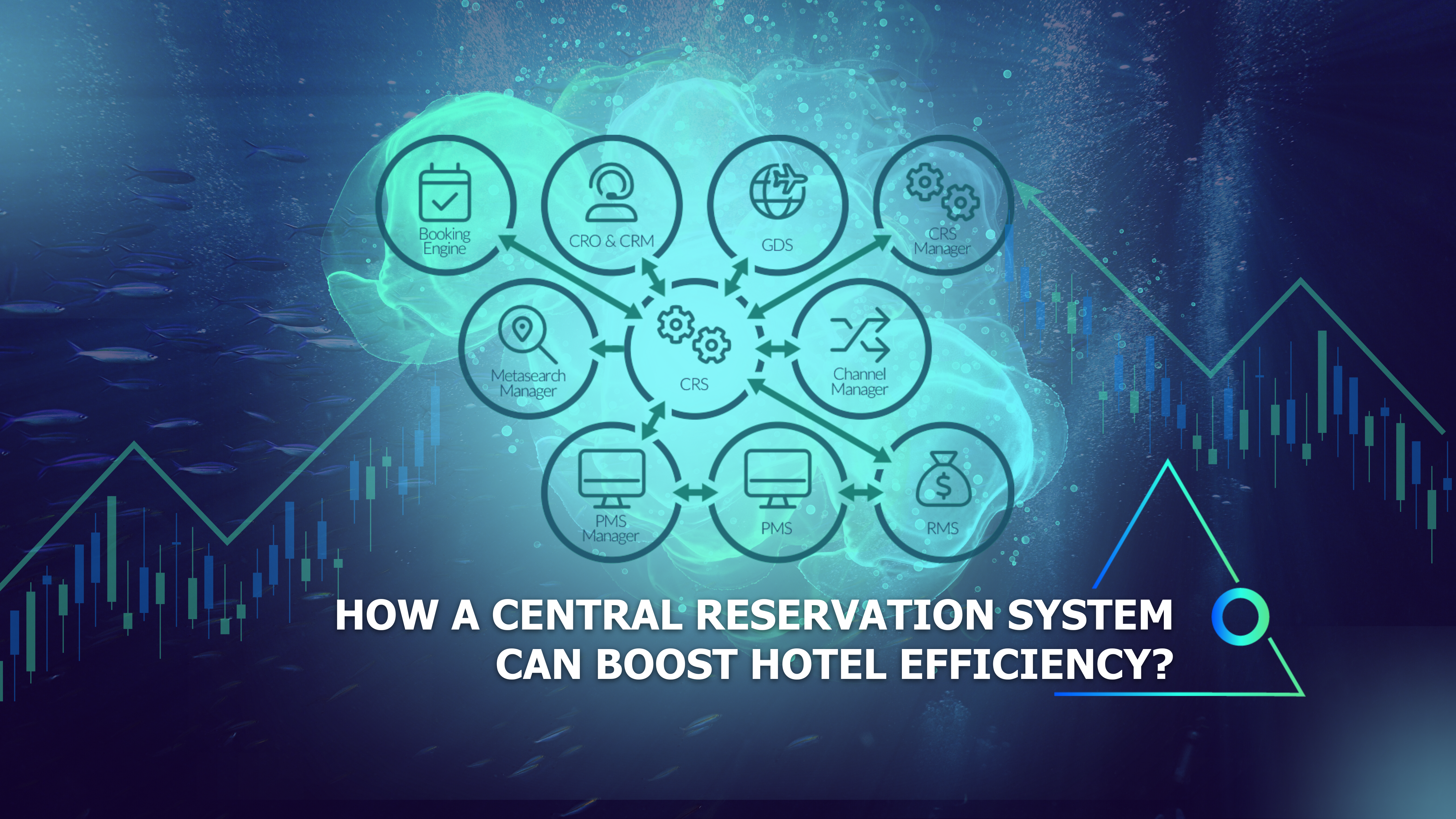
Boost Hotel Efficiency with a Central Reservation System (CRS)

Disruptive Trends & the Future of Hospitality

The Impact of Hotel CRM on Customer Loyalty
Choosing a Revenue Management System for Your Hotel

7 Ways Hospitality Technology Enhances Hotel Operations & Profitability