1
No. of Vendors
1
No. of Products
0
Verified Products
Products (1)

Wirely
by Wirely Unverified
Restaurant Accounting Software for hotels
Food and beverage financial management has requirements that general accounting platforms handle inconsistently. Recipe-level cost tracking, cover-based revenue analysis, tip and tronc management, multi-outlet reporting, and the specific cost of sales structures of F&B operations all require accounting infrastructure that understands the economics of food service rather than adapting general ledger tools to a business they were not designed for.
Restaurant Accounting Software provides the financial management infrastructure designed specifically for the revenue, cost, and reporting requirements of food and beverage operations. It connects with restaurant management software and POS systems, food costing software, and procurement platforms to deliver the integrated financial visibility that operators, owners, and investors require across standalone restaurants, hotel dining outlets, and multi-site food and beverage businesses.
What is Restaurant Accounting Software?
Restaurant
Accounting Software is a financial management platform designed for the specific
accounting requirements of food and beverage operations. It manages revenue
recording, cost of sales tracking, payroll integration, accounts payable, and
financial reporting within a structure that reflects F&B operational
economics including food cost percentage, labor cost percentage, and gross
profit by outlet and menu category.
Core
functions include:
•
Revenue recording from restaurant management software and POS
integration
•
Food and beverage cost of sales management
•
Payroll and labor cost management including tips and tronc
•
Accounts payable and supplier payment management
•
P&L and management reporting in F&B-specific formats
Why does Restaurant Accounting Software matter?
Food
and beverage profitability is determined by tight management of the
relationship between revenue, food cost, and labor cost. General accounting
platforms that record these as undifferentiated income and expense lines cannot
provide the operational financial intelligence that F&B management
requires. Purpose-built restaurant accounting connects financial reporting with
the operational data that reveals where margin is being made and lost.
•
Food cost percentage is the primary F&B profitability
metric:
tracking food cost as a percentage of revenue requires the recipe and
procurement cost connectivity that general accounting cannot provide
•
Labor cost management in F&B requires specialist handling: tip allocation, tronc
compliance, variable hour payroll, and split shift management create complexity
that standard payroll tools handle inconsistently
•
Multi-outlet reporting requires venue-level P&L
visibility:
operators managing multiple restaurants or hotel dining outlets need comparable
financial performance data by venue
•
Investor and franchisor reporting may require specific
financial formats: structured F&B reporting in recognized formats supports
the stakeholder communication that growing operations require
What problems does Restaurant Accounting Software help solve?
•
No food cost tracking connected to purchasing and recipe data: integrated cost of
sales management connecting POS revenue with procurement costs provides the
food cost analysis that general accounting cannot
•
Manual period-end financial compilation consuming finance
team time:
POS and procurement data integration automates the revenue and cost recording
that manual accounting compiles laboriously
•
Inconsistent labor cost management across variable employment
types:
F&B-specific payroll tools handle the tip, tronc, and variable hour
complexity that standard payroll systems manage poorly
•
No outlet-level P&L visibility for multi-site operators: restaurant accounting
platforms with outlet-level reporting provide the venue comparison that
portfolio management requires
•
Cash flow management challenges from multiple revenue streams: integrated accounts
payable and revenue management provides the cash flow visibility that F&B
operations need
What capabilities should operations expect?
•
POS integration for automated revenue recording by category and
period
•
Food cost of sales tracking connected to procurement data
•
Tip, tronc, and labor cost management
•
Outlet-level P&L reporting for multi-site operations
•
Integration with restaurant management software and POS, food
costing software, and hospitality procurement software
How does Restaurant Accounting Software fit into the technology ecosystem?
•
Restaurant management software and POS: POS revenue data
feeds accounting automatically for accurate, timely financial recording
•
Food costing software: recipe cost data connects with accounting for
integrated food cost percentage analysis
•
Hospitality procurement software: supplier invoice and
purchasing data feeds accounts payable and cost of sales recording
•
Financial planning and reporting: F&B financial
data connects with broader business financial management and investor reporting
Which operation types benefit most?
•
Standalone restaurants with active margin management: where food cost,
labor cost, and gross profit tracking are commercial priorities requiring
specialist accounting infrastructure
•
Hotel F&B operations with USALI reporting requirements: where departmental
F&B reporting in standardized formats is required for hotel financial
management and investor reporting
•
Multi-outlet food and beverage businesses: where comparable
outlet-level P&L and cost performance data drives operational and
investment decisions
•
Growing restaurant groups: where consistent financial management
standards and consolidated reporting across expanding portfolios require
scalable accounting infrastructure
What should operations evaluate before selecting a platform?
•
POS integration for automated revenue recording: manual revenue entry
from POS reports removes the accuracy and timeliness benefit of integrated
accounting
•
Food cost tracking capability: cost of sales
management must connect with procurement and recipe data for meaningful food
cost analysis
•
Labor and tronc management: tip allocation and variable employment
cost management must meet the specific compliance requirements of the
operation's employment framework
•
Reporting format flexibility: outlet-level and
format-specific reporting must be configurable for the operation's stakeholder
communication requirements
•
Procurement system integration: accounts payable must
connect with the procurement platform for automated invoice processing
What common mistakes should operations avoid?
•
Using general accounting software without F&B-specific
configuration: standard accounting tools that treat F&B costs as
undifferentiated expense lines cannot provide the food cost and labor cost
analysis that restaurant management requires
•
No POS integration relying on manual revenue entry: manual revenue
transfer from POS into accounting introduces the errors and delays that
integration eliminates
•
Insufficient chart of accounts structure for F&B: accounting systems
without the cost centre and category structure appropriate for F&B
operations produce reporting that obscures rather than illuminates performance
•
Tronc compliance handled outside the accounting system: tip and tronc
management disconnected from payroll accounting creates the compliance gaps
that integrated management prevents
How has Restaurant Accounting Software evolved?
F&B
financial management has evolved from manual bookkeeping and adapted general
accounting tools into purpose-built restaurant accounting platforms. POS
integration that automated revenue recording transformed the accuracy and
timeliness of F&B financial management from around 2015. By 2025,
cloud-based restaurant accounting platforms with integrated procurement,
payroll, and food costing connectivity had become accessible to independent
operators and growing groups alike, making professional F&B financial
management available beyond the large chains that previously invested in
dedicated systems.
What trends are shaping Restaurant Accounting Software?
•
Real-time financial visibility replacing period reporting: cloud-connected POS
and procurement integration is enabling continuously updated financial
dashboards rather than monthly P&L preparation
•
AI-powered cost anomaly detection: machine learning is
identifying unusual cost patterns in F&B accounting data that manual review
consistently misses
•
Sustainability cost tracking integration: environmental costs
including food waste and energy consumption are being incorporated alongside
financial cost tracking
•
Open banking and payment data integration: direct bank feed
integration is improving cash reconciliation accuracy and reducing manual
banking administration
What impact can Restaurant Accounting Software deliver?
•
Accurate, timely food cost tracking enabling active margin
management
•
Compliant labor cost management across variable employment types
•
Outlet-level financial visibility supporting multi-site
performance management
•
Reduced finance team time through automated POS and procurement
data integration
What should operations prioritize when comparing providers?
Operations
evaluating Restaurant Accounting Software should prioritize POS integration,
food cost tracking capability, labor and tronc management, and reporting format
flexibility.
•
POS integration for revenue recording: automated revenue
capture is the foundational accuracy requirement
•
Food cost tracking: cost of sales analysis must connect with
procurement and recipe data
•
Labor and tronc management: tip allocation and variable cost
compliance must be fully supported
• Reporting format and outlet-level visibility: financial reporting must serve the operation's stakeholder communication requirements
Blogs (5)
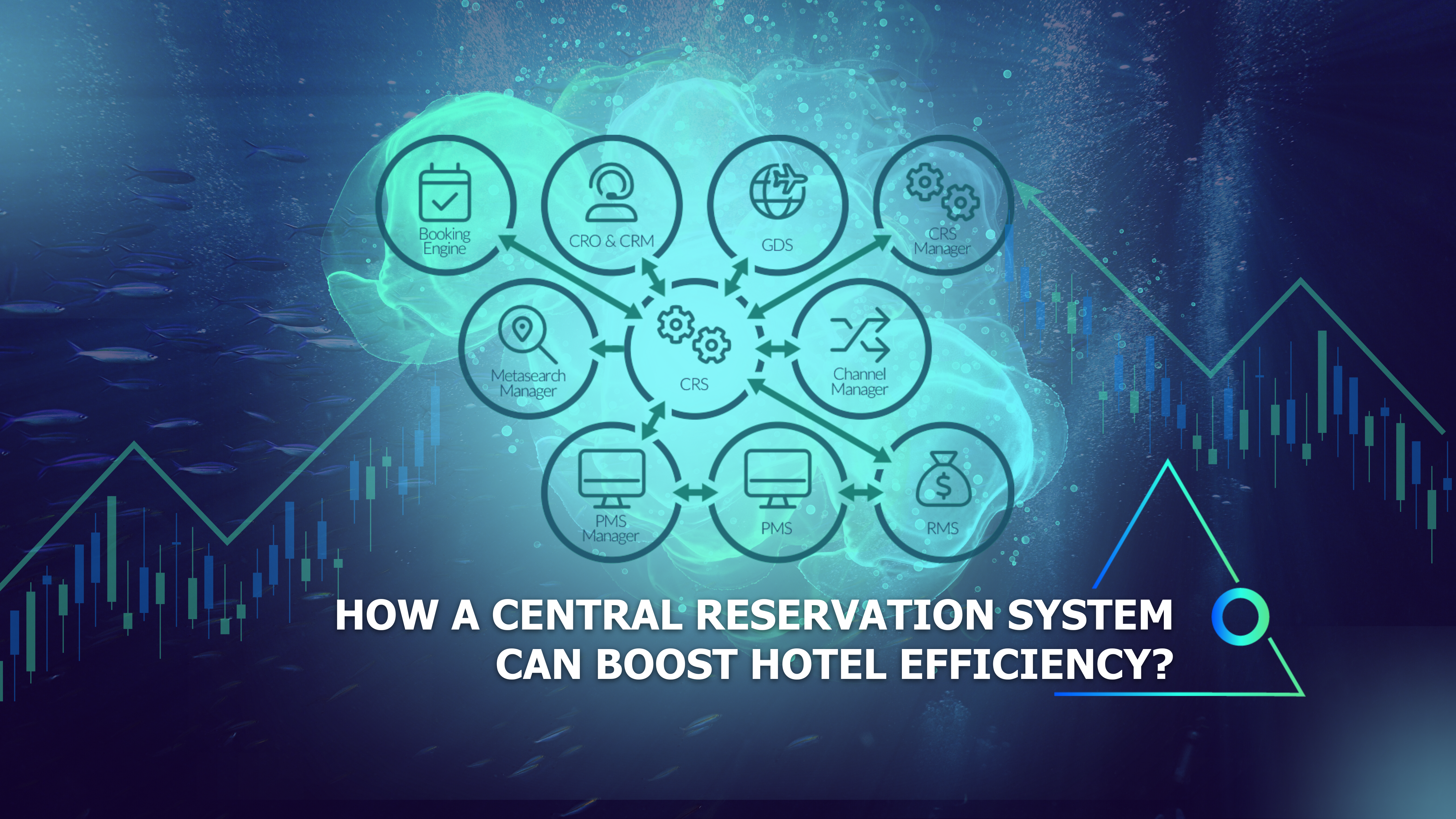
Boost Hotel Efficiency with a Central Reservation System (CRS)

Disruptive Trends & the Future of Hospitality

The Impact of Hotel CRM on Customer Loyalty
Choosing a Revenue Management System for Your Hotel

7 Ways Hospitality Technology Enhances Hotel Operations & Profitability