13
No. of Vendors
13
No. of Products
2
Verified Products
CHECKOUT OUR LATEST ARTICLE
.png)
Products (13)
AI Powered

SevenRooms
by SevenRooms Vendor verified
.png)
Restaurant CRM Software
by Posist Partially verified
Arryved Loyalty
by Arryved Unverified
Experience Hotel & restaurant CRM
by Experience HotelUnverified
Fideltour
by FideltourUnverified
Kobas CRM
by KobasUnverified
Connect CRM
by Me & UUnverified
Peoplevine
by PeoplevineUnverified
Revel Loyalty XT
by RevelUnverifiedRestaurant Customer Relationship Management (CRM)
Most restaurants know very little about the guests who visit them most frequently. A guest who has dined twelve times in the past year, always orders the same wine, and celebrates their anniversary in November is an extraordinarily valuable customer. Without a structured system to capture, connect, and act on this information, that relationship is managed no differently from a first-time visitor.
Restaurant Customer Relationship Management (CRM) platforms give food and beverage operations the tools to capture diner data, build guest profiles, manage loyalty programs, and execute targeted marketing that builds repeat business. Modern restaurant CRM platforms integrate with restaurant management software and POS systems and restaurant reservation software to create the connected guest intelligence environment that drives loyalty in dining operations across hotel restaurants, standalone venues, and multi-site food and beverage brands.
What is Restaurant CRM?
Restaurant
Customer Relationship Management (CRM) is a technology platform that consolidates
guest data from dining interactions into unified profiles, enabling
personalized communication, targeted marketing, and loyalty program management
for food and beverage operations. It connects reservation history, dining
preferences, spend patterns, and communication records into a single guest view
that informs both service delivery and commercial strategy.
Core
functions include:
•
Guest profile management with dining history and preferences
•
Loyalty program management including points, tiers, and reward
tracking
•
Targeted marketing communication by segment and occasion
•
Automated pre-visit and post-visit communication workflows
•
Integration with restaurant management software and POS systems
and restaurant reservation software
Why does Restaurant CRM matter?
Repeat
diners are the commercial foundation of successful restaurant operations. They
visit more frequently, spend more per visit, and refer others at higher rates
than first-time guests. Building systematic repeat business requires more than
good food and service. It requires knowing who your regulars are, what they
value, and how to communicate with them in a way that motivates the next visit.
•
Repeat diners have significantly higher lifetime value: guests who visit
regularly generate the predictable revenue base that restaurant operations
depend on for commercial stability
•
Personalized service requires guest knowledge: remembering a
regular's preferred table, dietary requirements, and favorite dishes requires
systems that capture and surface this information reliably
•
Marketing without segmentation wastes budget: generic promotional
communication sent to all contacts performs far below targeted communication
tailored to behavior, occasion, and preference
•
Loyalty programs require dedicated management infrastructure: points accumulation,
reward redemption, and tier management cannot be reliably handled through POS
or reservation systems alone
What problems does Restaurant CRM help solve?
•
Unknown guest identity despite frequent visits: CRM profile building
from reservation and POS data creates the guest recognition that transforms
anonymous diners into known regulars
•
No systematic approach to loyalty and recognition: structured loyalty
program management ensures consistent recognition and reward for returning
guests regardless of which team member is on shift
•
Generic marketing communication with low engagement: segmented campaigns
based on dining frequency, preferences, and occasions achieve significantly
higher engagement than broadcast communications
•
No post-visit follow-up strategy: automated post-dining
communication triggered by visit data builds the relationship continuity that
drives the next reservation
•
Disconnected reservation and POS data preventing complete
guest view:
CRM integration with both reservation and POS systems creates the complete
picture of each guest's dining relationship
What capabilities should operations expect?
•
Unified guest profile combining reservation history and POS
transaction data
•
Loyalty program with configurable points, tiers, and reward
structures
•
Automated pre-visit and post-visit communication workflows
•
Segmentation tools for occasion, frequency, and preference-based
marketing
•
Integration with restaurant management software and POS systems
and restaurant reservation software
How does Restaurant CRM fit into the technology ecosystem?
•
Restaurant management software and POS: transaction data from
POS feeds guest spend and preference profiles for complete dining history
•
Restaurant reservation software: reservation history
and booking preferences connect with CRM for unified guest profile management
•
Guest feedback and surveys: post-dining feedback connects with CRM
profiles for satisfaction-informed relationship management
•
Marketing platforms: CRM guest segments feed marketing platform
campaigns for targeted digital and email communication
Which operation types benefit most?
•
Restaurants with significant repeat diner business: where the commercial
value of regular guest relationships makes systematic loyalty management most
impactful
•
Hotel restaurants seeking to build a loyal local dining
audience:
where establishing the restaurant as a destination independent of hotel
accommodation requires dedicated guest relationship management
•
Multi-outlet food and beverage operations: where consistent
guest recognition across multiple venues requires portfolio-level CRM
infrastructure
•
Fine dining and premium casual venues: where the
personalized service and recognition that defines the guest experience depends
on structured guest knowledge management
What should operations evaluate before selecting a platform?
•
POS and reservation system integration quality: guest profile
completeness depends on reliable data connections with both transaction and
reservation platforms
•
Loyalty program configurability: points structures,
earning rules, and reward types must be flexible enough to reflect the
operation's specific commercial model
•
Marketing automation capability: pre-visit and
post-visit communication triggers must be configurable to the operation's guest
journey and communication style
•
Segmentation sophistication: the ability to define meaningful guest
segments by behavior, occasion, and preference determines marketing
effectiveness
•
Ease of use for operations and marketing teams: both front-of-house
staff accessing guest profiles and marketing teams managing campaigns must find
the platform accessible
What common mistakes should operations avoid?
•
Capturing guest data without acting on it: a restaurant CRM that
stores dining history without using it for personalization or marketing
delivers data management cost without commercial return
•
Over-communicating to all contacts: excessive marketing
communication regardless of guest engagement level generates unsubscribes that
permanently reduce reachable audience size
•
No staff training on guest profile access during service: CRM value in service
delivery depends on front-of-house teams accessing and using guest profiles
before and during the dining experience
•
Loyalty programs without clear value proposition: loyalty structures
that guests do not understand or find rewarding create administrative overhead
without the repeat visit behavior they are designed to generate
How has Restaurant CRM evolved?
Restaurant
guest management has evolved from paper comment cards and manual reservation
notes into connected CRM platforms. Early restaurant loyalty programs operated
through physical cards and manual stamp systems. The digitization of restaurant
reservations and POS systems from around 2015 created the data infrastructure
that modern restaurant CRM depends on. By 2025, cloud-based restaurant CRM
platforms with POS integration, automated marketing workflows, and configurable
loyalty programs had become accessible to independent operators as well as
multi-site restaurant brands.
What trends are shaping Restaurant CRM?
•
POS data integration enabling purchase-based profile building: transaction data from
restaurant management software and POS is creating more complete guest profiles
than reservation data alone provides
•
Occasion-based marketing automation: anniversary,
birthday, and seasonal communication triggered by guest profile data is
generating higher conversion than generic promotional campaigns
•
Contactless dining data connecting with CRM: digital ordering and
payment data from contactless dining platforms is feeding CRM profiles with
more granular preference and behavior data
•
AI-powered next-visit prediction: machine learning is
identifying the communication timing and offer type most likely to generate the
next reservation for individual guest segments
What impact can Restaurant CRM deliver?
•
Increased visit frequency among existing diners through targeted
loyalty and occasion marketing
•
Higher average spend through recognition-enabled personalized
service
•
Stronger guest relationships through consistent recognition and
communication
•
Better marketing ROI through segmented campaigns that reflect
actual guest behavior
What should operations prioritize when comparing providers?
Operations
evaluating Restaurant CRM platforms should prioritize POS and reservation
system integration quality, loyalty program configurability, marketing
automation capability, and segmentation sophistication.
•
POS and reservation integration: complete guest
profile data depends on reliable connections with both transaction and booking
platforms
•
Loyalty program flexibility: reward structures must match the
operation's commercial model and guest value proposition
•
Marketing automation: pre and post-visit communication workflows
drive the relationship continuity that generates repeat visits
• Segmentation capability: meaningful guest segments based on behavior and occasion are the foundation of effective restaurant marketing
Blogs (5)
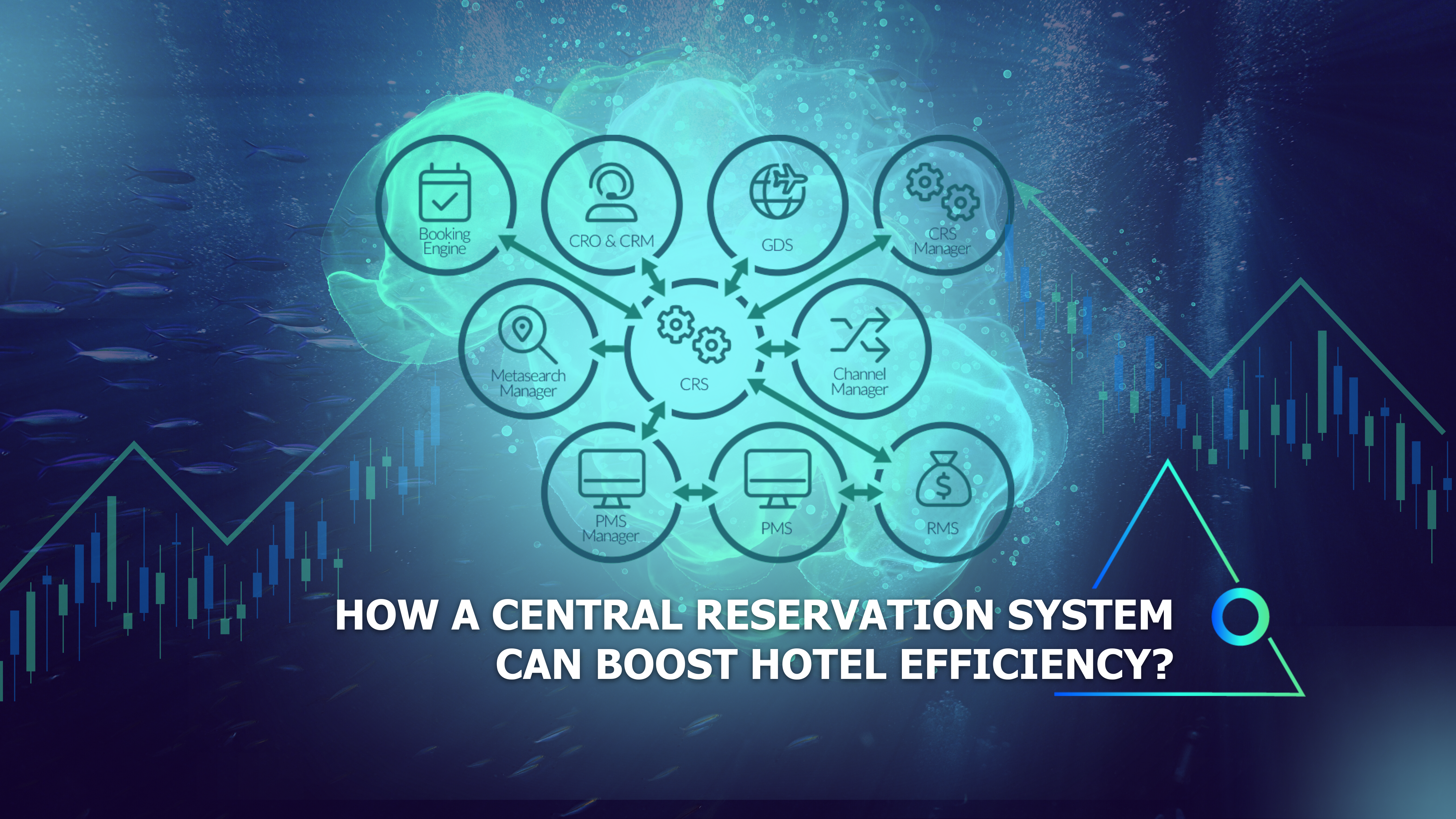
Boost Hotel Efficiency with a Central Reservation System (CRS)

Disruptive Trends & the Future of Hospitality

The Impact of Hotel CRM on Customer Loyalty
Choosing a Revenue Management System for Your Hotel

7 Ways Hospitality Technology Enhances Hotel Operations & Profitability