85
No. of Vendors
85
No. of Products
20
Verified Products
CHECKOUT OUR LATEST ARTICLE

Angie Lacia
Hotel distribution optimization expertProducts (85)

Blastness - Channel Manager
by Blastness Vendor verified
AI Channel Manager
by HERA by Hotel Res BotVendor verified-(1).jpg)
AxisRooms Channel Manager
by HotelogixVendor verifiedAI Powered

HotelRunner Channel Manager
by HotelRunnerVendor verified
Kwentra Channel Manager
by KwentraVendor verified
NightsBridge Channel Manager
by NightsBridgeVendor verified
RateTiger Channel Manager
by RateTigerVendor verified
The SiteMinder platform
by SiteMinderVendor verified
Smart Channel Manager
by SmarthotelVendor verifiedChannel Manager for hotels
Managing hotel inventory across multiple booking channels simultaneously is one of the most operationally demanding challenges in hospitality. A single synchronization delay can result in an overbooking or pricing inconsistency that is difficult and costly to resolve.
Channel
Managers address this by automating the
coordination of room availability, rates, and reservations across all connected
booking channels in real time. Modern platforms have evolved well beyond basic
inventory updates into broader distribution coordination tools that support
pricing strategy, channel performance analysis, and connected commercial
operations.
What is a Channel Manager for hotels?
A
hotel Channel
Manager
is a technology platform that manages the distribution of room rates and
availability across all connected booking channels through a single interface
with automated two-way synchronization. When a booking is received from any
channel, the channel manager updates all other connected channels
simultaneously to prevent overselling. When rate changes are made, they push to
all channels instantly to maintain pricing consistency.
Core
channel manager functions include:
•
Real-time two-way rate and availability synchronization across
all connected channels
•
Centralized rate management with channel-specific pricing rules
and restrictions
•
Automated inventory updates on booking, cancellation, and
modification
•
Performance reporting by channel including pickup, revenue, and
conversion data
•
Integration with property management systems, revenue management
system (RMS), and hotel booking engine software
Why does a Channel Manager matter for hotels?
Distribution
complexity has grown significantly as the number of channels through which
guests can book has multiplied. Managing rates and availability across ten or
more channels manually creates the errors that damage both revenue and guest
experience. A channel manager that automates this management is no longer a
convenience but a commercial and operational necessity for any hotel
distributing across multiple booking platforms.
•
Double bookings from unsynchronized availability damage guest
relationships: a room sold to two guests because channel availability was not
updated creates the most operationally disruptive and reputationally damaging
booking error a hotel can experience
•
Rate parity violations create commercial and contractual risk: inconsistent rates
across OTA channels violate rate parity agreements and undermine the pricing
strategy that the revenue management system (RMS) is designed to execute
•
Manual channel updates cannot keep pace with dynamic pricing: RMS-driven rate
changes that cannot execute instantly across all channels fail to capture the
commercial benefit of the pricing decisions being made
•
Channel performance visibility requires consolidated
reporting:
understanding which channels deliver the most valuable bookings at the lowest
acquisition cost requires the aggregated performance data that the channel
manager provides
What problems does a Channel Manager help solve?
•
Double bookings from manual availability management: real-time two-way
synchronization ensures that a confirmed booking on any channel immediately
removes availability from all others
•
Rate inconsistencies creating parity violations: centralized rate
management with automated channel updates ensures consistent pricing that
reflects current commercial strategy across all distribution points
•
Manual rate entry consuming reservations team time: automated rate
distribution from a single interface replaces the channel-by-channel rate
loading that manual management requires
•
No visibility into channel mix and booking performance: channel manager
reporting provides the pickup, revenue, and conversion data by channel that
distribution strategy and partner relationship decisions require
•
Slow response to availability changes during high-demand
periods:
real-time inventory updates ensure that sold-out dates and restricted periods
are immediately applied across all channels
What capabilities should hotels expect from a Channel Manager?
•
Real-time two-way synchronization with all major OTAs, GDS, and
direct booking channels
•
Centralized rate and restriction management with channel-level
rules and overrides
•
PMS integration for live inventory and booking data exchange
•
Revenue management system (RMS) connectivity for automated rate
execution across channels
•
Channel performance reporting and booking analytics by source
and segment
How does a Channel Manager fit into the hotel technology ecosystem?
•
Property management systems: the PMS provides live inventory data
to the channel manager and receives booking records for each confirmed
reservation across all connected channels
•
Revenue management system (RMS): rate recommendations
from the RMS execute through the channel manager to update all distribution
channels simultaneously for commercial strategy alignment
•
Hotel booking engine software: the direct booking
engine connects through the channel manager for integrated inventory management
alongside OTA channels
•
Central reservation system (CRS): CRS connectivity
enables consistent rate and availability management across GDS and voice
reservation channels alongside online distribution
Which hotel types benefit most from Channel Manager investment?
•
Hotels distributing across multiple OTA and GDS channels: where the volume and
diversity of distribution channels makes manual management operationally
unsustainable and error-prone
•
Hotels using dynamic pricing through an RMS: where the commercial
value of automated rate execution depends on instant channel-wide distribution
of every pricing change
•
Independent hotels competing with branded properties: where efficient
distribution management without brand-provided infrastructure requires
standalone channel management capability
•
Multi-property hotel groups: where consistent distribution
standards, centralized rate management, and portfolio-level performance
reporting require connected channel manager infrastructure
What should hotels evaluate before selecting a Channel Manager?
•
Channel connectivity breadth: the platform must
connect with all the OTA, GDS, and wholesaler channels that contribute
meaningfully to the hotel's booking mix
•
PMS integration reliability: the quality of PMS connectivity
determines availability accuracy and booking data reliability for all
downstream operations
•
RMS integration capability: automated rate execution from the
revenue management system (RMS) requires fast, reliable channel manager
connectivity with minimal update latency
•
Update speed and synchronization reliability: rate and availability
updates must execute across all channels quickly enough to prevent rate
inconsistencies and availability gaps during high-demand periods
•
Reporting and analytics quality: channel performance
data must be accessible and actionable for distribution strategy management
decisions
What common mistakes should hotels avoid?
•
Connecting to too many channels without performance analysis: channel proliferation
that does not improve net revenue after commission creates distribution cost
and management complexity without commercial benefit
•
No channel-specific pricing strategy: applying identical
rates to all channels without accounting for different commission structures
and guest segment values misses revenue optimization opportunity
•
Insufficient testing of PMS integration before going live: channel manager and
PMS synchronization failures discovered after double bookings occur are
significantly more costly than thorough pre-launch testing
•
Treating the channel manager as a rate loading tool only: the most valuable
channel manager applications include distribution strategy analytics and RMS
integration that pure rate loading approaches miss
How have Channel Managers evolved?
Hotel
channel management has evolved from manual extranet updates and early XML
connections into real-time, two-way distribution platforms. The growth of OTA
distribution from around 2008 created the distribution complexity that channel
managers were built to address. Two-way XML connectivity replaced one-way rate
loading, and direct PMS integration replaced manual availability management. By
2025, channel managers with instant multi-channel synchronization, RMS
integration, metasearch connectivity, and detailed performance analytics had
become standard commercial infrastructure for any hotel distributing across
more than a handful of booking channels.
What trends are shaping Channel Managers?
•
Direct booking channel integration within channel management: channel managers are
incorporating hotel booking engine software management alongside OTA
distribution for unified channel oversight and performance comparison
•
Deeper RMS integration for fully automated pricing: tighter connectivity
between revenue management system (RMS) platforms and channel managers is
enabling faster and more granular automated pricing execution
•
Metasearch connectivity and bid management: channel managers are
adding Google Hotel Ads and metasearch management alongside traditional OTA and
GDS distribution
•
Channel profitability analytics beyond booking volume: net revenue after
commission reporting is providing the true channel performance visibility that
gross booking data alone cannot deliver
What impact can a well-configured Channel Manager deliver?
•
Eliminated double bookings through real-time two-way inventory
synchronization across all channels
•
Consistent rate parity maintained automatically across all
distribution partners
•
Faster RMS pricing execution through automated multi-channel
rate distribution
•
Better distribution strategy through comprehensive channel
performance analytics
What should hotels prioritize when comparing Channel Manager providers?
Hotels
evaluating Channel Managers should prioritize channel connectivity breadth, PMS
integration reliability, revenue management system (RMS) connectivity, and
synchronization speed as the primary criteria for a platform that will sit at
the center of the hotel's commercial distribution infrastructure.
•
Channel connectivity breadth: all commercially
significant booking channels must be supported with reliable two-way
connectivity
•
PMS integration reliability: inventory accuracy depends on fast,
reliable property management system connectivity
•
RMS connectivity: automated rate execution requires tight
revenue management system (RMS) integration with minimal update latency
• Synchronization speed and reliability: update performance determines rate consistency and double booking prevention across all channels
News (5)
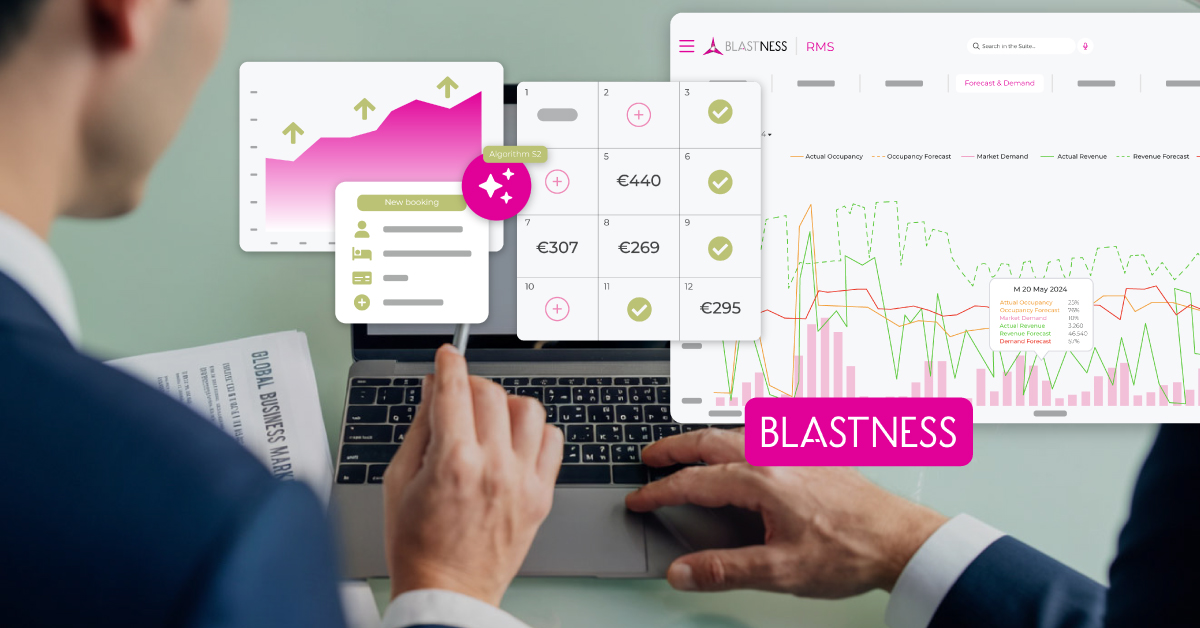
How to choose the right RMS for your property
How to choose the right RMS for your property
.png)
RateGain announces exclusive partnership with Aztech Digital to accelerate UNO VIVA’s expansion across Greece and Cyprus

7 Ways "Invisible Tech" is Boosting Hotel Profits
HotelRunner Recognized as Strategic Partner in Agoda Connectivity Partner Program Once Again
Blogs (5)
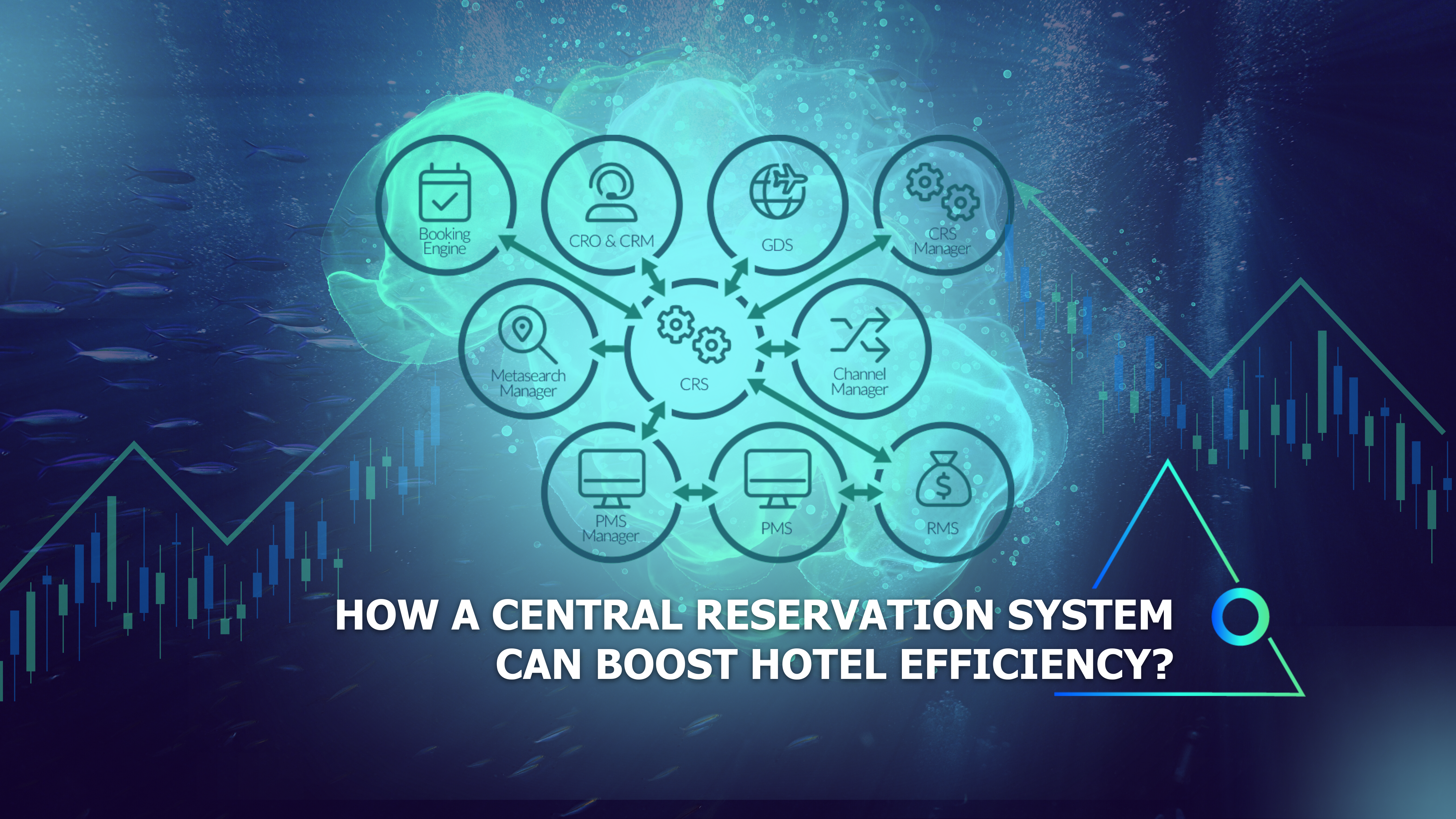
Boost Hotel Efficiency with a Central Reservation System (CRS)

Disruptive Trends & the Future of Hospitality

The Impact of Hotel CRM on Customer Loyalty

Choosing a Revenue Management System for Your Hotel

7 Ways Hospitality Technology Enhances Hotel Operations & Profitability