11
No. of Vendors
11
No. of Products
1
Verified Products
Products (11)

Lokalee
by Swissnet Hospitality Partially verified
Bilberry Blend
by Bilberry Technologies Unverified
Bridgify
by Bridgify TravelUnverified
CoolNCamp
by CoolNCampUnverified
incert sales solutions
by incert eTourismusUnverified
NeoCommerce
by NeobookingsUnverified
RealTime Reservation
by RealTime ReservationUnverified
Turneo
by TurneoUnverified
UP2 | Upgrade2
by Upgrade2UnverifiedAncillary Merchandising for Hotels
Room revenue has limits. The number of rooms is fixed, the nightly rate has a ceiling, and occupancy can only reach 100 percent. Ancillary revenue has no such constraints. Every guest who books a room is also a potential customer for dining, spa treatments, experiences, transfers, upgrades, and a wide range of services that most hotels present inconsistently, inconveniently, or not at all.
Ancillary Merchandising platforms give hotels the infrastructure to present, promote, and sell non-room products and services across every digital touchpoint in the guest journey. Distinct from hotel upsell software, which focuses specifically on upgrade offers, ancillary merchandising covers the broader commercial opportunity of presenting the full range of hotel services as a digital retail environment that guests can browse and purchase from at any stage of their journey.
What is Ancillary Merchandising for hotels?
Ancillary
Merchandising is the practice of presenting and selling hotel services beyond
room accommodation through structured digital retail environments. It applies
retail merchandising principles, such as product presentation, bundling,
cross-selling, and promotional pricing, to the full range of hotel offerings
including dining, spa, experiences, amenities, transfers, and in-room services.
Core
functions include:
•
Digital product catalog management for hotel services and
experiences
•
Pre-arrival, in-stay, and post-stay merchandising across digital
channels
•
Bundling and packaging tools for service combination offers
•
Integration with hotel booking engine software for pre-arrival
purchase
•
Revenue reporting and product performance analytics
Why does Ancillary Merchandising matter for hotels?
The
commercial case for ancillary merchandising is straightforward. Guests who have
already committed to staying at a hotel are the highest-intent,
lowest-acquisition-cost customer segment for every other service the hotel
offers. Yet most hotels present these services through printed menus, static
websites, and reactive front desk conversations that capture only a fraction of
the spending potential of an engaged, in-journey guest.
•
Ancillary revenue has no capacity ceiling: unlike room revenue,
which is constrained by inventory, ancillary spending can grow without limit as
long as the right services are presented at the right moments
•
Pre-arrival is the highest-intent commercial window: guests who have
confirmed their booking and are anticipating their stay are more receptive to
service purchases than at any other point in the journey
•
Digital presentation dramatically outperforms static menus: services presented
through rich digital content with photography, descriptions, and easy purchase
convert significantly better than printed or verbal alternatives
•
Bundled offers increase both conversion and average value: package combinations
that present complementary services together drive higher purchase rates than
individually presented services
What problems does Ancillary Merchandising help solve?
•
Services that guests do not know exist: many hotel ancillary
services are simply not visible to guests through current presentation methods,
leaving revenue entirely uncaptured
•
No structured digital purchase pathway for hotel services: guests who would
willingly purchase a spa treatment or restaurant reservation cannot easily do
so without phone calls or front desk visits
•
Inconsistent service presentation across guest touchpoints: ancillary services
presented differently in email, website, and in-stay channels create a
fragmented impression that reduces commercial credibility
•
Limited insight into ancillary service performance: hotels without
product-level analytics cannot identify which services convert well, which need
better presentation, and which should be discontinued
•
Missed bundling and cross-sell opportunities: services presented in
isolation generate lower average order values than structured bundle and
cross-sell approaches
What capabilities should hotels expect?
•
Rich digital product catalog with photography, descriptions, and
pricing
•
Multi-channel delivery across website, email, mobile app, and
in-stay platforms
•
Bundle and package creation tools
•
Integration with hotel booking engine software, hotel upsell
software, and property management systems
•
Product performance analytics and revenue attribution
How does Ancillary Merchandising fit into the hotel technology ecosystem?
•
Hotel booking engine software: ancillary products
available for pre-booking purchase should be integrated within the booking
engine journey
•
Hotel upsell software: ancillary merchandising and hotel upsell
software are complementary, with upsell focusing on room upgrades and ancillary
merchandising covering the broader service catalog
•
Property management systems: service purchase fulfillment and folio
charging depend on PMS connectivity
•
Customer relationship management (CRM): guest purchase
history informs personalized ancillary offer targeting for future stays
Which hotel types benefit most?
•
Resort and full-service hotels: with extensive
service offerings across spa, dining, activities, and experiences that benefit
most from structured digital merchandising
•
Luxury properties: where ancillary service quality and
presentation is part of the brand experience and digital merchandising elevates
commercial and experiential standards
•
Hotels with significant F&B and spa operations: where pre-booking
restaurant reservations, spa treatments, and experience packages represent
meaningful revenue opportunities
•
Boutique and lifestyle hotels: where unique local
experiences and curated service offerings can be presented through digital
merchandising as a differentiating commercial proposition
What should hotels evaluate before selecting a platform?
•
Booking engine and PMS integration quality: purchase completion
and folio charging must be seamless across digital channels
•
Product catalog management ease: hotel teams must be
able to add, update, and promote services without technical support
•
Multi-channel delivery capability: ancillary offers
should reach guests across pre-arrival email, website, mobile app, and in-stay
touchpoints
•
Bundle and package creation tools: the ability to create
and price service combinations is one of the highest-value merchandising
capabilities
•
Analytics and product performance reporting: revenue attribution
and conversion data by service type must be accessible for ongoing commercial
optimization
What common mistakes should hotels avoid?
•
Presenting too many services without prioritization: digital product
catalogs that display every available service without curation overwhelm guests
and reduce purchase rates
•
No photography or descriptive content for ancillary services: services presented
with placeholder descriptions and no imagery convert poorly regardless of
platform quality
•
Treating ancillary merchandising as a technology deployment
rather than a commercial strategy: the platform enables merchandising but the
commercial impact depends on product selection, pricing, content quality, and
promotional timing
•
No measurement of ancillary product performance: without product-level
conversion and revenue data, hotels cannot identify which services to promote,
improve, or remove from the catalog
How has Ancillary Merchandising evolved?
Hotel
ancillary merchandising has evolved from printed room service menus and front
desk recommendations into digital commerce platforms. The application of
airline and e-commerce merchandising principles to hospitality accelerated
significantly from around 2016, driven by growing recognition that room revenue
alone was insufficient for profitability targets. By 2025, AI-supported product
recommendation and dynamic bundle pricing had begun to emerge as capabilities
within leading ancillary merchandising platforms.
What trends are shaping Ancillary Merchandising?
•
AI-powered product recommendations: machine learning is
beginning to match ancillary service offers to individual guest profiles and
behavioral signals
•
Experience-first merchandising: hotels are expanding
ancillary catalogs beyond room services into local experiences, activities, and
destination services
•
Dynamic bundle pricing: demand-responsive pricing for service
packages is beginning to apply revenue management logic beyond rooms to the
full ancillary catalog
•
Integration with total revenue management: ancillary
merchandising data is feeding into total revenue management strategies that
optimize value across rooms and services simultaneously
What impact can Ancillary Merchandising deliver?
•
Increased ancillary revenue per guest stay through structured
digital service presentation
•
Higher pre-arrival service purchase rates through optimized
booking engine integration
•
Better commercial visibility into ancillary service performance
through product-level analytics
•
Stronger brand impression through professional digital
presentation of the full hotel service offering
What should hotels prioritize when comparing providers?
Hotels
evaluating Ancillary Merchandising platforms should look beyond catalog
management and assess how effectively a solution integrates with booking and
operational systems, delivers services across all guest journey touchpoints,
and provides the commercial analytics needed to optimize ancillary revenue
performance over time.
•
Booking engine and PMS integration: purchase completion
and fulfillment must work seamlessly across all channels
•
Content management and catalog flexibility: hotel teams need to
manage product listings, pricing, and promotions independently
•
Multi-channel delivery: guests must encounter ancillary offers at the
moments in their journey when purchase intent is highest
•
Product analytics and revenue reporting: ancillary revenue
optimization requires product-level performance data
Blogs (5)
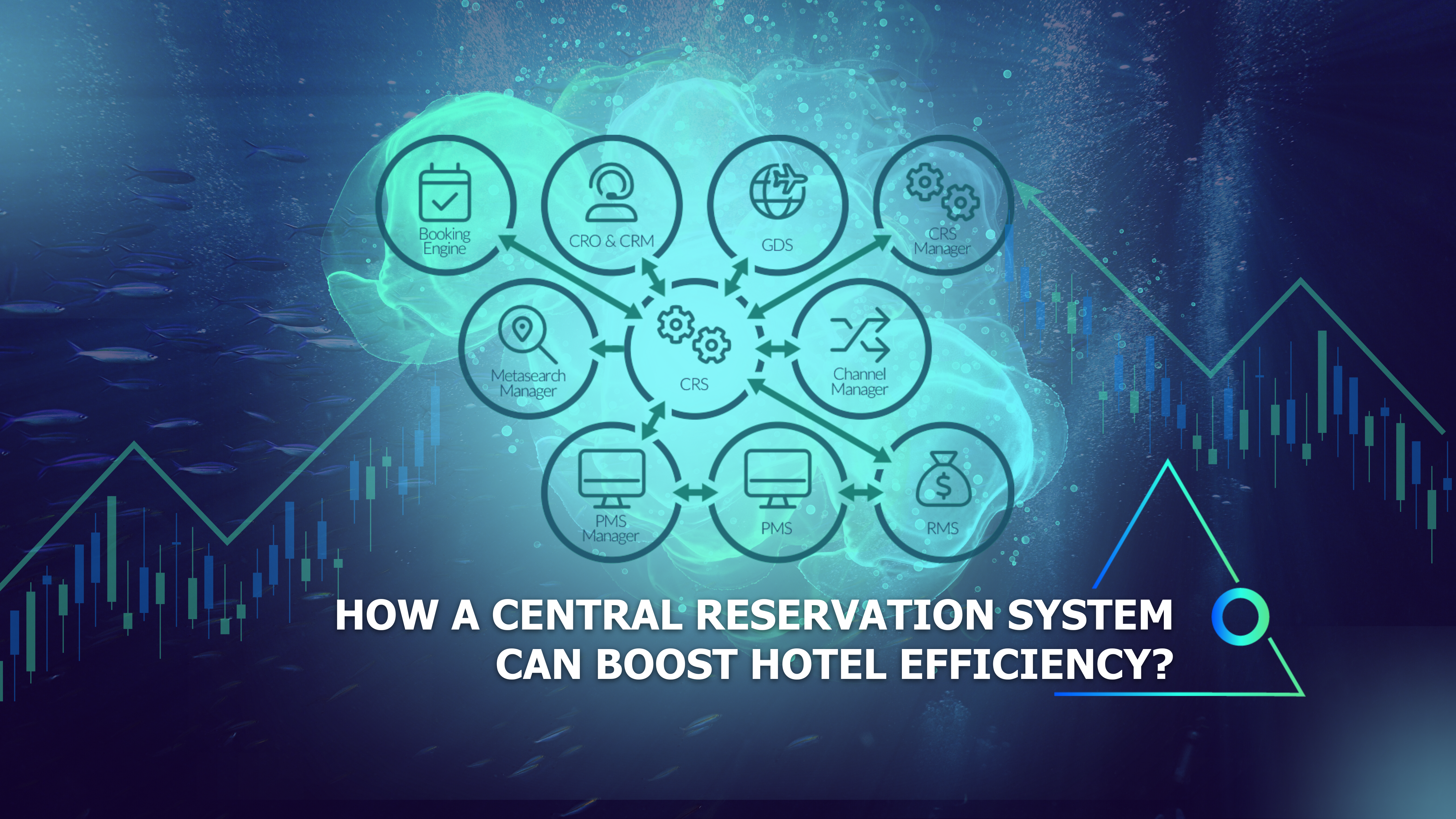
Boost Hotel Efficiency with a Central Reservation System (CRS)

Disruptive Trends & the Future of Hospitality

The Impact of Hotel CRM on Customer Loyalty

Choosing a Revenue Management System for Your Hotel

7 Ways Hospitality Technology Enhances Hotel Operations & Profitability