21
No. of Vendors
21
No. of Products
2
Verified Products
CHECKOUT OUR LATEST ARTICLE
.png)
Products (21)
.png)
Tablecheck
by Tablecheck Vendor verified
AI Powered

TablePath
by TablePathVendor verified
TableRes Digital
by BookingTek Unverified
Crqlar Hotel Restaurant Software
by CrqlarUnverified
Dineplan
by DineplanUnverified
LINA Table
by Gastro-MisUnverified
gastronovi table reservation module
by Gastronovi POSUnverified
Book My Table
by Innoventix SolutionsUnverified
iReserved Smart Internet Content Provider LLC
by iReserved.UnverifiedRestaurant Reservation Software for hotels
Managing restaurant reservations through a paper diary, a generic booking widget, or a phone-only process creates operational constraints that become increasingly costly as dining demand grows. Guests expect to book online at any time, on any device, without calling during service hours. Operations that cannot offer this lose covers to competitors who can.
Restaurant Reservation Software gives food and beverage operations the digital infrastructure to manage table bookings, covers management, waitlist management, and guest communication across all booking channels. Modern platforms serve hotel restaurants, standalone dining venues, bars with reservation requirements, and any hospitality food and beverage operation managing a bookable dining experience, integrating with restaurant management software and POS systems for connected operational management.
What is Restaurant Reservation Software?
Restaurant
Reservation Software is a technology platform that manages the complete reservation
lifecycle for food and beverage operations, from booking acceptance across all
channels through table allocation, covers management, pre-service
communication, and no-show management. It gives operations real-time visibility
into reservation commitments and available capacity across all service periods.
Core
functions include:
•
Online booking through restaurant website, app, and third-party
reservation platforms
•
Table and covers management with floor plan integration
•
Automated guest communication including confirmation, reminders,
and post-dining follow-up
•
Waitlist management and real-time availability updates
•
Integration with restaurant management software and POS systems
Why does Restaurant Reservation Software matter?
Reservation
management is both a commercial and an operational function. Commercially, it
determines how much of the available dining capacity is booked, how far in
advance, and through which channels. Operationally, it determines how
accurately kitchen and service teams can plan for service. Both dimensions
benefit from digital infrastructure that manual processes and generic booking
tools cannot provide.
•
Online booking availability is a guest expectation: diners who cannot
book online do not call instead — they book elsewhere
•
Covers visibility enables preparation accuracy: kitchen and service
teams who know the exact covers, arrival times, and dietary requirements for
each service can prepare with precision that manual diary management cannot
support
•
No-show management protects revenue: deposit collection,
reminder communication, and waitlist management reduce the revenue loss from
no-shows
•
Guest data from reservations supports relationship management: reservation history
connected to guest profiles enables the personalization that drives loyalty
What problems does Restaurant Reservation Software help solve?
•
Phone-only booking limiting accessibility and capacity
capture:
online booking available around the clock captures reservations outside service
hours when phone lines are unavailable
•
Manual reservation management creating double booking risk: digital reservation
management with real-time availability prevents the conflicts that paper diary
management produces
•
No advance visibility into service demands: digital reservation
data gives kitchen and service teams preparation intelligence days in advance
•
High no-show rates damaging revenue: automated reminders
and deposit management reduce the no-show rates that unconfirmed reservations
produce
•
No guest history connected to reservations: reservation platforms
that connect with customer relationship management (CRM) build the guest
intelligence that personalizes future visits
What capabilities should operations expect?
•
Real-time online booking through multiple channels
•
Floor plan and table management with turn time optimization
•
Automated confirmation, reminder, and post-dining communication
•
Deposit and pre-payment management for no-show protection
•
Integration with restaurant management software and POS and
customer relationship management (CRM)
How does Restaurant Reservation Software fit into the technology ecosystem?
•
Restaurant management software and POS: reservation and
covers data feeds POS table management for service coordination
•
Customer relationship management (CRM): guest reservation
history connects with CRM profiles for personalization and retention management
•
Digital menus and content management: reservation
confirmation communication can include menu information and pre-arrival dining
content
•
Guest feedback and surveys: post-dining feedback requests connect
with reservation data for triggered survey delivery
Which operation types benefit most?
•
Full-service restaurants with bookable dining: where reservation
management quality directly affects covers capture, service preparation, and
no-show rate
•
Hotel restaurants and dining outlets: where reservation
data connects with PMS guest profiles for recognition and integrated guest
journey management
•
High-demand venues with waitlist requirements: where waitlist
management and real-time availability updates maximize covers across fully
booked service periods
•
Multi-outlet food and beverage operations: where centralized
reservation management across multiple venues requires consistent platform
infrastructure
What should operations evaluate before selecting a platform?
•
Online booking channel breadth: the platform must
accept bookings through the operation's website and the third-party reservation
platforms most used by its guest demographic
•
POS integration quality: covers data must flow into restaurant
management software and POS for service preparation accuracy
•
Communication automation quality: confirmation and
reminder messaging must be professional, timely, and configurable to the
operation's communication standards
•
No-show management capability: deposit collection
and cancellation policy enforcement must be manageable within the platform
•
Reporting and covers analytics: advance booking pace
and covers analysis should be accessible for operational planning
What common mistakes should operations avoid?
•
Accepting online bookings without a defined service for
managing them: reservation software that generates bookings without a
consistent process for acknowledgment, preparation, and communication fails to
deliver the guest experience improvement it promises
•
No deposit or pre-payment for high-value reservations: operations that do
not protect high-demand slots through deposits consistently absorb the revenue
loss of no-shows that committed deposits prevent
•
Disconnecting reservation data from kitchen preparation
workflows:
reservation counts and dietary requirements that do not reach kitchen teams
remove the preparation benefit that advance reservation data provides
•
Over-booking relative to actual service capacity: digital reservation
management must be configured to reflect realistic turn times and covers
capacity to avoid the service pressure that over-commitment creates
How has Restaurant Reservation Software evolved?
Restaurant
reservation management has evolved from paper booking diaries and phone-only
processes into multi-channel digital platforms with guest profile integration.
The growth of online booking expectation across hospitality from around 2012
drove adoption of digital reservation tools. By 2025, reservation platforms
with deposit management, automated communication, and CRM integration had
become standard infrastructure for professionally operated dining venues across
standalone restaurant, hotel F&B, and multi-site environments.
What trends are shaping Restaurant Reservation Software?
•
Pre-ordering integration with reservations: platforms are
enabling dining preferences and pre-orders to be collected at the point of
booking for kitchen preparation benefit
•
Dynamic capacity management: AI-powered turn time prediction and
table allocation is improving covers throughput in high-demand venues
•
Sustainability communication through reservation journeys: reservation
confirmation flows are incorporating sustainability and provenance information
as guest expectation for dining transparency grows
•
Direct booking incentives competing with third-party
platforms:
operations are using proprietary reservation platforms to offer exclusive
benefits for direct booking rather than routing all covers through
commission-charging platforms
What impact can Restaurant Reservation Software deliver?
•
Increased covers capture through 24-hour online booking
availability
•
Reduced no-show rates through automated reminders and deposit
management
•
Better service preparation through advance covers and dietary
visibility
•
Stronger guest relationships through reservation history
connected to CRM profiles
What should operations prioritize when comparing providers?
Operations
evaluating Restaurant Reservation Software should prioritize online booking
channel coverage, POS integration, communication automation quality, and
no-show management capability.
•
Online booking channel coverage: reservation capture
across website and third-party platforms is the foundational commercial
requirement
•
POS integration: covers data must reach kitchen and service
management systems
•
Communication automation quality: confirmation and
reminder messaging reflects the operation's service standard
•
No-show management: deposit and cancellation tools protect
revenue in high-demand periods
Blogs (5)
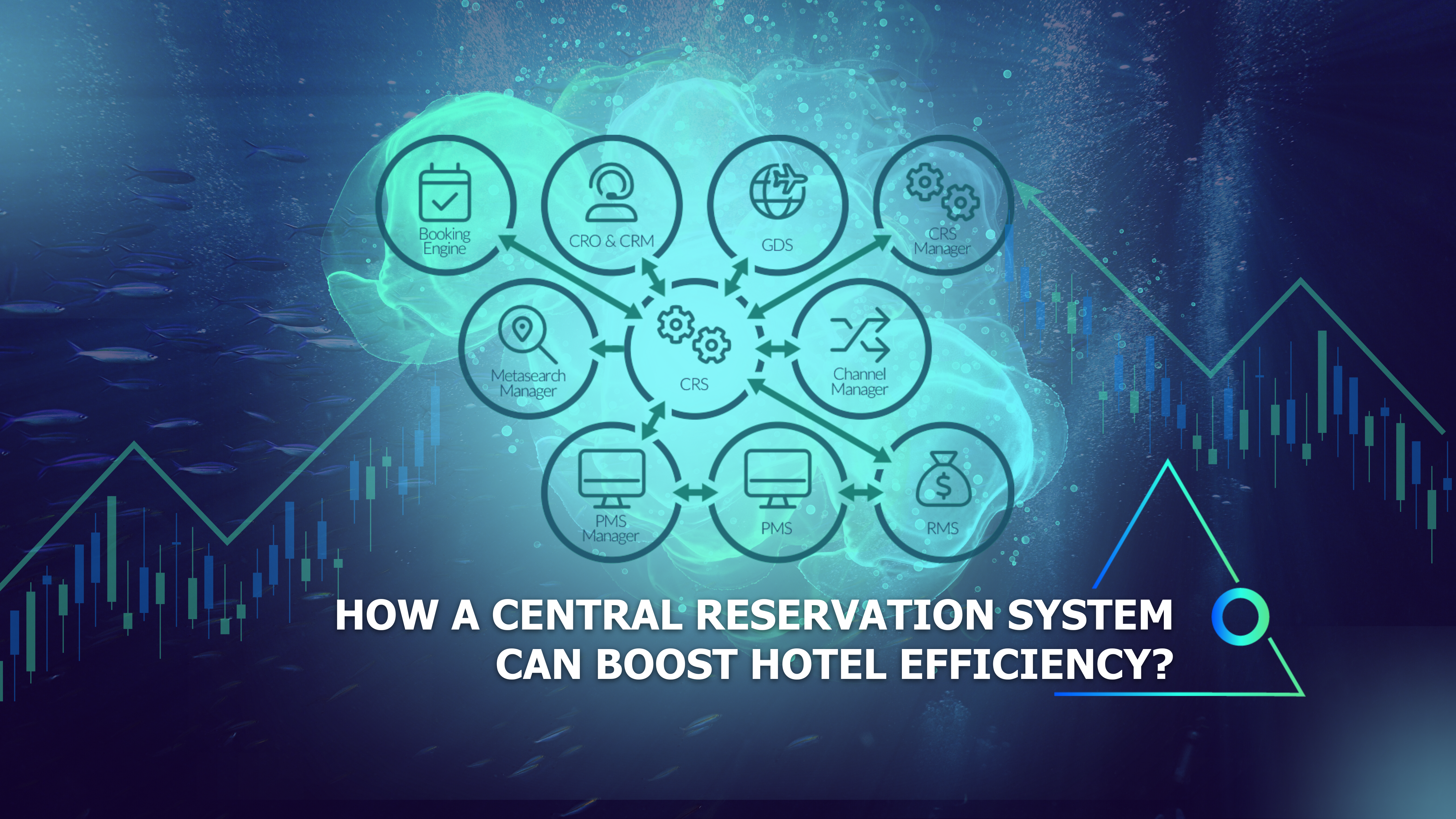
Boost Hotel Efficiency with a Central Reservation System (CRS)

Disruptive Trends & the Future of Hospitality

The Impact of Hotel CRM on Customer Loyalty
Choosing a Revenue Management System for Your Hotel

7 Ways Hospitality Technology Enhances Hotel Operations & Profitability