26
No. of Vendors
28
No. of Products
13
Verified Products
CHECKOUT OUR LATEST ARTICLE

Li Hawkins
Project management & innovationProducts (28)
AI Powered

Correspondence Manager
by Brandnamic Vendor verified
AI Powered

AI Voice
by Canary TechnologiesVendor verifiedAI Powered
AI Guest Messaging
by Canary TechnologiesVendor verified
Guestara
by GuestaraVendor verified.png)
Live Chat
by HotelwayVendor verifiedAI Powered
Guest by iNPLASS
by iNPLASS InfoTechVendor verified
@yourWISH Guest Request Management Software
by Prologic FirstVendor verified
Revinate Ivy
by RevinateVendor verified
RIMS (Reservation Communication System)
by RIMS Confirmation SystemVendor verifiedCustomer Communication for hotels
The quality of a hotel stay is shaped as much by how the hotel communicates with guests as by what it delivers. Pre-arrival information that reduces arrival anxiety, in-stay check-ins that surface issues before they become complaints, and post-stay follow-up that makes guests feel valued all depend on communication that is timely, relevant, and personal. Most hotels manage this inconsistently, communicating when it is convenient for the hotel rather than when it is most useful for the guest.
Customer Communication platforms for hotels provide the infrastructure to manage guest communication systematically across the full stay journey. Modern solutions integrate with property management systems, customer relationship management (CRM), and customer loyalty software to deliver automated yet personalized communication across email, SMS, WhatsApp, and in-app channels at the moments that most influence guest experience and commercial outcomes.
What are Customer Communication platforms for hotels?
Hotel
Customer
Communication platforms are technology solutions that manage automated and
personalized guest communication across the full stay lifecycle. They
coordinate messaging across pre-arrival, check-in, in-stay, and post-stay
stages through multiple digital channels, using guest data from property
management systems and customer relationship management (CRM) to make
communication relevant rather than generic.
Core
functions include:
•
Automated pre-arrival communication including confirmation,
directions, and pre-stay upsell
•
In-stay communication including check-in assistance, service
requests, and experience recommendations
•
Post-stay follow-up including feedback requests and retention
communication
•
Multi-channel delivery across email, SMS, WhatsApp, and in-app
messaging
•
Integration with property management systems and customer
relationship management (CRM)
Why do Customer Communication platforms matter for hotels?
Guests
form impressions of a hotel before they arrive and maintain them long after
they leave. Pre-arrival communication that is helpful and personalized creates
positive anticipation. In-stay communication that is proactive rather than
reactive catches issues before they become complaints. Post-stay follow-up that
feels genuine rather than automated builds the relationship that drives repeat
visits. Each of these communication moments requires infrastructure to execute
consistently at scale.
•
Pre-arrival communication reduces arrival friction: guests who receive
clear information about check-in, directions, and available services arrive
more relaxed and make fewer routine inquiries at the front desk
•
In-stay communication can recover experiences before checkout: identifying
dissatisfied guests during their stay and addressing issues immediately
dramatically improves satisfaction outcomes
•
Post-stay communication drives repeat booking and review
generation:
timely, personalized follow-up increases review completion rates and creates
the re-engagement opportunity that drives direct repeat bookings
•
Consistent communication across all stays builds brand trust: guests who receive
thoughtful, relevant communication consistently develop stronger brand
relationships than those who hear from the hotel only when it is convenient
What problems do Customer Communication platforms help solve?
•
Inconsistent communication quality across stays and staff
members:
automated workflows ensure every guest receives consistent communication
quality regardless of which team member handles their reservation
•
Missed in-stay service recovery opportunities: proactive in-stay
check-ins surface dissatisfaction that guests would otherwise take directly to
post-stay reviews
•
Generic mass email communication with low engagement: guest segmentation
and personalization through CRM integration transforms broadcast messaging into
relevant individual communication
•
No structured post-stay re-engagement workflow: automated post-stay
sequences ensure that review requests and retention communication reach guests
at the optimal moment after checkout
•
Fragmented communication across multiple platforms: unified communication
management replaces the mix of email tools, SMS platforms, and manual messaging
that most hotels currently rely on
What capabilities should hotels expect?
•
Journey-stage automation for pre-arrival, in-stay, and post-stay
communication
•
Multi-channel delivery across email, SMS, WhatsApp, and other
messaging platforms
•
Personalization using guest data from property management
systems and customer relationship management (CRM)
•
In-stay check-in and service request integration
•
Post-stay review generation and retention campaign management
How do Customer Communication platforms fit into the hotel technology ecosystem?
•
Property management systems: provide reservation data, guest
profiles, and stay status information that drives communication timing and
personalization
•
Customer relationship management (CRM): supplies guest
preference and history data that transforms automated communication from
generic to personalized
•
Customer loyalty software: loyalty member status and benefits
inform personalized recognition communication throughout the guest journey
•
Hotel reputation management: post-stay feedback collection connects
communication platforms with review generation workflows
Which hotel types benefit most?
•
Independent hotels building direct guest relationships: where consistent,
personalized communication compensates for the lack of brand loyalty program
infrastructure
•
Boutique and lifestyle hotels: where communication
tone and content is a direct expression of brand identity and guest experience
philosophy
•
Hotels with high repeat business objectives: where post-stay
communication and retention workflows are strategically important for
commercial performance
•
Multi-property hotel groups: that require consistent communication
standards across properties with centralized template management and
performance reporting
What should hotels evaluate before selecting a platform?
•
PMS integration for timing and personalization: communication
triggered by actual reservation events rather than scheduled campaigns requires
reliable PMS connectivity
•
Multi-channel delivery capability: guest communication
preferences vary significantly and the platform must support the channels most
relevant to the hotel's guest segments
•
CRM integration for personalization depth: meaningful
personalization beyond name and room type requires guest history data from
customer relationship management (CRM)
•
In-stay feedback and recovery capability: proactive in-stay
check-ins with issue escalation are among the highest-value communication
platform capabilities
•
Post-stay workflow and review generation: the platform should
support structured post-stay sequences that optimize feedback collection timing
and retention communication
What common mistakes should hotels avoid?
•
Over-communicating with excessive automated messages: guests who receive
too many automated messages disengage quickly, reducing open rates and making
genuinely important communications less likely to be seen
•
Generic automation without meaningful personalization: automated messages
that do not reflect individual guest data feel like system-generated spam
rather than thoughtful communication
•
No in-stay recovery process: collecting in-stay satisfaction
feedback without a process for responding to dissatisfied guests misses the
recovery opportunity that makes in-stay communication valuable
•
Treating communication as a one-way channel: the most effective
guest communication platforms support two-way conversation rather than
broadcast messaging
How has Customer Communication evolved?
Hotel
guest communication has evolved from paper-based correspondence and phone calls
into multi-channel digital communication platforms. The growth of email, SMS,
and messaging apps created both the opportunity and the complexity of managing
communication across multiple channels consistently. By 2025, WhatsApp had
become the dominant in-stay communication channel in many markets, and
AI-powered message personalization had begun to make automated communication
genuinely feel individual rather than templated.
What trends are shaping Customer Communication?
•
WhatsApp and messaging app dominance: guests increasingly
prefer hotel communication through the messaging apps they already use rather
than hotel-specific channels
•
AI-powered message personalization: machine learning is
enabling communication that adapts tone, content, and timing to individual
guest profiles rather than applying uniform templates
•
Converging with hotel communication omni channel chatbots: automated
communication and conversational guest messaging are merging into unified
platforms
•
Two-way communication replacing broadcast messaging: guests expect to be
able to respond to hotel messages and receive relevant replies rather than
receiving one-way automated notifications
What impact can Customer Communication platforms deliver?
•
Improved guest satisfaction through consistent, relevant, and
timely communication across the full stay journey
•
Increased review generation through optimally timed post-stay
feedback requests
•
Better in-stay issue recovery through proactive satisfaction
checks and escalation workflows
•
Stronger direct repeat booking performance through personalized
post-stay retention communication
What should hotels prioritize when comparing providers?
Hotels
evaluating Customer Communication platforms should look beyond message
automation and assess how effectively a solution personalizes communication
using guest data, supports two-way conversation, and connects with the
operational systems that make timing and context accurate.
•
PMS and CRM integration: communication relevance and timing
depend entirely on accurate data from property management systems and customer
relationship management (CRM)
•
Multi-channel delivery and guest preference management: the platform must
reach guests through the channels they prefer without requiring hotel teams to
manage separate tools
•
In-stay feedback and recovery capability: proactive issue
identification during the stay is the highest-value communication function for
guest experience management
• Post-stay retention workflow: structured post-stay sequences should support both review generation and direct booking retention objectives
Start your comparison
on ExploreTECH
News (5)

The AI Execution Era: Why 82% of Hoteliers Are Increasing Investment in 2026
.png)
Canary Technologies launches first-of-its-kind Hospitality AI Agent Studio
Omni Hotels & Resorts modernizes guest engagement with Canary Technologies
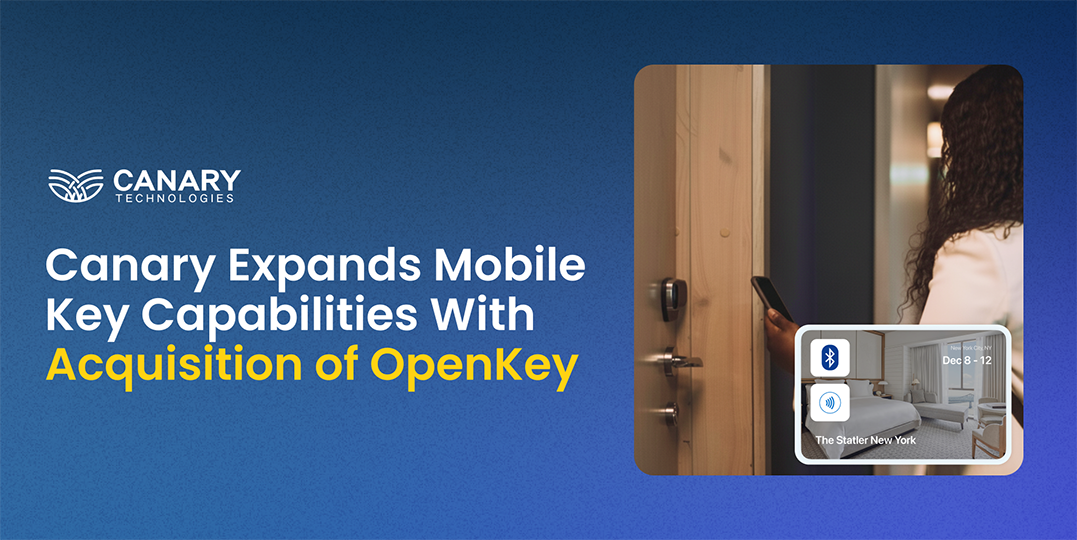
Canary Technologies expands mobile key capabilities with acquisition of OpenKey
Hotel revenue generating ideas for 2026
Blogs (5)
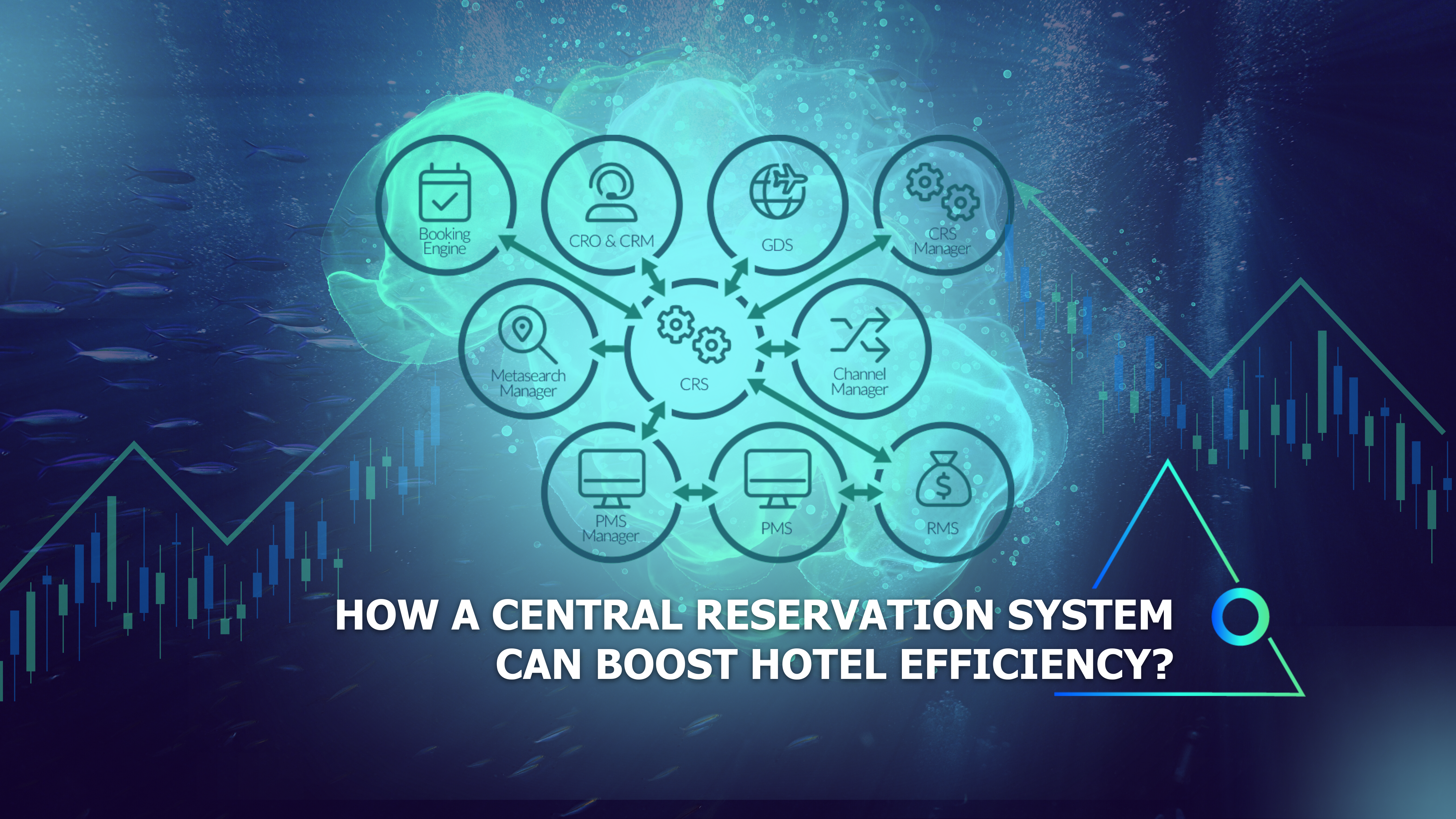
Boost Hotel Efficiency with a Central Reservation System (CRS)

Disruptive Trends & the Future of Hospitality

The Impact of Hotel CRM on Customer Loyalty

Choosing a Revenue Management System for Your Hotel

7 Ways Hospitality Technology Enhances Hotel Operations & Profitability