0
No. of Vendors
0
No. of Products
0
Verified Products
Water Intelligence Solutions for Hotels
Water is one of the most significant operational costs and environmental impacts in hotel operations. Leaks go undetected for weeks. Irrigation systems run on schedules regardless of rainfall. Guest rooms consume water without any operational visibility. For most hotels, water management means receiving a monthly utility bill and reacting to it.
Water Intelligence Solutions change this by giving hotels continuous, real-time visibility into water consumption across all property systems. Modern platforms combine smart metering, leak detection, consumption analytics, and benchmarking to transform water management from a reactive utility function into a proactive operational discipline. Closely related to water conservation solutions, water intelligence platforms specifically focus on the measurement, monitoring, and analytical capabilities that make conservation programs effective.
What are Water Intelligence Solutions for hotels?
Water
Intelligence Solutions are technology platforms that provide hotels with
real-time data on water consumption across all property systems. They use smart
meters, IoT sensors, and analytics to identify consumption patterns, detect
leaks and anomalies, benchmark performance against targets and industry
standards, and generate the reporting data that feeds into ESG reporting
platforms and water conservation solutions.
Core
functions include:
•
Real-time water consumption monitoring across rooms, kitchens,
laundry, pools, and irrigation
•
Leak and anomaly detection with automated alerts
•
Water consumption benchmarking by area, department, and period
•
Trend analysis and forecasting for consumption planning
•
Integration with ESG reporting platforms and water conservation
solutions
Why do Water Intelligence Solutions matter for hotels?
Hotels
are among the most water-intensive buildings per square meter in any real
estate category. Guest room consumption, laundry operations, pool management,
kitchen use, and landscaping irrigation combine to create significant water
demand that most hotels manage without meaningful visibility. In water-stressed
regions, operational water risk is a growing investment consideration. In all
markets, water costs are rising and regulatory pressure on consumption is
increasing.
•
Most hotels have no real-time visibility into water
consumption: monthly utility billing provides no operational insight into
where water is being used, wasted, or lost
•
Undetected leaks create significant waste and cost: a single undetected
leak can waste thousands of liters per day for weeks before showing up in
utility bills
•
Water costs are rising across most markets: water pricing is
increasing in virtually every hospitality market, making consumption reduction
directly financially beneficial
•
ESG reporting requires documented water performance data: carbon footprint
management and ESG reporting platforms increasingly require water consumption
data alongside energy metrics
What problems do Water Intelligence Solutions help solve?
•
No visibility into consumption by area or system: hotels without
sub-metering cannot identify which areas, departments, or systems account for
the greatest water use
•
Undetected leaks consuming water and creating damage risk: real-time anomaly
detection identifies abnormal consumption patterns that indicate leaks before
they escalate
•
Reactive water management based on utility bills: monthly billing data
arrives too late to inform operational decisions or identify emerging
consumption problems
•
No baseline for water conservation investment justification: hotels cannot measure
the impact of water conservation solutions without pre-intervention consumption
data
•
Disconnected water data from ESG reporting: water performance
data that is not automatically available for ESG reporting platforms requires
manual compilation that reduces accuracy
What capabilities should hotels expect?
•
Smart sub-metering across guest rooms, kitchens, laundry, pools,
and irrigation systems
•
Real-time consumption dashboards with area and system level
granularity
•
Automated leak and anomaly detection with alert delivery
•
Consumption benchmarking against property targets and industry
standards
•
Integration with ESG reporting platforms and water conservation
solutions
How do Water Intelligence Solutions fit into the hotel technology ecosystem?
•
Water conservation solutions: use consumption
intelligence data to identify the highest-impact conservation intervention
opportunities
•
ESG reporting platforms: receive water consumption and
intensity data for comprehensive environmental performance reporting
•
Carbon footprint management platforms: incorporate
water-related emissions data into Scope 3 calculations
•
Facility management software: coordinates
maintenance responses to leak alerts and water system fault notifications
Which hotel types benefit most?
•
Hotels in water-stressed regions: face the greatest
operational and regulatory water risk and benefit most from real-time
consumption intelligence
•
Large resorts with pools, spas, and irrigation: where water
consumption across multiple high-use systems creates significant financial and
environmental exposure
•
Hotels with sustainability certification targets: where documented
water reduction performance is a certification requirement
•
Multi-property hotel groups: benefit from centralized water
performance benchmarking across properties to identify outliers and share
conservation best practice
What should hotels evaluate before selecting a platform?
•
Sub-metering coverage and granularity: the platform must
support monitoring at the area and system level that makes consumption
intelligence actionable
•
Leak detection sensitivity: evaluate the platform's ability to
detect abnormal consumption patterns that indicate leaks before significant
waste accumulates
•
ESG reporting integration: water data must flow automatically
into ESG reporting platforms without manual extraction
•
Benchmarking capability: consumption comparison against
targets, historical performance, and industry standards provides the context
needed for meaningful performance assessment
•
Alert delivery and response workflow: leak and anomaly
alerts must reach the right maintenance teams with sufficient information for
effective response
What common mistakes should hotels avoid?
•
Installing meters without analytics capability: raw consumption data
without anomaly detection, benchmarking, and trend analysis provides limited
operational value
•
No defined response process for alerts: water intelligence
platforms only prevent waste if leak alerts trigger fast, appropriate
maintenance responses
•
Monitoring only main supply without sub-metering: property-level
consumption data cannot identify where water is being used or wasted without
area and system level granularity
•
Disconnecting water intelligence from ESG reporting: water performance
data that is not connected to ESG reporting platforms requires manual
compilation and loses accuracy
How has Water Intelligence Solutions evolved?
Water
management in hospitality has evolved from monthly utility bill review into
real-time IoT-enabled consumption intelligence. Smart metering costs fell
significantly from 2018 onwards, making sub-metering across large properties
economically viable. By 2025, real-time water intelligence had become an
established component of hotel sustainability programs, and integration with
ESG reporting platforms had made water performance data a standard element of
environmental disclosure.
What trends are shaping Water Intelligence Solutions?
•
AI-powered leak prediction: machine learning is beginning to
predict likely leak locations before they occur based on consumption pattern
analysis
•
Water stress risk integration: platforms are
incorporating regional water stress data to contextualise consumption
performance against local availability constraints
•
Integration with building management systems: water intelligence is
becoming part of broader smart building platforms connecting energy, water, and
environmental management
•
Guest-facing water transparency: some hotels are
sharing water consumption data with guests as part of sustainability
communication strategies
What impact can Water Intelligence Solutions deliver?
•
Early leak detection preventing significant waste and property
damage
•
Measurable water consumption reduction through data-driven
conservation targeting
•
Reduced water utility costs through waste elimination and
consumption optimization
•
Verified water performance data for ESG reporting and
sustainability certification
What should hotels prioritize when comparing providers?
Hotels
evaluating Water Intelligence Solutions should assess how effectively a
platform provides the consumption granularity, anomaly detection, and ESG
reporting integration needed to make water management genuinely proactive.
•
Sub-metering coverage and granularity: area and system level
monitoring is essential for actionable water intelligence
•
Leak detection accuracy and alert quality: early, accurate
anomaly detection is the most commercially valuable capability
•
ESG reporting and conservation solution integration: water data must flow
seamlessly into sustainability reporting and conservation planning
•
Benchmarking and trend analysis: consumption context
against targets and standards enables meaningful performance assessment
Start your comparison
on ExploreTECH
Blogs (5)
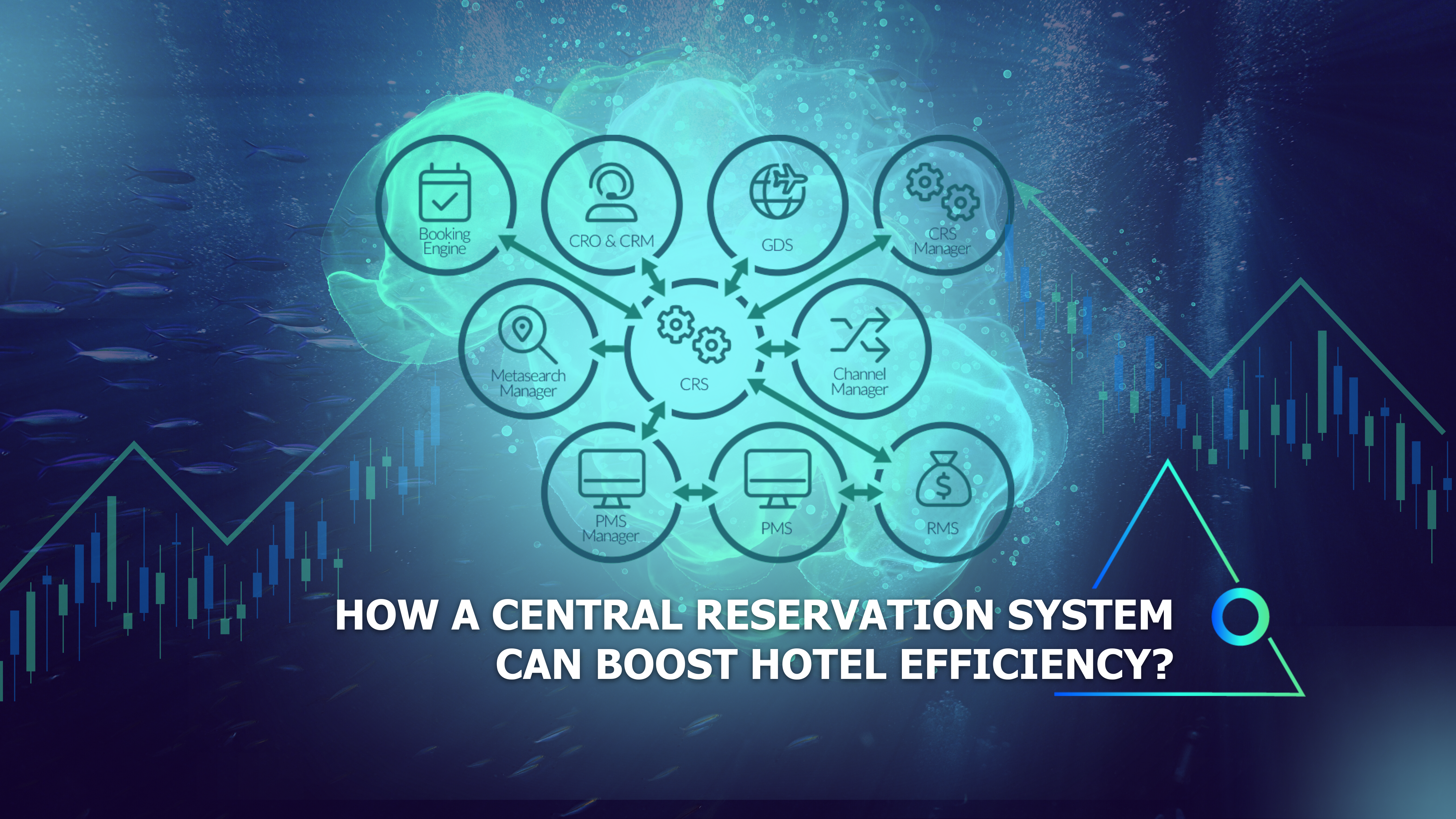
Boost Hotel Efficiency with a Central Reservation System (CRS)
Disruptive Trends & the Future of Hospitality

The Impact of Hotel CRM on Customer Loyalty
Choosing a Revenue Management System for Your Hotel
7 Ways Hospitality Technology Enhances Hotel Operations & Profitability